


1. Introduction
2. Materials and Methods
2.1 Materials
2.2 Experimental methods
3. Results and Discussion
3.1 Surface modification characteristics of pulp
3.2 Moisture resistance of silanized pulp
3.3 Mechanical properties of recycled PP/pulp composites
3.4 Fracture surface analysis of recycled PP/pulp composites
4. Conclusions
1. Introduction
Growing concerns over plastic waste and carbon emissions have intensified efforts to reduce the consumption of petroleum-derived polymers and expand the use of recycled plastics [1,2]. Polypropylene (PP) is one of the most widely used thermoplastics because of its low density, good processability, chemical resistance, and balanced mechanical properties, with applications ranging from packaging and consumer products to automotive components and industrial materials. However, the large volume of post-consumer PP waste and its persistence in the environment have increased the importance of recycling and circular utilization [3]. Recycled polypropylene (R-PP) offers a potential route for the value-added utilization of plastic waste; however, repeated thermal processing, oxidative degradation, molecular-weight reduction, and contamination during recycling can deteriorate its mechanical properties and processing stability compared with virgin PP [4,5,6].
The incorporation of reinforcing fillers is a practical strategy for compensating for the deterioration in the properties of R-PP and expanding its potential applications. Cellulose pulp is a renewable, bio-based fibrous material with considerable potential as a reinforcement for thermoplastic composites. When adequately dispersed within a polymer matrix, pulp fibers can contribute to load bearing and stress transfer. Their fibrous morphology can also hinder crack propagation and constrain matrix deformation, thereby contributing to improvements in tensile and flexural properties [7,8,9]. Accordingly, incorporating cellulose pulp into R-PP may provide a means of improving the mechanical performance of recycled polymer composites while increasing their bio-based material content.
However, direct incorporation of hydrophilic cellulose pulp into a hydrophobic polymer such as PP presents several challenges. Cellulose fibers contain abundant hydroxyl groups on their surfaces and therefore exhibit a strong affinity for water, whereas PP is a nonpolar and hydrophobic polymer. This mismatch in surface characteristics can result in poor interfacial compatibility between the pulp fibers and the PP matrix, leading to interfacial gaps, fiber pull-out, and inefficient stress transfer [9,10]. In addition, cellulose pulp readily absorbs moisture. Residual moisture in the pulp may vaporize during high-temperature melt compounding, potentially contributing to void formation and other internal defects in the composite. These effects can compromise both the mechanical performance and processing stability of R-PP/pulp composites [7,10].
Silane treatment has been extensively investigated as a surface-modification strategy for cellulose and natural fibers to mitigate these limitations [10,11,12]. Silane coupling agents can interact with hydroxyl groups on cellulose surfaces and introduce organofunctional moieties, thereby reducing the hydrophilic character of the fibers and improving their compatibility with hydrophobic polymer matrices. Conventional silanization is typically performed by immersing fibers in silane solutions prepared in aqueous or alcohol-based media. Although such wet-treatment methods are relatively straightforward at the laboratory scale, their scale-up can involve substantial solvent consumption as well as additional filtration, washing, drying, and solvent-handling steps [13,14].
The environmental burden of solvent-based silane treatments including organic solvent use and wastewater generation has been identified as a significant barrier to the broader industrial adoption of these methods [12,15].
Vapor-phase silanization provides an alternative approach in which volatile silane species are delivered to the cellulose surface in the vapor phase without direct immersion of the fibers in a treatment solution. Vapor- or solvent-phase silanization has previously been employed to modify the surface wettability of paper and other cellulose-based materials [16,17]. Compared with conventional wet treatment, vapor-phase processing can avoid liquid-phase immersion and eliminate or simplify subsequent filtration and washing steps. More importantly for polymer compounding, reducing the hydrophilic character of pulp through vapor-phase surface modification may decrease moisture uptake while improving its compatibility with the polymer matrix. These combined effects could facilitate the use of cellulose pulp as a reinforcing filler in recycled thermoplastic composites.
In this study, cellulose pulp was modified by a solvent-free vapor-phase silanization process using vinyltrimethoxysilane (VTMS) at a dosage of 2 wt% based on the dry pulp weight. The resulting vapor-phase silanized pulp (VSP) was evaluated as a bio-based reinforcement for R-PP composites. Changes in surface chemistry, morphology, and silicon distribution after silanization were characterized by XPS and SEM-EDS. The effect of vapor-phase silanization on moisture resistance was evaluated through capillary wicking and long-term water-immersion tests. Untreated and VSPs were subsequently incorporated into R-PP at different loadings, and the tensile, flexural and impact properties of the resulting composites were compared. Fracture-surface morphology was further examined to assess pulp–matrix interfacial characteristics and relate the observed morphological features to the mechanical performance of the composites. Through this approach, the study aimed to evaluate vapor-phase silanization as a solvent-free and potentially scalable surface-modification strategy for improving the performance of cellulose-pulp-reinforced R-PP composites.
2. Materials and Methods
2.1 Materials
Cellulosic pulp passing through a 1 mm mesh (Moorim Co., Ltd., Korea) was used as the raw material. VTMS (98%, Daejung Chemicals & Metals Co., Ltd., Korea) was used as the silane coupling agent for pulp surface modification.
R-PP (Small Action, Korea) was used as the polymer matrix, and maleic anhydride-grafted polypropylene (MAPP, product No. 427845, Sigma-Aldrich, USA) was used as a compatibilizer. Antioxidant (Irganox B215, BASF, Germany) and wax (L-C 503N, Lion Chemtech Co., Ltd., Korea) were also used for composite preparation.
2.2 Experimental methods
2.2.1 Preparation of vapor-phase silanized pulp
Vapor-phase silane treatment was performed without liquid immersion to modify the pulp surface. The as-received pulp had an initial moisture content of approximately 14–17 wt%. Preliminary drying observations confirmed that the moisture content decreased to below 10 wt% after approximately 6 h at 55°C. Based on this observation, the pulp was subsequently dried at 55°C for 6 h and used immediately for vapor-phase silanization without additional moisture conditioning. VTMS (98%) was used at 2 wt% based on the dry weight of the pulp.
A predetermined amount of VTMS was placed at the bottom of a heat-resistant sealed container. A metal mesh (20–30 mesh) was positioned above the liquid VTMS to prevent direct contact between the pulp and the silane, and the 1 mm pulp was evenly distributed over the mesh. As shown in Fig. 1, the pulp layer was loosely arranged to facilitate the diffusion of silane vapor through the material.
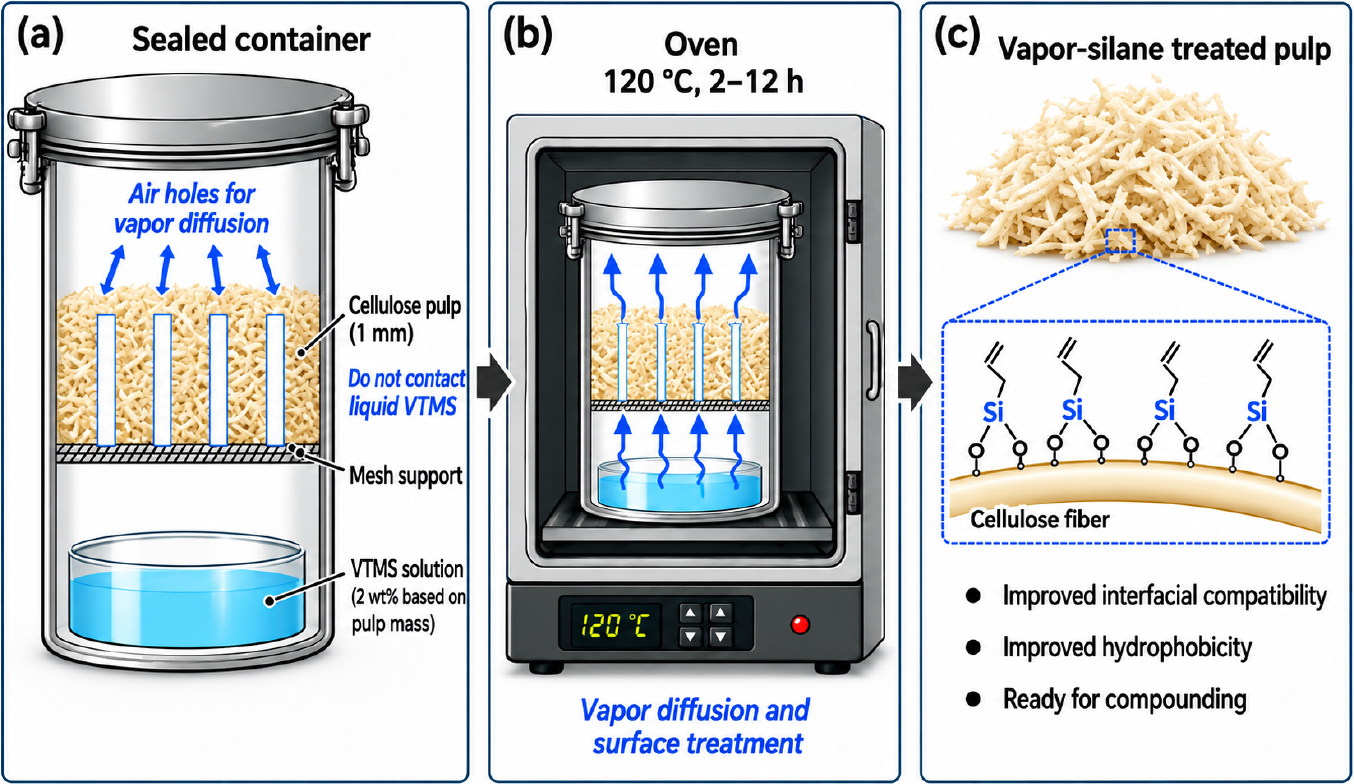
The container was sealed and heated in an oven at 120°C for 2–12 h. Under these conditions, VTMS vaporized from the bottom of the container and contacted the pulp without direct liquid-phase immersion. After treatment, the container was cooled to room temperature and the pulp was recovered. The resulting material was designated as VSP. No washing or filtration step was performed after treatment. All VSP samples used for surface characterization (XPS and SEM-EDS), moisture-resistance evaluation (Washburn and water-immersion tests), and R-PP composite preparation were treated under the same vapor-phase silanization conditions of 120°C for 4 h.
2.2.2 Surface characterization of pulp
The surface characteristics of untreated pulp (UP) and VSP were analyzed using FE-SEM, SEM-EDS, and XPS.
Surface morphology was examined using FE-SEM (SU8600, Hitachi, Japan), with the samples mounted on carbon-tape-covered stubs. SEM-EDS analysis was performed to compare the elemental composition and Si distribution of UP and VSP.
XPS analysis was performed using an X-ray photoelectron spectrometer (Nexsa G2, Thermo Fisher Scientific, USA). Survey spectra were used to determine the relative surface compositions of C, O, and Si, while high-resolution C 1s, O 1s, and Si 2p spectra were analyzed to characterize changes in surface chemical states associated with the VTMS treatment.
2.2.3 Hydrophobicity evaluation
The wettability and water absorption characteristics of UP and VSP were evaluated using the Washburn method and a long-term water absorption test.
The Washburn test was performed using a powder surface analyzer (SIGMA-700, Biolin Scientific AB, Sweden). Pulp samples were packed into a sample holder and brought into contact with the test liquid, and liquid uptake was determined from the increase in sample mass over time due to capillary penetration.
For the long-term water absorption test, 1.0 g of pulp was placed on a sieve and immersed in distilled water for 1, 10, 30, and 60 min and then for 1–7 days at 1-day intervals. At each interval, the sample was removed from the water, excess water on the sieve surface was removed using absorbent tissue, followed by gentle shaking and drainage for approximately 1 min. The pulp itself was not directly blotted or mechanically compressed. The sample mass was measured. Water absorption was calculated as:
where W0 is the initial dry mass of the pulp (g), and Wt is the mass of the pulp after immersion for time t (g).
2.2.4 Preparation of recycled PP/pulp composites
Recycled PP/pulp composites containing UP or VSP were prepared by melt compounding using a twin-screw extruder. Pulp contents of 10 and 20 wt% were used, and the formulations are summarized in Table 1.
Table 1.
Formulations of recycled PP/pulp composites used in this study
| No. | R-PP (wt%) | UP (wt%) | VSP (wt%) | MAPP (wt%) | Antioxidant (wt%) | Wax (wt%) |
| Control | 94.8 | - | - | 3 | 0.2 | 2 |
| UP-10 | 84.8 | 10 | - | 3 | 0.2 | 2 |
| UP-20 | 74.8 | 20 | - | 3 | 0.2 | 2 |
| VSP-10 | 84.8 | - | 10 | 3 | 0.2 | 2 |
| VSP-20 | 74.8 | - | 20 | 3 | 0.2 | 2 |
Compounding was performed using a twin-screw extruder (TEK 30, SM Platek, Korea) at barrel temperatures of 180–220°C and screw speeds of 100–200 rpm. The extrudates were cooled and pelletized for subsequent specimen preparation.
MAPP was incorporated as a compatibilizer to promote interfacial interaction between the cellulose pulp and the R-PP matrix, while the antioxidant and wax were added to improve thermal stability and processability during melt compounding.
2.2.5 Mechanical characterization
The mechanical properties of the recycled PP/pulp composites were evaluated by tensile, flexural, and Izod impact tests. Standard test specimens were prepared by injection molding the compounded pellets.
Tensile tests were performed according to ISO 527 using Type 1A specimens. Tensile modulus was measured at a crosshead speed of 1 mm/min, while tensile strength and elongation at break were measured using separate specimens at 20 mm/min. Three-point flexural tests were performed according to ISO 178 using specimens with dimensions of 80 × 10 × 4 mm at a crosshead speed of 50 mm/min. Izod impact strength was measured according to ISO 180. For each mechanical test, ten specimens were evaluated, and the mean values were reported.
2.2.6 Fracture surface analysis of recycled PP/pulp composites
To investigate the interfacial characteristics and fracture behavior of the recycled PP/pulp composites, the fracture surfaces of specimens obtained after Izod impact testing were examined using field-emission scanning electron microscopy (FE-SEM; SU8600, Hitachi, Japan). The fractured specimens were mounted on stubs using carbon tape and coated with Au prior to observation. The dispersion of pulp fibers and the occurrence of fiber pull-out, interfacial gaps, and voids were examined by SEM. These morphological features were used to assess the interfacial characteristics between the VSP fibers and the R-PP matrix.
3. Results and Discussion
3.1 Surface modification characteristics of pulp
3.1.1 Surface chemical characteristics of vapor-phase silanized pulp
The surface chemical characteristics of UP and VSP were analyzed by XPS. As shown in Fig. 2, the survey spectrum of UP exhibited only C 1s and O 1s signals, whereas VSP showed additional Si 2p and Si 2s signals at approximately 102 and 154 eV, respectively. The appearance of Si signals after treatment confirms the introduction of Si-containing species onto the pulp surface.
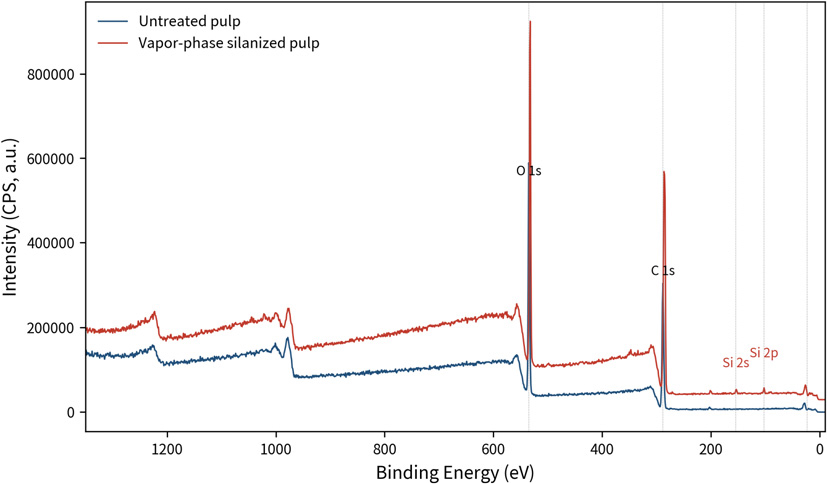
The surface elemental compositions determined from the XPS survey spectra are summarized in Table 2. UP contained 60.83 at.% C and 39.17 at.% O, corresponding to an O/C ratio of 0.64. After vapor-phase silanization, the C content increased to 68.72 at.%, while the O content decreased to 29.90 at.%, with 1.37 at.% Si detected on the surface. Consequently, the O/C ratio decreased from 0.64 to 0.44. This decrease, together with the appearance of Si, indicates a change in the surface chemical composition following VTMS treatment.
Table 2.
Surface elemental composition of untreated and vapor-phase silanized pulp determined by XPS survey scan
| Sample | C 1s (at.%) | O 1s (at.%) | Si 2p (at.%) | O/C ratio |
| UP | 60.83 | 39.17 | - | 0.64 |
| VSP | 68.72 | 29.9 | 1.37 | 0.44 |
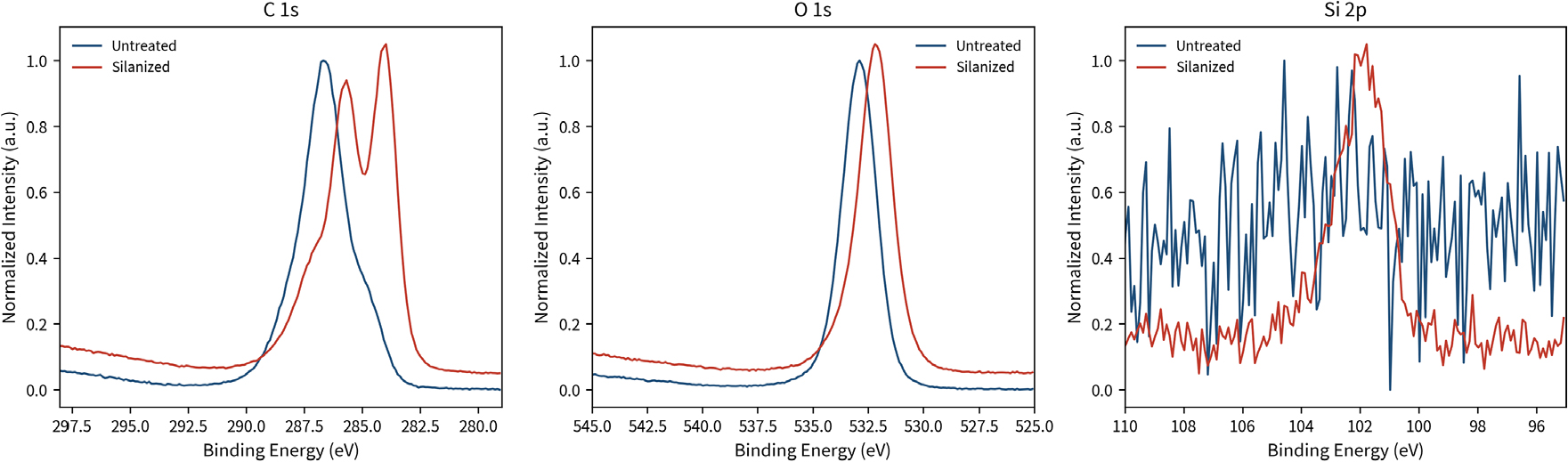
High-resolution C 1s, O 1s, and Si 2p spectra are shown in Fig. 3. No distinct Si 2p signal was observed for UP, whereas VSP exhibited a clear Si 2p peak at approximately 102 eV. This binding-energy region is consistent with Si–O–C and Si–O–Si environments reported for silane-modified cellulose [17,18]. The C 1s spectrum also changed markedly after treatment. UP was dominated by the C–O component characteristic of cellulose, whereas VSP showed a pronounced increase in intensity in the lower-binding-energy region associated with C–C/C–H environments.
To further examine these changes, the C 1s spectra were deconvoluted into three components assigned to C–C/C–H, C–O, and O–C–O/C=O environments (Fig. 4). For UP, the relative contributions of these components were 19.1, 55.5, and 25.4%, respectively. After silanization, the C–C/C–H contribution increased to 45.5%, while the C–O and O–C–O/C=O contributions decreased to 40.1 and 14.5%, respectively. The substantial increase in the C–C/C–H component is consistent with the introduction of the organic groups of VTMS onto the cellulose surface.
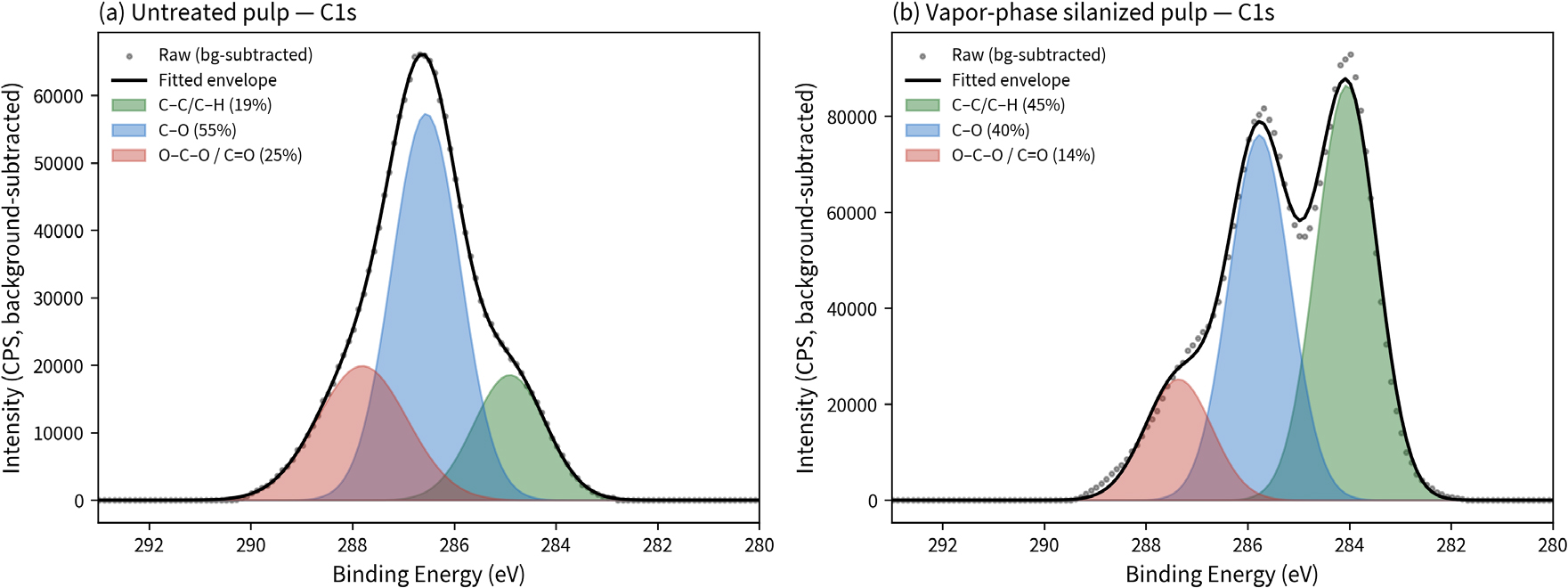
Overall, the appearance of Si signals, decrease in the O/C ratio, and increase in the C–C/C–H contribution consistently demonstrate that vapor-phase silanization altered the chemical environment of the pulp surface. These results provide evidence for the successful introduction of VTMS-derived Si-containing species onto the cellulose surface.
3.1.2 Surface morphology and Si distribution by SEM and SEM-EDS
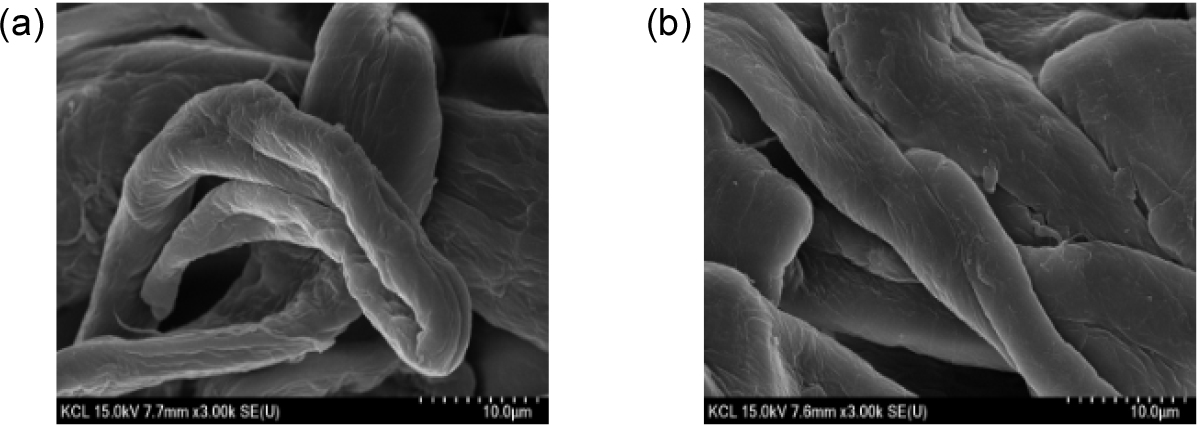
The surface morphology and elemental distribution of UP and VSP were examined by SEM and SEM-EDS. As shown in Fig. 5, the fibrous morphology of the pulp was retained after vapor-phase silanization, with no apparent structural collapse or severe surface damage. This indicates that the vapor-phase treatment modified the pulp surface without substantially altering its overall fibrous structure.
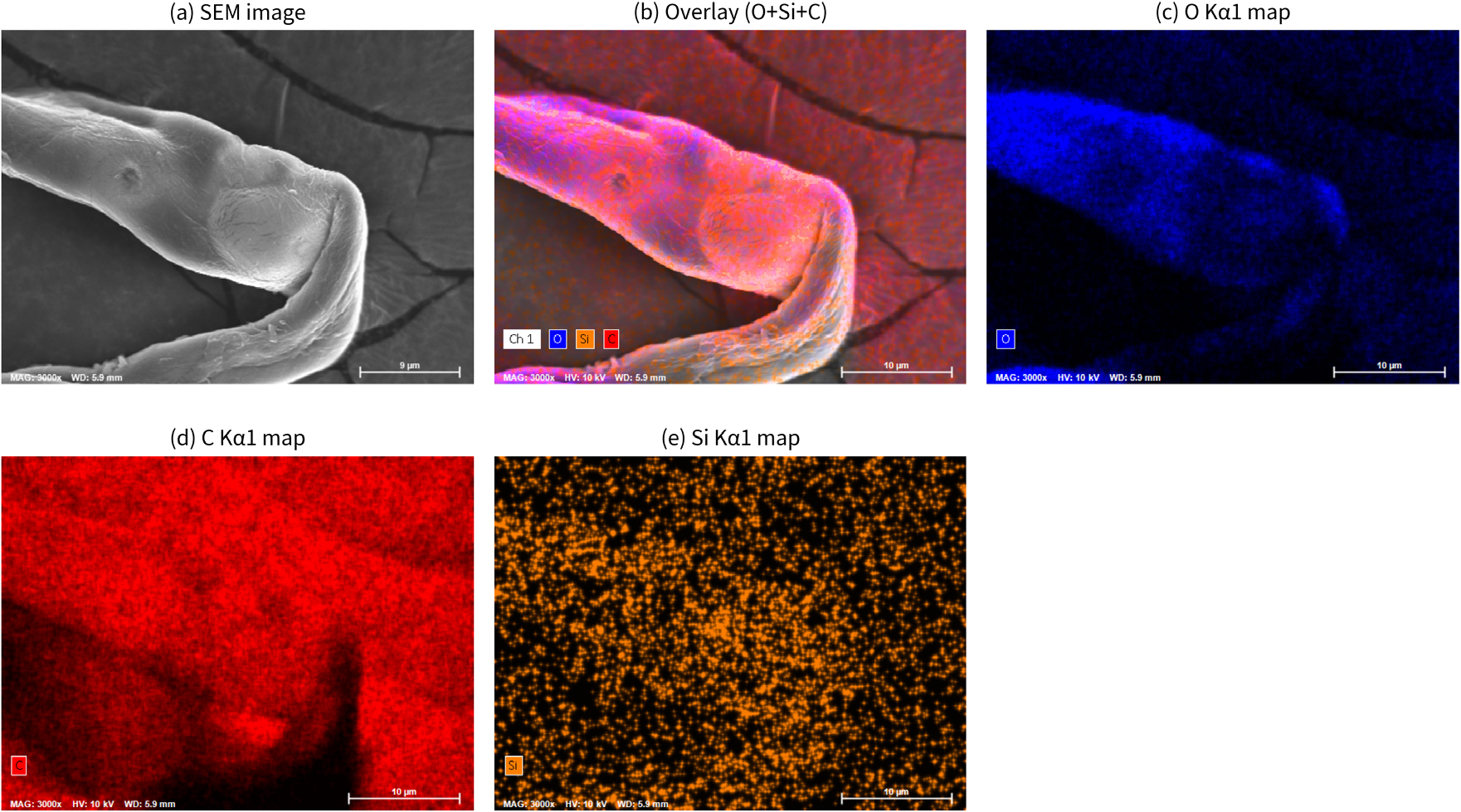
Elemental mapping of a representative VSP fiber is shown in Fig. 6. The C and O signals generally followed the morphology of the cellulose fiber, whereas Si was detected as relatively low-intensity signals distributed over the observed fiber surface. No distinct localized Si-rich aggregates were observed, suggesting that the Si-containing species were dispersed over the fiber surface rather than concentrated in large domains.
Spot EDS analysis was performed at three locations on the VSP fiber (Fig. 7). Si contents of 0.10–0.15 at.% (0.17–0.33 wt.%) were detected at the analyzed locations, with relatively small variation among the measurement points. In contrast, Si was not detected at the corresponding analyzed locations of UP. These results further support the introduction and distribution of Si-containing species on the pulp surface following vapor-phase silanization.
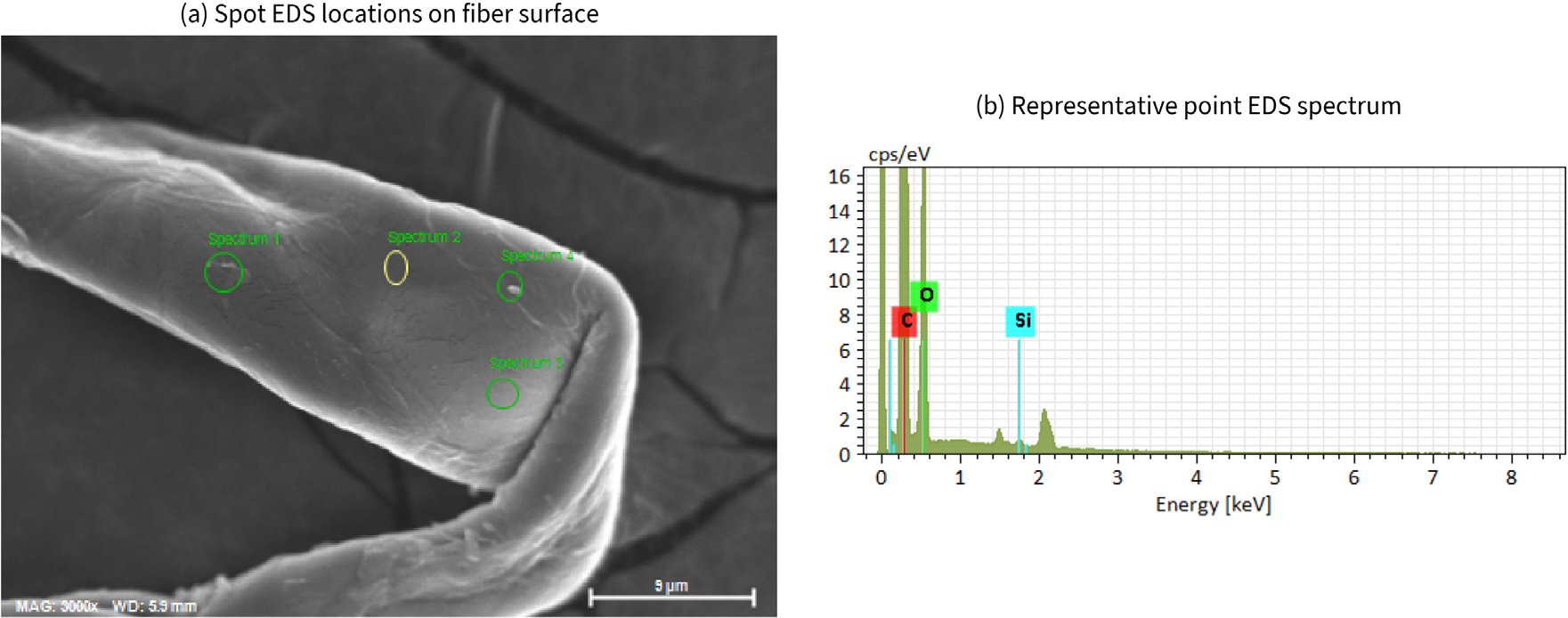
Because VTMS was applied at only 2 wt.% relative to the pulp mass, the amount of Si introduced into the system was inherently low. Based on the Si content of VTMS, the theoretical maximum Si content corresponding to a 2 wt.% VTMS dosage is approximately 0.38 wt.% relative to the pulp mass. The Si contents detected by SEM-EDS are therefore reasonable considering the low VTMS dosage. However, because SEM-EDS provides local and semi-quantitative elemental information, these values should not be interpreted as the absolute amount of silane immobilized on the pulp.
Taken together, the XPS and SEM-EDS results indicate the introduction of Si-containing species onto the pulp surface, while SEM observations show that the fibrous morphology was largely preserved after treatment.
3.2 Moisture resistance of silanized pulp
3.2.1 Initial wetting behavior evaluated by the Washburn method
The initial wetting behavior of UP and VSP was evaluated using the Washburn method. According to the Washburn theory [19], the square of the liquid uptake mass (m2) is proportional to time during capillary penetration through a packed porous material. Under identical liquid and packing conditions, the slope of the linear region of the m2–t curve can therefore be used to compare the relative wettability of the samples.
As shown in Fig. 8a, UP exhibited rapid water uptake immediately after contact with water, reaching a plateau of approximately 1.09 g2 within 40–50 s. The slope of the linear region from 5 to 30 s was 3.30 × 10⁻² g2/s (R2 = 0.996). In contrast, VSP showed a much slower and nearly linear increase in m2 throughout the 300 s measurement period, without reaching a plateau (Fig. 8b). The slope determined over the same 5–30 s interval was 1.44 × 10⁻⁴ g2/s (R2 = 0.995), approximately 230 times lower than that of UP. At 300 s, the m2 value of VSP was only 0.065 g2, compared with 1.090 g2 for UP (Table 3).
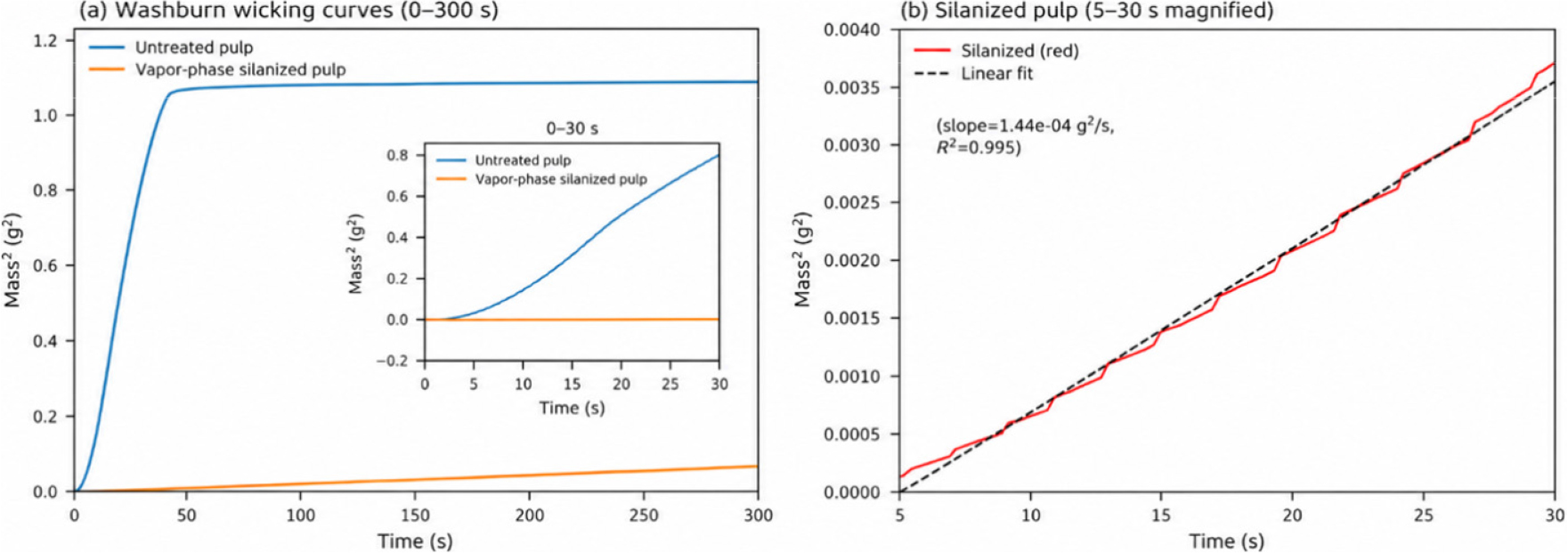
Table 3.
Washburn wicking kinetic parameters of untreated and vapor-phase silanized pulp with initial wicking rates determined over 5–30 s
| Sample | Initial wicking rate, dm2/dt (g2/s) | m2 at t = 300 s (g2) |
| Untreated pulp | 3.30 × 10⁻² | 1.090 |
| Vapor-phase silanized pulp | 1.44 × 10⁻⁴ | 0.065 |
The substantially reduced wicking rate of VSP demonstrates that vapor-phase silanization markedly decreased the wettability of the pulp. This behavior is consistent with the XPS results in Section 3.1, which showed the appearance of Si-containing species, a decrease in the O/C ratio from 0.64 to 0.44, and an increase in the C–C/C–H contribution from 19.1% to 45.5%. Together, these results indicate that the surface chemical changes induced by VTMS treatment strongly suppressed the initial penetration of water into the pulp.
3.2.2 Long-term water absorption behavior
The long-term water absorption behavior of UP and VSP during 7 days of immersion in distilled water is shown in Fig. 9. UP exhibited a water absorption of approximately 300% after 1 day and remained within 309–342% over the 7-day period, with an average value of 322%. This rapid uptake is consistent with the high wettability observed in the Washburn analysis. In contrast, VSP maintained substantially lower water absorption of 22.6–38.2%, with an average value of 32.0%, corresponding to approximately one-tenth of that of UP.
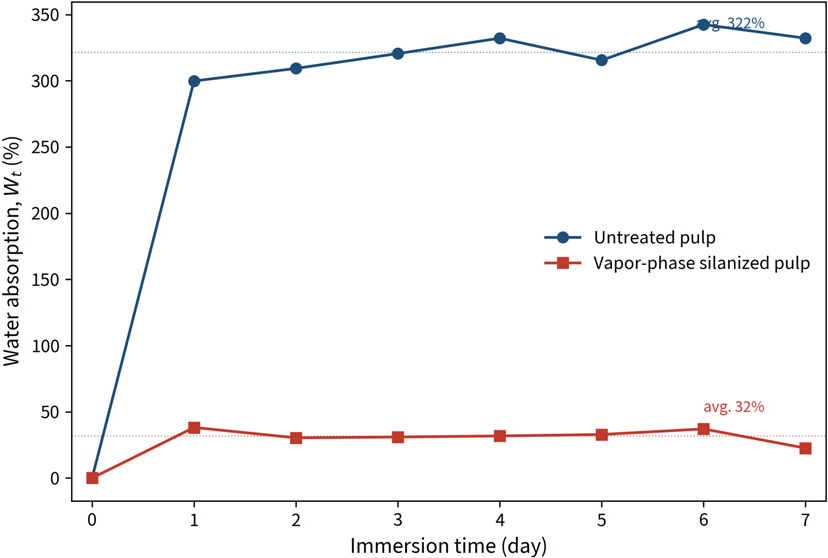
Because the pulp samples were not directly blotted or compressed during measurement, the measured mass increase may include water retained on the fiber surfaces and within inter-fiber voids in addition to water absorbed by the fibers. Therefore, the values should be interpreted as a comparative measure of water uptake and retention under identical experimental conditions rather than as absolute water absorption capacities. The small variations observed on Days 6 and 7 are likely attributable to variations in residual surface water during repeated measurements.
The substantially lower water uptake of VSP throughout the 7-day immersion period demonstrates that the reduction in wettability induced by vapor-phase silanization was maintained during prolonged exposure to water. Together with the approximately two-orders-of-magnitude reduction in the wicking rate observed in the Washburn analysis, these results demonstrate that vapor-phase silanization effectively improves the moisture resistance of cellulose pulp over both short and prolonged exposure periods. Such a reduction in moisture uptake is particularly important for cellulosic-fiber/polymer composites because absorbed water can adversely affect fiber–matrix interfacial interactions and composite performance [12,20]. This behavior is consistent with the surface chemical changes identified by XPS, including the introduction of Si-containing species and the decrease in the O/C ratio.
3.3 Mechanical properties of recycled PP/pulp composites
The mechanical properties of R-PP composites containing UP and VSP are shown in Fig. 10. Overall, VSP composites exhibited higher tensile strength, flexural strength, flexural modulus, and Izod impact strength than control R-PP and the corresponding UP composites, suggesting improved stress transfer associated with the surface treatment under the same composite formulation [21,22].
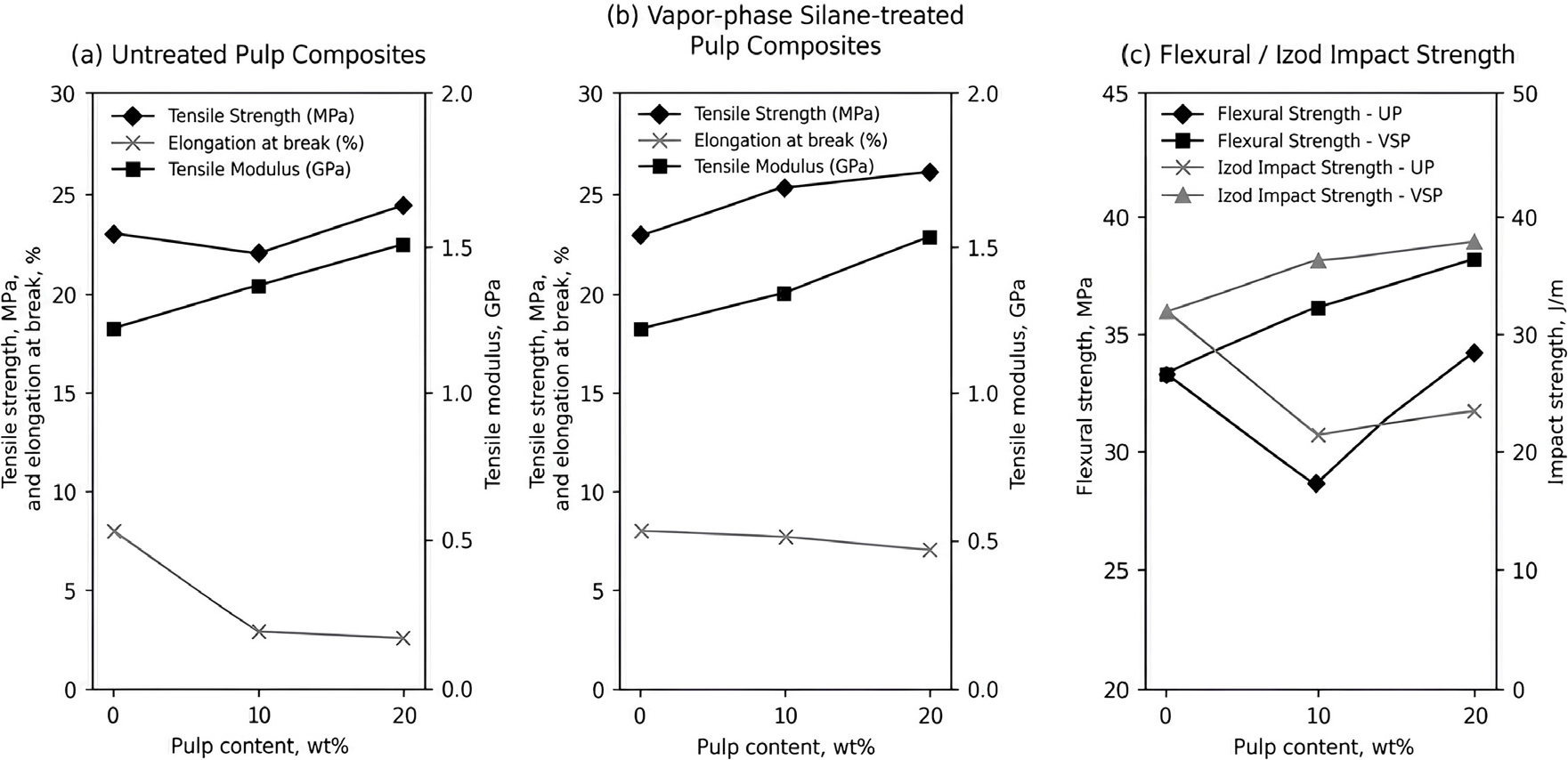
The tensile strength of control R-PP was 23.0 MPa. The incorporation of UP resulted in tensile strengths of 22.1 and 24.6 MPa at 10 and 20 wt%, respectively, whereas VSP increased the tensile strength to 26.4 and 26.6 MPa. At the same pulp loadings, VSP composites therefore exhibited higher tensile strength than the corresponding UP composites, indicating more effective stress transfer between the pulp fibers and the R-PP matrix. The tensile modulus generally increased with pulp loading, reaching 1.50 GPa at 20 wt%. Notably, elongation at break decreased substantially with UP, from 8.0% for control R-PP to 3.1 and 2.7%, whereas VSP composites retained considerably higher values of 7.8 and 6.9% at 10 and 20 wt%, respectively.
Vapor-phase silanization also improved the flexural properties. The flexural strength increased from 33.1 MPa for control R-PP to 36.0 and 38.4 MPa for VSP-10 and VSP-20, respectively, while the flexural modulus increased from 1.20 to 1.40 and 1.70 GPa. In contrast, UP-10 showed decreases in both flexural strength and modulus, and UP-20 showed only moderate improvements over control R-PP.
A particularly pronounced effect was observed for Izod impact strength. The incorporation of UP decreased the impact strength from 31.9 J/m for control R-PP to 21.2 and 23.1 J/m. In contrast, VSP increased the impact strength to 36.4 and 38.1 J/m at 10 and 20 wt%, respectively. These results indicate that vapor-phase silanization not only improved strength and stiffness but also mitigated the loss of ductility and impact resistance typically associated with the incorporation of UP. The simultaneous improvement in strength, stiffness, and impact resistance suggests enhanced pulp–matrix interfacial interactions, which are further examined through fracture-surface analysis in Section 3.4.
Since MAPP was incorporated at a constant concentration of 3 wt% in all formulations, the improved mechanical properties of VSP composites reflect the additional contribution of vapor-phase silanization to interfacial compatibility within the MAPP-containing R-PP system.
3.4 Fracture surface analysis of recycled PP/pulp composites
The fracture surfaces of R-PP composites containing VSP were examined by SEM to investigate the interfacial characteristics and fracture behavior (Fig. 11). At low magnification, the pulp fibers were relatively well dispersed within the R-PP matrix, with no apparent large voids or extensive fiber pull-out (Fig. 11a). At higher magnification, fractured or torn pulp fibers were observed with R-PP matrix remaining attached to their surfaces, and no distinct interfacial gaps were evident (Fig. 11b and c).
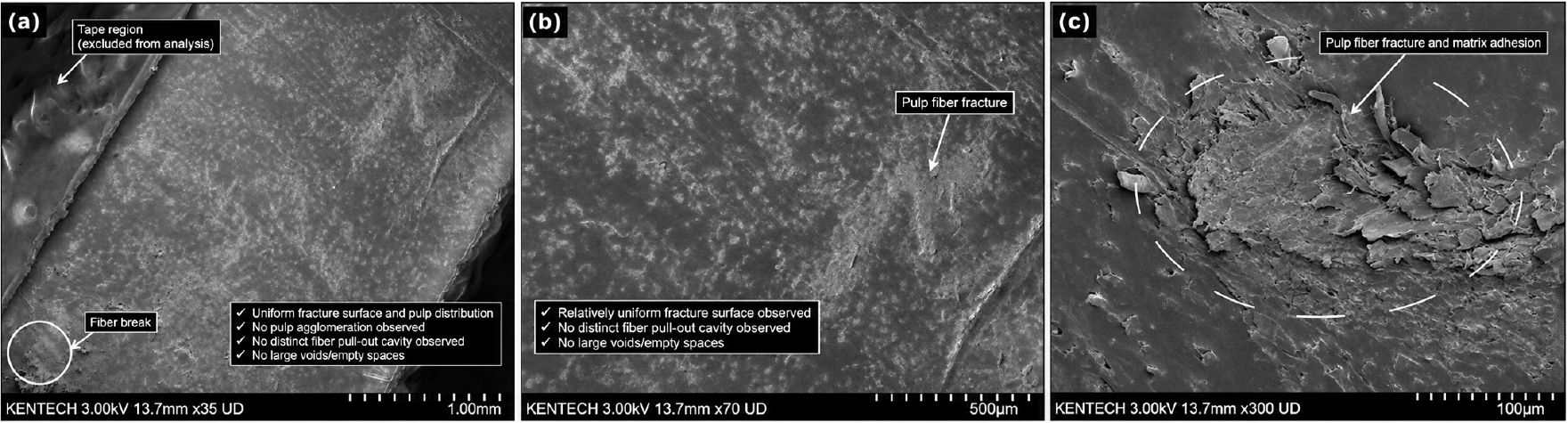
These fracture features suggest effective fiber–matrix interactions between VSP and the R-PP matrix. The presence of fractured pulp fibers with attached polymer matrix and the limited occurrence of interfacial gaps suggest that the fibers may have contributed to load bearing during fracture. Such morphological characteristics are generally associated with effective stress transfer across fiber–matrix interfaces [23].
The observed fracture morphology is consistent with the mechanical performance of the VSP composites described in Section 3.3. The presence of polymer matrix attached to fractured fibers and the limited interfacial separation suggest favorable fiber–matrix interactions, which may contribute to effective stress transfer and energy dissipation during fracture. These observations provide qualitative morphological support for the mechanical behavior of the VSP composites.
4. Conclusions
In this study, a solvent-free vapor-phase silanization process using a low concentration VTMS (2 wt% based on pulp dry weight) was applied to cellulose pulp, and its effects on surface characteristics, moisture resistance, and reinforcing performance in R-PP composites were investigated. XPS analysis confirmed the introduction of Si-containing species onto the pulp surface, accompanied by a decrease in the O/C ratio from 0.64 to 0.44 and an increase in the C–C/C–H contribution from 19.1% to 45.5%. SEM-EDS further indicated a relatively dispersed distribution of Si over the analyzed fiber surface.
Vapor-phase silanization markedly reduced the interaction of the pulp with water. The slope of the linear region in the Washburn analysis decreased by approximately two orders of magnitude, while the average water uptake during 7 days of immersion decreased from 322% for UP to 32% for silanized pulp. VSP composites exhibited higher tensile strength, flexural strength, flexural modulus, and Izod impact strength than control R-PP and generally outperformed the corresponding UP composites. At 20 wt% VSP, the composite exhibited a tensile strength of 26.6 MPa, flexural strength of 38.4 MPa, flexural modulus of 1.70 GPa, and Izod impact strength of 38.1 J/m. Fracture-surface observations showing matrix adhesion to the pulp fibers and limited interfacial separation were consistent with improved pulp–matrix interfacial interactions.
Overall, these results demonstrate that vapor-phase silanization can simultaneously reduce the moisture sensitivity of cellulose pulp and improve its reinforcing performance in R-PP composites. Because the process avoids liquid-phase immersion and subsequent washing, it provides a simplified route for silane modification of cellulose pulp and has potential for further development toward scalable production of bio-based reinforcements for recycled thermoplastic composites.