


1. Introduction
2. Materials and Methods
2.1 Materials
2.2 Preparation and characterization of recycled paper cup powder
2.3 Preparation and characterization of CMF
2.4 Handsheet preparation and mechanical testing
3. Results and Discussion
3.1 Characteristics of recycled paper cup powder prepared using a two-stage grinder
3.2 Characteristics of CMF prepared using a micro-grinder
3.3 Effects of micro-grinder-prepared CMF on the mechanical properties of recycled paper cup powder-starch handsheets
4. Conclusions
1. Introduction
The growing demand for sustainable alternatives to petroleum-based plastics has increased interest in cellulose-based materials for molded products. In particular, molded pulp products have attracted attention in packaging and other applications because they are produced from renewable resources and offer advantages in recyclability and biodegradability [1,2,3].
Conventional wet molding involves dispersing cellulose fibers in water to form a wet fiber network, removing water by drainage or pressing, and drying the molded product. Wet injection molding is being developed as an alternative process in which a flowable cellulose-based mixture is introduced into a mold to produce products with more complex shapes. To achieve sufficient mechanical strength, selecting suitable cellulosic raw materials, binders, and reinforcing agents is important. Although handsheets cannot fully represent the manufacturing conditions of wet injection molding, they can be used to evaluate the mechanical properties of candidate materials before actual molding trials.
In the previous study, Tak et al. [4] investigated the use of recycled paper cup powder, cornstarch, and cellulose microfibers (CMFs) prepared using a high-pressure homogenizer. A paper cup powder-to-starch ratio of 60:40 was selected as a suitable composition, and partial replacement of starch with CMF improved the mechanical properties of the handsheets at addition levels up to 5 wt%. However, the reinforcing effects of CMF prepared using a micro-grinder were not examined. In addition, the paper cup powder used in the previous study was prepared using a laboratory-scale grinder, whereas this study employed a two-stage grinder process for powder preparation.
CMF can be produced using various mechanical fibrillation methods, including high-pressure homogenization and micro-grinding. High-pressure homogenization promotes fibrillation by forcing fiber suspensions through narrow channels under high pressure, whereas micro-grinding relies mainly on shear and friction between grinding stones. Previous studies have shown that the choice of mechanical treatment can affect the degree of fibrillation, fiber morphology, and rheological properties of cellulose micro- and nanofibers [5,6,7]. These differences may influence the interactions between CMF and other cellulosic materials. Therefore, the reinforcing effects of CMF prepared using different mechanical methods need to be examined.
In this study, CMF was prepared using a micro-grinder and added to recycled paper cup powder-starch handsheets at levels of 1, 3, and 5 wt%. The physical characteristics of the paper cup powder and CMF were evaluated, and CMF reinforcing effects were examined by measuring the tensile index, elongation at break, and burst index of the handsheets. The results were also discussed in relation to our previous findings using high-pressure-homogenized CMF [4]. The aim was to evaluate the suitability of micro-grinder-prepared CMF as a reinforcing material for recycled cellulose-based composites intended for subsequent wet injection-molding applications.
2. Materials and Methods
2.1 Materials
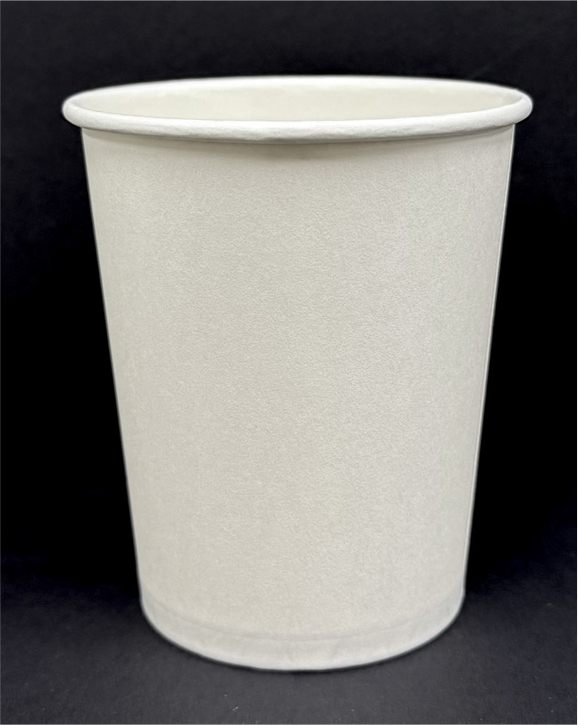
Commercially available paper cups were used as the recycled cellulosic raw material as shown in Fig. 1. Cornstarch supplied by Moorim Paper Co., Ltd. (Jinju, Republic of Korea) was used as a bio-based binder. Hardwood bleached kraft pulp (HwBKP) supplied by Moorim P&P Co., Ltd. (Ulsan, Republic of Korea) was used to prepare CMF.
2.2 Preparation and characterization of recycled paper cup powder
The bonded seams of the paper cups were separated, and the cups were flattened and cut into strips less than 2 mm wide. The strips were then ground using a two-stage shredder developed for recycled paper processing by Eshin Machinery Co., Ltd. (Busan, Republic of Korea). Grinding was performed at a rotational speed of 240 rpm and a linear speed of 1.08 m/s until no unground material was visible.
The fiber length and width of the resulting paper cup powder were measured using a fiber analyzer (FQA-360, OpTest Equipment Inc., Hawkesbury, Canada).
2.3 Preparation and characterization of CMF
HwBKP with a consistency of 1.57% was refined to 300 mL CSF using a laboratory Hollander beater for approximately 35 min. The average fiber length and width of the HwBKP before mechanical fibrillation were 0.51 mm and 18.9 µm, respectively, as measured using a fiber analyzer (FQA-360, OpTest Equipment Inc., Hawkesbury, Canada). The refined pulp was diluted to 1.0% consistency and passed twice through a micro-grinder (MKZA6-2, Masuko Sangyo Co., Ltd., Japan) to prepare CMF.
The low-shear viscosity of the CMF suspension was measured at 1.0% consistency using a Brookfield viscometer (DV-IP, Brookfield Engineering Laboratories, USA) equipped with spindle No. 64, operated at 60 rpm and maintained at 23°C. The apparent particle size was measured at 0.2% consistency using a laser diffraction particle analyzer (1090 LD, CILAS, France). Since the fibrous structure of CMF makes it difficult to determine its actual dimensions by laser diffraction, the measured particle size was used as an apparent size rather than an absolute fiber dimension [8,9].
The morphology and fiber width of CMF were examined using field-emission scanning electron microscopy (FE-SEM; JSM-7610F, JEOL, Japan). CMF pads were prepared by vacuum filtration and dried by solvent exchange with ethanol, acetone, and n-hexane. The widths of 100 individual fibers were measured from the FE-SEM images.
2.4 Handsheet preparation and mechanical testing
Handsheets were prepared using recycled paper cup powder, cornstarch, and CMF as model specimens for wet injection-molded composites. Cornstarch was gelatinized at 90–95°C for 30 min at a concentration of 10%, cooled to room temperature, and diluted to 3% before use.
Based on our previous study [4], the paper cup powder-to-starch ratio was fixed at 60:40 for the control. CMF was added at 1, 3, and 5 wt% of the total dry solids by replacing an equivalent amount of starch, giving paper cup powder:starch:CMF ratios of 60:39:1, 60:37:3, and 60:35:5, respectively.
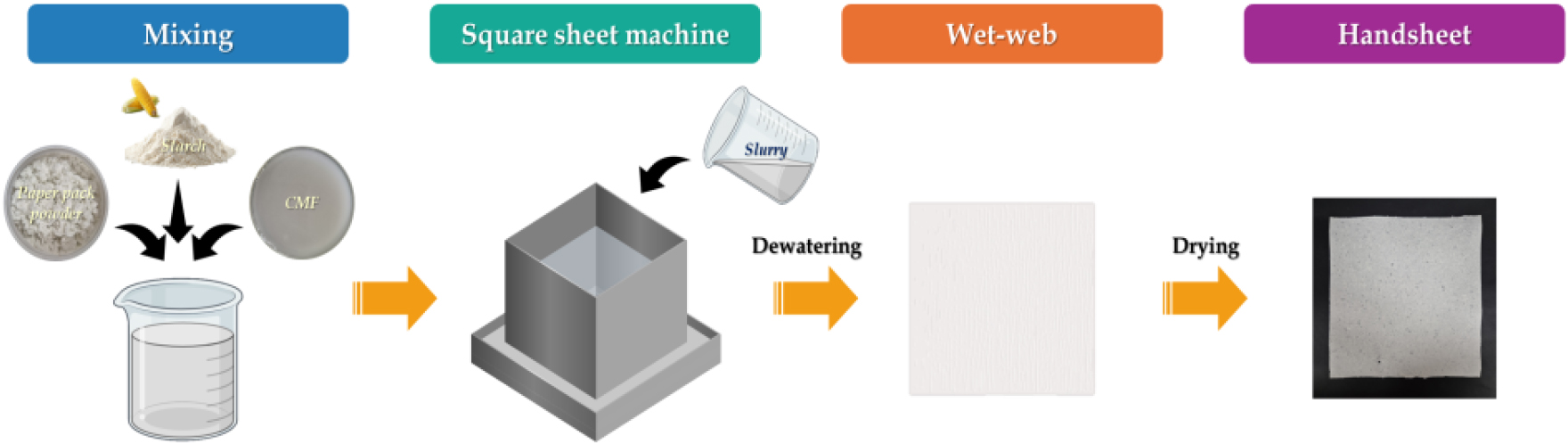
Handsheets were prepared following the procedure described by Tak et al. [4], using paper cup powder and CMF produced by different mechanical treatments. Fig. 2 shows the handsheet preparation process. Paper cup powder was dispersed in tap water, followed by the sequential addition of starch solution and CMF slurry. The mixture was stirred at 600 rpm for 2 min, and handsheets with a target grammage of 60 ± 5 g/m2 were prepared in accordance with TAPPI T 205 sp-06. The wet handsheets were pressed at 345 kPa for 5 min using a laboratory wet press (Model 326, Wintree Corporation, Osaka, Japan) and dried at 120°C using a cylinder dryer (Daeil Machinery Co., Ltd., Daejeon, Republic of Korea).
Before testing, the handsheets were conditioned at 23°C and 50% relative humidity. Tensile properties and burst strength were measured according to TAPPI T 494 om-06 and TAPPI T 403 om-10, respectively.
3. Results and Discussion
3.1 Characteristics of recycled paper cup powder prepared using a two-stage grinder
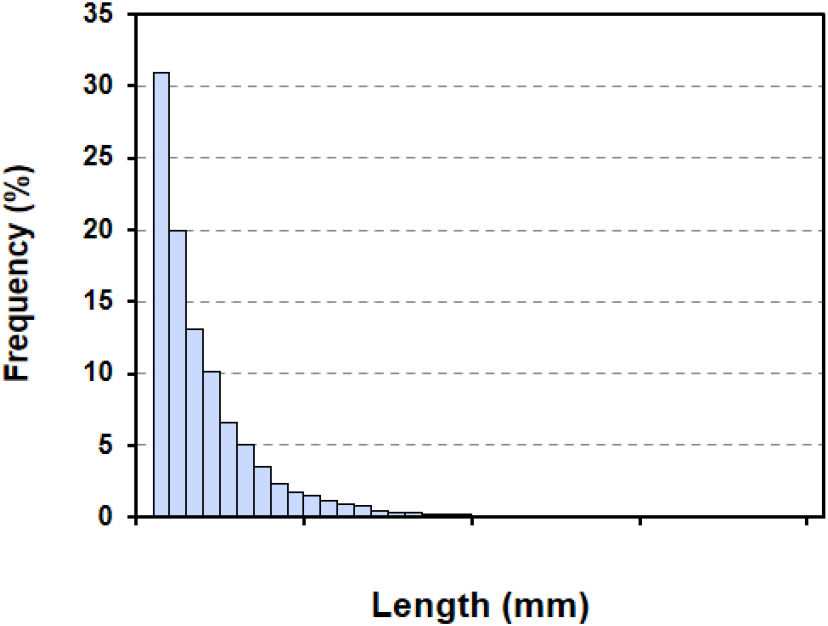
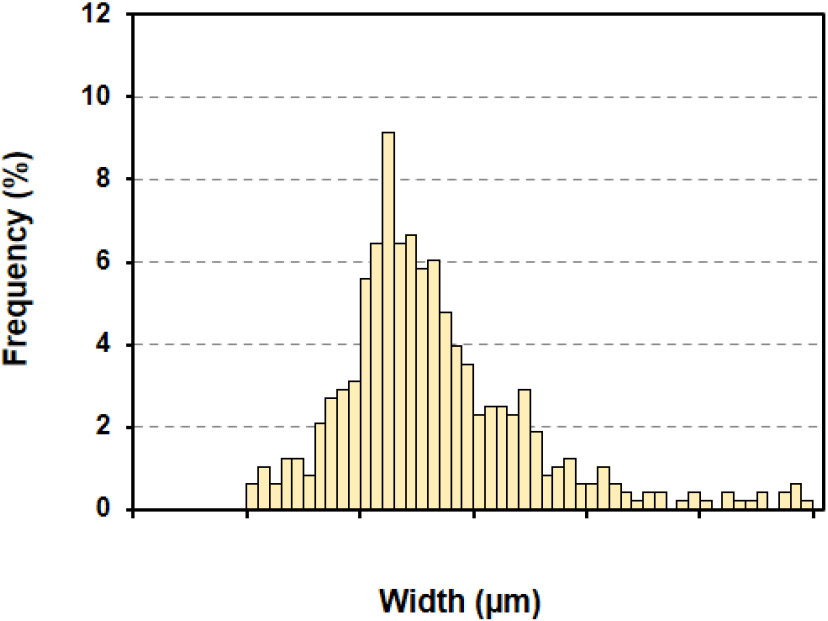
The average fiber length and width of the recycled paper cup powder prepared using the two-stage grinder were 0.44 mm and 25.3 µm, respectively (Table 1). As shown in Figs. 3 and 4, the fiber length distribution was skewed toward shorter fibers, with the frequency decreasing as fiber length increased. In contrast, the fiber width showed a more concentrated distribution. The two-stage grinding process thus produced paper cup powder containing a high proportion of short fibers.
Table 1.
Characteristics of paper cup powder
| Average fiber length (mm) | Average fiber width (µm) |
| 0.44 ± 0.02 | 25.3 ± 0.3 |
In our previous study, paper cup powder prepared using a laboratory-scale grinder had an average fiber length of approximately 0.75 mm [4]. In contrast, the paper cup powder used in the present study was prepared using a two-stage grinder operated at 240 rpm and a linear speed of 1.08 m/s, resulting in a shorter average fiber length of 0.44 mm. The difference in fiber length may be attributed to the different grinding equipment and processing conditions. However, the influence of individual grinding parameters cannot be determined from the present results.
3.2 Characteristics of CMF prepared using a micro-grinder
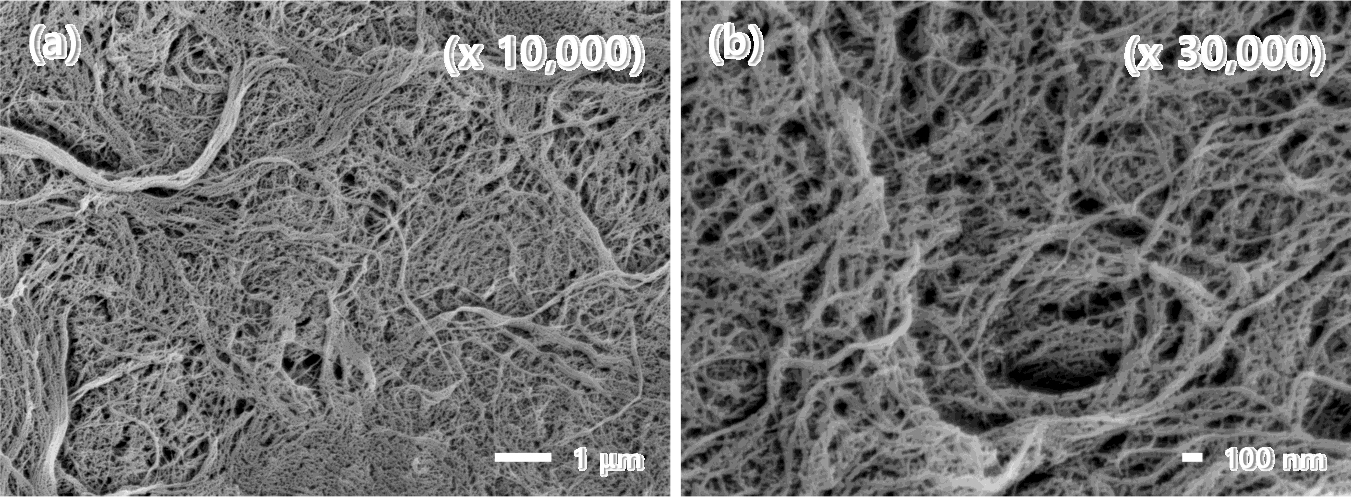
Table 2 compares the characteristics of micro-grinder-prepared CMF with those of CMF prepared using a high-pressure homogenizer in our previous study [4]. The micro-grinder- prepared CMF had a low-shear viscosity of 1,106 cPs, an average apparent particle size of 23.4 µm, and an average fiber width of 34.1 nm. Its viscosity was higher than that of the previously reported CMF, whereas the differences in particle size and fiber width were relatively small. The FE-SEM images in Fig. 5 showed a heterogeneous morphology comprising fine fibrils and relatively coarse fiber bundles.
Table 2.
Characteristics of CMF prepared using a micro-grinder and a high-pressure homogenizer
|
Low-shear viscosity (cPs) |
Average particle size (µm) |
Average fiber width (nm) | |
| Micro-grinder CMF | 1,106 ± 70 | 23.4 ± 5.0 | 34.1 ± 15.1 |
| High-pressure homogenizer CMF (previous study) | 883 | 26.0 | 36.0 |
* Data for HPH-prepared CMF were obtained from our previous study [4] and are presented for comparison.
3.3 Effects of micro-grinder-prepared CMF on the mechanical properties of recycled paper cup powder-starch handsheets
Fig. 6 shows the tensile index of recycled paper cup powder-starch handsheets containing different amounts of micro-grinder-prepared CMF. The tensile index increased from approximately 11.3 N·m/g for the control to 27.2 N·m/g at 5 wt% CMF. A marked increase was observed at 1 wt% CMF, followed by smaller increases at higher addition levels. This suggests that adding a small amount of CMF substantially improved tensile strength. The fine fibrillar structure of CMF may provide additional contact points between fibers, promoting bonding within the fiber network.
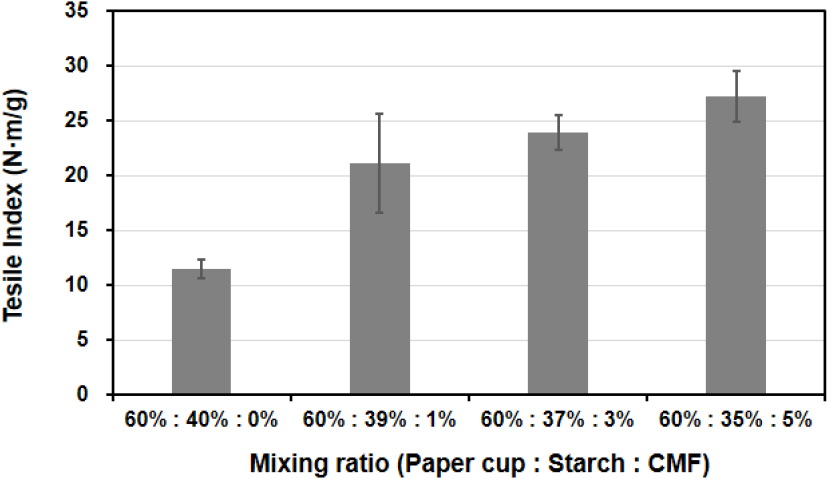
Fig. 7 shows the elongation at break of the handsheets containing different amounts of CMF. The elongation increased from approximately 1.3% for the control to 2.6% at 5 wt% CMF. Unlike the tensile index, the elongation increased more gradually with CMF content. The fine fibrils and entangled structure observed in Fig. 5 may have contributed to improved stress distribution within the fiber network, allowing the handsheets to undergo greater deformation before failure.
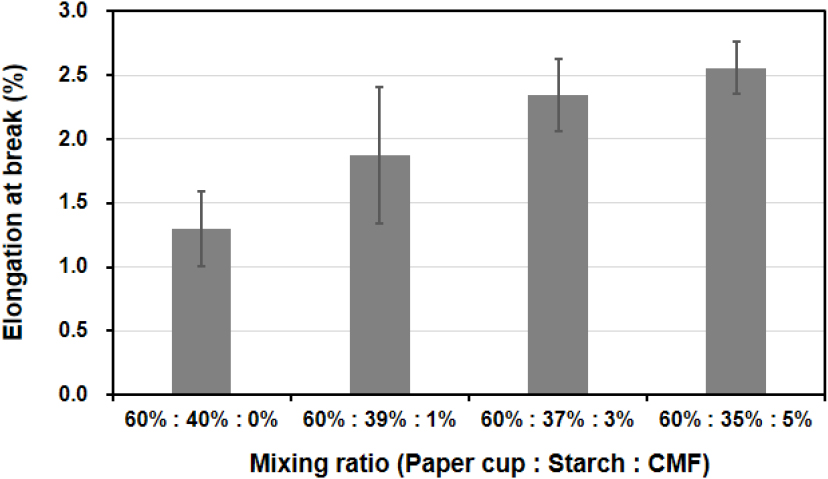
Fig. 8 shows the burst index for handsheets containing varying amounts of CMF. The burst index increased from approximately 7.4 kPa·m2/g for the control to 13.6 kPa·m2/g at 5 wt% CMF. At this addition level, the tensile and burst indices increased by approximately 141% and 84%, respectively, compared with the control. The greater increase in tensile index may be related to the different loading conditions used in the two tests. Tensile strength reflects the fiber network’s resistance to uniaxial loading, whereas burst strength is also influenced by sheet extensibility and resistance to multiaxial deformation. Thus, improved fiber bonding may not lead to the same degree of improvement in tensile and burst properties.
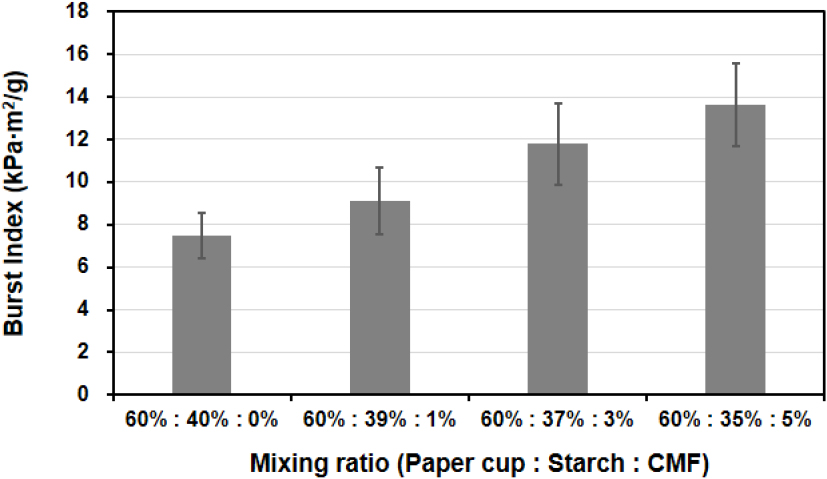
The addition of micro-grinder-prepared CMF improved the tensile index, elongation at break, and burst index of the handsheets. However, differences in CMF retention during sheet formation may have affected the final sheet composition and fiber network structure. In addition, because CMF partially replaced starch, the observed improvements may have been influenced by both the addition of CMF and changes in starch content. Therefore, the improvements in mechanical properties cannot be attributed solely to the reinforcing effect of CMF. The tensile and burst properties measured in this study provide an initial indication of the reinforcing potential of CMF in cellulose-based materials. However, these results cannot be directly applied to wet injection-molded products because of differences in processing conditions and internal structure. Further studies on the flexural and compressive properties of wet injection-molded products are needed to evaluate the reinforcing effect of CMF in practical applications.
4. Conclusions
This study investigated the reinforcing effect of CMF prepared using a micro-grinder on recycled paper cup powder-starch handsheets as model specimens for wet injection-molded composites. The recycled paper cup powder produced using a two-stage grinding process had an average fiber length of 0.44 mm. The CMF prepared by two passes through a micro-grinder had an average fiber width of 34.1 ± 15.1 nm and exhibited a heterogeneous structure consisting of fine fibrils and relatively coarse fiber bundles.
The addition of CMF improved the tensile index, elongation at break, and burst index of the handsheets, with the highest values obtained at 5 wt% CMF. The tensile index increased by approximately 141% relative to the control, indicating a greater relative improvement than the burst index. A substantial increase in tensile index was observed even at 1 wt% CMF, suggesting that a small amount of CMF may enhance bonding within the fiber network.
Therefore, micro-grinder-prepared CMF shows potential as a reinforcing material for recycled paper-based composites. However, as the present study was limited to handsheet testing, further investigation of the mechanical properties of actual wet-injection-molded products is needed to evaluate their practical applicability.