


1. Introduction
2. Materials and Methods
2.1 Materials
2.2 Preparation of kraft pulp and fibrillated lignocellulose fibers
2.3 Preparation of fibrillated lignocellulose films
2.4 Preparation of recycled fiber sheets
2.5 Fiber length analysis and particle size analysis (PSA) of fiber
2.6 Water retention value of fiber
2.7 Morphological characterization of films and sheets
2.8 Mechanical properties of fibrillated films
2.9 Physical properties of paper sheets
3. Results and Discussion
3.1 Fiber morphology and particle size distribution
3.2 Water retention value of fibers
3.3 Properties of fibrillated lignocellulose films
3.4 Properties of reinforced recycled newspaper-based paper sheets
4. Conclusions
1. Introduction
In recent years, the rapid expansion of online consumption has led to continuous growth in the logistics and packaging industries worldwide. Consequently, the demand for packaging materials has increased significantly, particularly for non-biodegradable materials such as plastic cushioning materials, expanded polystyrene, and plastic films, which are widely used to protect products during transportation [1]. Although these materials provide excellent cushioning performance and processability, they are primarily derived from petroleum-based polymers and contribute to environmental pollution after disposal. In particular, discarded plastic packaging materials have become a major environmental concern due to the generation of microplastics and the accumulation of plastic waste [2]. Therefore, the development of environmentally friendly packaging materials that can replace conventional plastic-based packaging has attracted increasing attention. As an alternative to conventional plastic packaging materials, paper-based packaging has received increasing attention for its renewable, environmentally friendly nature. Paper packaging is primarily produced from renewable biomass resources, such as cellulose pulp and recycled paper, and can be readily recycled or biodegraded after use. Furthermore, its environmental burden is generally lower than that of petroleum-based plastic materials, making it a promising option for the development of sustainable packaging systems [3,4,5,6].
Representative paper-based packaging materials, such as pulp-mold products, are commonly manufactured using various recycled fiber sources, including old newspapers (ONP), old corrugated containers (OCC), and old magazines (OMG) [7,8]. However, recycled fibers are subject to fiber shortening and structural damage during repeated use and reprocessing, resulting in reduced fiber length and, consequently, deterioration of their mechanical properties. In particular, recycled newspaper fibers contain various impurities originating from the printing process, including inks, adhesives, dyes, sizing agents, and coating agents. These substances can interfere with the formation of hydrogen bonds between fibers, thereby reducing the strength properties of the paper. Furthermore, repeated recycling decreases fiber flexibility and bonding ability, which can lead to reductions in the physical properties of the final products, such as tensile, burst, and compression strengths [9,10,11,12].
Accordingly, the use of nanocellulose has attracted considerable attention as a strategy for improving the mechanical performance and value of recycled fiber-based paper products [13,14,15,16]. Owing to its high aspect ratio, large specific surface area, and abundant hydroxyl groups, nanocellulose has been widely utilized as a reinforcing additive in paper and pulp-based materials [17,18,19,20]. In general, nanocellulose is produced from bleached chemical pulp through intensive mechanical treatments, such as high-pressure homogenization and grinding, often combined with pretreatment processes including TEMPO- mediated oxidation and enzymatic treatment [21,22,23,24,25]. However, these production processes are associated with high energy consumption, and substantial amounts of chemicals are required during bleaching and chemical pretreatment. Consequently, concerns regarding economic feasibility and environmental sustainability remain major challenges for the large-scale application of nanocellulose [26]. Accordingly, lignocellulose fibrillated materials produced without a bleaching process have emerged as a more sustainable alternative to conventional nanocellulose [27,28,29,30]. In addition, lignin is relatively more hydrophobic than cellulose and may reduce water absorption while improving the water resistance of paper-based materials. Therefore, lignin-containing fibrillated fibers have attracted interest as potential additives to enhance the mechanical properties and moisture resistance of paper products. Despite the effectiveness of nanocellulose as a reinforcing additive for recycled fiber-based paper products, increasing the degree of fibrillation is generally accompanied by higher production costs and energy consumption. Furthermore, highly fibrillated materials may cause process-related challenges, such as reduced drainage and retention during papermaking [31,32]. However, previous studies have primarily focused on the reinforcing effects of nanocellulose produced from bleached pulp, whereas the potential of lignin-containing fibrillated fibers has received relatively limited attention. In addition, most studies have investigated a single fibrillation level, and systematic comparisons of the reinforcing performance of lignocellulose fibers with different degrees of fibrillation remain scarce. Therefore, evaluating the effect of fibrillation level on the properties of recycled fiber-based paper products is necessary to identify an appropriate degree of fibrillation for practical applications. In this study, lignin-containing fibers with different fibrillation levels were prepared from softwood kraft pulp and applied as reinforcing additives for recycled newspaper-based paper sheets. The effects of fibrillation level and addition amount on the mechanical properties and water resistance of the resulting paper sheets were systematically investigated. Furthermore, the reinforcing performance of the lignocellulose fibers was compared with that of commercial bleached cellulose nanofibers (CNF) to assess their potential as sustainable additives for recycled fiber-based paper products.
2. Materials and Methods
2.1 Materials
ONP obtained from commercially distributed newspapers in Daegu, Republic of Korea, was used as the recycled fiber source without any deinking procedure. Pine (Pinus densiflora) wood chips were provided by the Korea Wood Chip Association (Republic of Korea). Polyamideamine-epichlorohydrin (PAE; KYMENE 777Lx, 12.6% total solid) and alkyl ketene dimer (AKD; HERCON 120, 20.1% total solid) were supplied by Solenis Chemical (Daejeon, Republic of Korea) and used as dry-strength and sizing agents, respectively. Commercial bleached CNF, supplied by Moorim P&P Co., Ltd. (Ulsan, Republic of Korea), were used as a reference material for comparison with the lignocellulose fibrillated fibers prepared in this study. The commercial bleached CNF contained less than 0.1% Klason lignin (TAPPI T 222).
2.2 Preparation of kraft pulp and fibrillated lignocellulose fibers
Kraft pulp was prepared from pine (P. densiflora) wood chips using an active alkali charge of 20% and a sulfidity of 20%. The liquor-to-wood ratio was maintained at 4:1 (w/w). Before cooking, the wood chips were soaked in the cooking liquor overnight. Kraft pulping was subsequently conducted at 170°C for 110 min (H-factor 1800). After cooking, the pulp was disintegrated and screened using a Somerville screen (Daeil Co., Ltd., Republic of Korea) to remove uncooked materials. The screened pulp exhibited a yield of 43% based on the oven-dry weight of the wood chips. The prepared kraft pulp contained 10.1% Klason lignin, as determined according to TAPPI T 222. The kraft pulp prepared was subjected to stepwise fibrillation to produce fibrillated lignocellulose fibers with different fibrillation levels. First, lignin-containing 100 CSF fiber (L-100CSF) was prepared by refining the kraft pulp using a Valley beater until a Canadian Standard Freeness (CSF) of 100 mL was reached. To prepare lignin-containing microfibrillated fibers (L-MFC), the L-100CSF suspension was diluted to 2 wt% and passed through a Supermasscolloider (MKZA10-15JIV, Masuko Sangyo Co., Ltd., Saitama, Japan) six times. Subsequently, the L-MFC suspension was diluted to 1 wt% and subjected to additional fibrillation using a high-pressure homogenizer (PandaPLUS 2000, GEA Niro Soavi, Parma, Italy) at 1,000 bar for five passes. The obtained nanofibrillated material was designated as lignin-containing cellulose nanofibers (L-CNF).
2.3 Preparation of fibrillated lignocellulose films
The prepared fibrillated lignocellulose suspensions (L-100CSF, L-MFC, and L-CNF) and commercial bleached CNF were diluted to a consistency below 0.12 wt%. Films were prepared by pressure filtration using a laboratory sheet former with a 16 cm diameter. The target grammage of the films was 30 g/m2. After filtration, the wet films were dried using a gel dryer (SE1160, Hoefer Inc., USA) at 70°C for 30 min.
2.4 Preparation of recycled fiber sheets
The newspaper was disintegrated at a consistency of 3 wt% using a laboratory disintegrator operating at 30,000 rpm, and the resulting slurry was diluted to 1 wt%. Recycled fiber sheets were prepared using a laboratory round mold with a 16 cm diameter and a target grammage of 240 g/m2. Commercial bleached CNF, L-100CSF, L-MFC, and L-CNF were incorporated by replacing 5, 10, or 20 wt% of the oven-dry ONP while maintaining a constant total fiber weight. PAE and AKD were added at 2.0 and 0.45 wt%, respectively, based on the oven-dry weight of the sheet. The amount of ONP was reduced accordingly to maintain a constant basis weight. The formed sheets were dewatered by vacuum filtration and pressed at 5 MPa for 1 min at room temperature. The sheets were subsequently dried at 90°C and hot-pressed at 230°C under 5 MPa for 2 min.
2.5 Fiber length analysis and particle size analysis (PSA) of fiber
Fiber morphology, including fiber length, fiber width, and fines content, was analyzed using a fiber image analyzer (Valmet FS5, Valmet, Finland). The particle size distribution of the fibrillated fibers was determined using a laser diffraction particle size analyzer (Mastersizer 3000, Malvern Instruments Ltd., Worcestershire, UK). Prior to analysis, the entire fiber suspensions (without separating the fines fraction) were diluted with distilled water, and particle sizes ranging from 0.1 to 1,000 µm were measured.
2.6 Water retention value of fiber
The water retention value (WRV) of the samples was determined according to TAPPI UM 256. A 10 mL fiber suspension at a consistency of 2 wt% was transferred to a 50 mL centrifuge tube equipped with a glass filter (1G4). The suspension was centrifuged at 3,000 × g for 20 min using a centrifuge (1580, Gyrozen Co., Ltd., Republic of Korea). The fiber wet mass was measured immediately after centrifugation. The fibers were then dried at 105°C for 3 h to determine the oven-dry mass. The WRV was calculated using the wet and oven-dry masses of the fibers (Eq. (1)).
where, is the wet mass after centrifugation and is the oven-dry mass of the fibers.
2.7 Morphological characterization of films and sheets
The surface morphology of the fibrillated lignocellulose films and paper sheets was examined using field-emission scanning electron microscopy (FE-SEM; SU8220, Hitachi, Japan). Prior to observation, the samples were sputter-coated with platinum using an ion sputter coater (E1030, Hitachi, Japan). SEM images were obtained at an accelerating voltage of 5 kV and a magnification of 1,000×. Film density was calculated from the measured mass and volume of the film specimens. The density of the films was calculated by dividing the measured mass by the calculated volume of each specimen (n = 10), and the results are presented as the mean ± standard deviation.
2.8 Mechanical properties of fibrillated films
The tensile index and elongation at break of the fibrillated lignocellulose films were measured using a universal testing machine (OTT-005, Oriental TM, Republic of Korea). The specimens were cut to dimensions of 120 mm × 15 mm. Tensile tests were performed using a 50 N load cell at a crosshead speed of 10 mm/min and a gauge length of 10 mm. Six replicates were tested for each sample, and the average values were reported.
2.9 Physical properties of paper sheets
The tensile index of the paper sheets was determined according to TAPPI T 494 using a universal testing machine (OTT-005, Oriental TM, Republic of Korea). The specimens were cut to dimensions of 120 mm × 15 mm. Tensile tests were conducted using a 50 N load cell at a crosshead speed of 10 mm/min and a gauge length of 100 mm. Four replicates were tested for each sample, and the average values were reported. The compressive index was measured according to KS M ISO 12192 using a ring crush test (RCT) apparatus (L&W Crush Tester). The specimens were prepared with dimensions of 12.7 mm × 152.4 mm, and three replicates were measured for each sample. The water absorbency of the sheets was evaluated using the Cobb test per TAPPI T 441. The Cobb120 value was determined by measuring the mass increase of the sheets after 120 s of water exposure.
3. Results and Discussion
3.1 Fiber morphology and particle size distribution
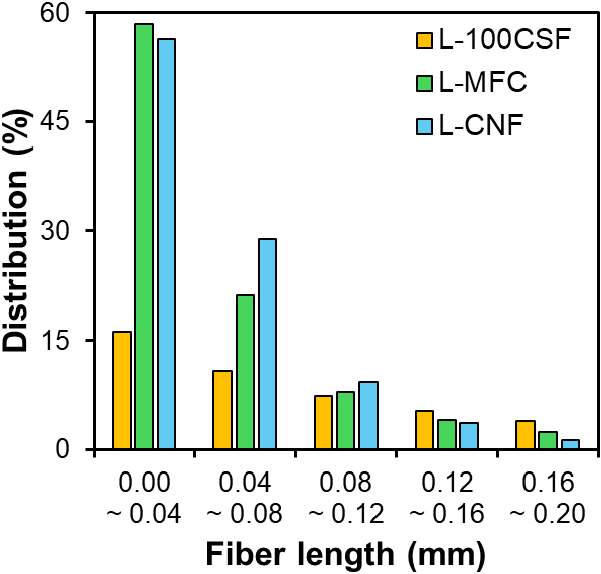
The fiber morphological characteristics of the recycled newspaper fibers and lignocellulosic fibers prepared at different fibrillation levels are presented in Table 1. The recycled newspaper fibers exhibited an average fiber length of 0.857 mm. The softwood kraft pulp used as the starting material for the preparation of the fibrillated fibers had a considerably longer average fiber length of 3.034 mm. As the degree of fibrillation increased, the average fiber length decreased to 0.450, 0.081, and 0.045 mm for L-100CSF, L-MFC, and L-CNF, respectively, while the fines content increased from 1.2% to 45.5%, 93.9%, and 99.3%. The commercial bleached CNF exhibited a fiber length of 0.101 mm and a fines content of 87.5%. L-MFC and L-CNF showed shorter fiber lengths and higher fines contents than the commercial CNF, indicating that a high degree of fibrillation was achieved despite the absence of a bleaching process. The decrease in fiber length and increase in fines content indicate progressive fibrillation of the lignocellulosic fibers during mechanical treatment [33,34]. The fiber length distribution of the fines fraction is presented in Fig. 1. As the degree of fibrillation increased, the proportion of fibers within the shortest length interval (0–0.04 mm) increased, whereas the fraction of longer fibers decreased. This tendency was most pronounced for L-CNF, which exhibited the highest proportion of fibers in the shortest length range. This trend was consistent with the changes in average fiber length and fines content shown in Table 1.
Table 1.
Results of fiber length analysis
| Sample |
Fiber length* (mm) |
Fiber width (µm) |
Fines (%) |
| Newspaper | 0.857 | 19.6 | 4.0 |
| Bleached CNF | 0.101 | 12.2 | 87.5 |
| L-Pulp | 3.034 | 36.8 | 1.2 |
| L-100 CSF | 0.450 | 19.9 | 45.5 |
| L- MFC | 0.081 | 10.2 | 93.9 |
| L-CNF | 0.045 | 6.9 | 99.3 |
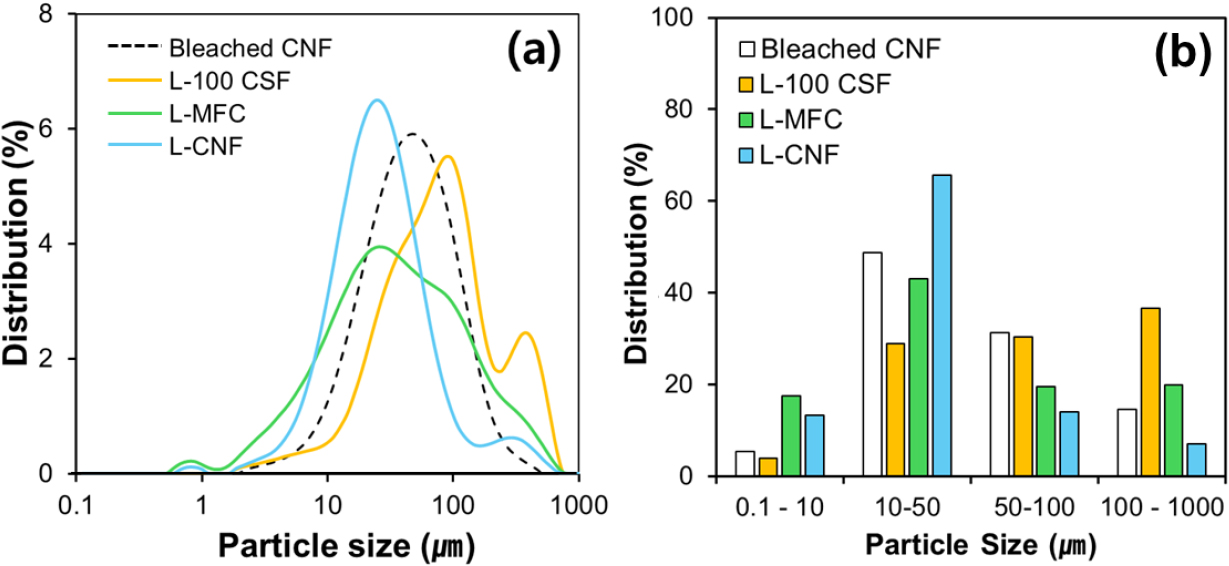
The particle size distribution of the entire fiber suspension is presented in Fig. 2. L-100CSF exhibited the broadest particle size distribution, with 36.9% of the particles distributed within the 100–1,000 µm range. In contrast, the proportion of particles larger than 100 µm decreased to 19.8% and 7.1% for L-MFC and L-CNF, respectively. Bleached CNF, L-MFC, and L-CNF exhibited the highest particle fractions within the 10–50 µm range, accounting for 48.7%, 43.0%, and 65.6%, respectively. Particularly, L-CNF showed a particle size distribution similar to that of the commercial bleached CNF, with approximately 80% of the particles distributed within the 10–100 µm range. Furthermore, bleached CNF and L-CNF exhibited distributions concentrated within a narrower particle size range, whereas L-100CSF and L-MFC showed broader distributions extending toward larger particle sizes. These results indicate that although a large proportion of the fibrillated material was classified as fines by fiber length analysis, notable differences remained in the apparent particle size distribution of the entire fiber suspension.
3.2 Water retention value of fibers
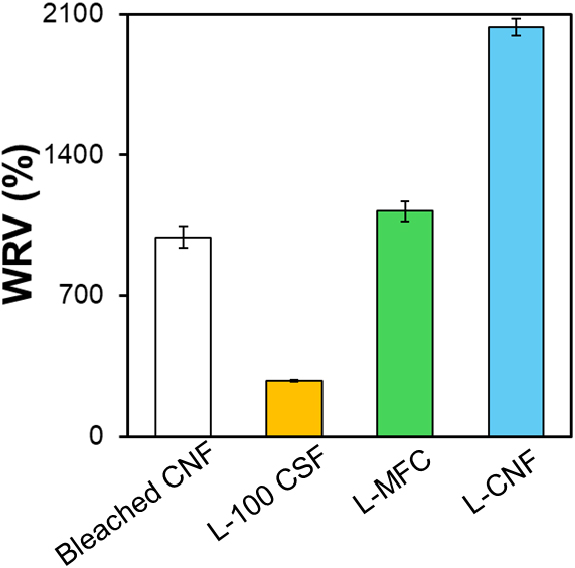
The WRV values of the fibrillated lignocellulose fibers are presented in Fig. 3. The WRV increased with increasing fibrillation level, indicating enhanced water-holding capacity of the fibers [35]. L-100CSF exhibited the lowest WRV among the fibrillated samples, whereas L-MFC and L-CNF showed substantially higher values. The increase in WRV can be attributed to the progressive disruption of the fiber cell wall during refining and fibrillation, which promotes fiber swelling and increases water accessibility within the fiber structure. In addition, external fibrillation increases the specific surface area of the fibers, providing additional sites for water retention [36,37,38]. L-MFC exhibited a WRV comparable to that of the commercial bleached CNF despite containing residual lignin and not being subjected to high-pressure homogenization. This observation is consistent with the particle size distribution shown in Fig. 2, where both materials exhibited similar proportions of particles within the smaller size ranges. Although lignin is generally considered hydrophobic [39], the comparable WRV values indicate that the effect of fibrillation on fiber swelling and water accessibility was greater than the influence of residual lignin. Among all samples, L-CNF exhibited the highest WRV. This result indicates that the additional homogenization treatment further enhanced fiber swelling and water retention by generating highly fibrillated structures. The higher WRV of L-CNF compared with the commercial bleached CNF further supports the development of a highly fibrillated and swollen fiber structure.
3.3 Properties of fibrillated lignocellulose films
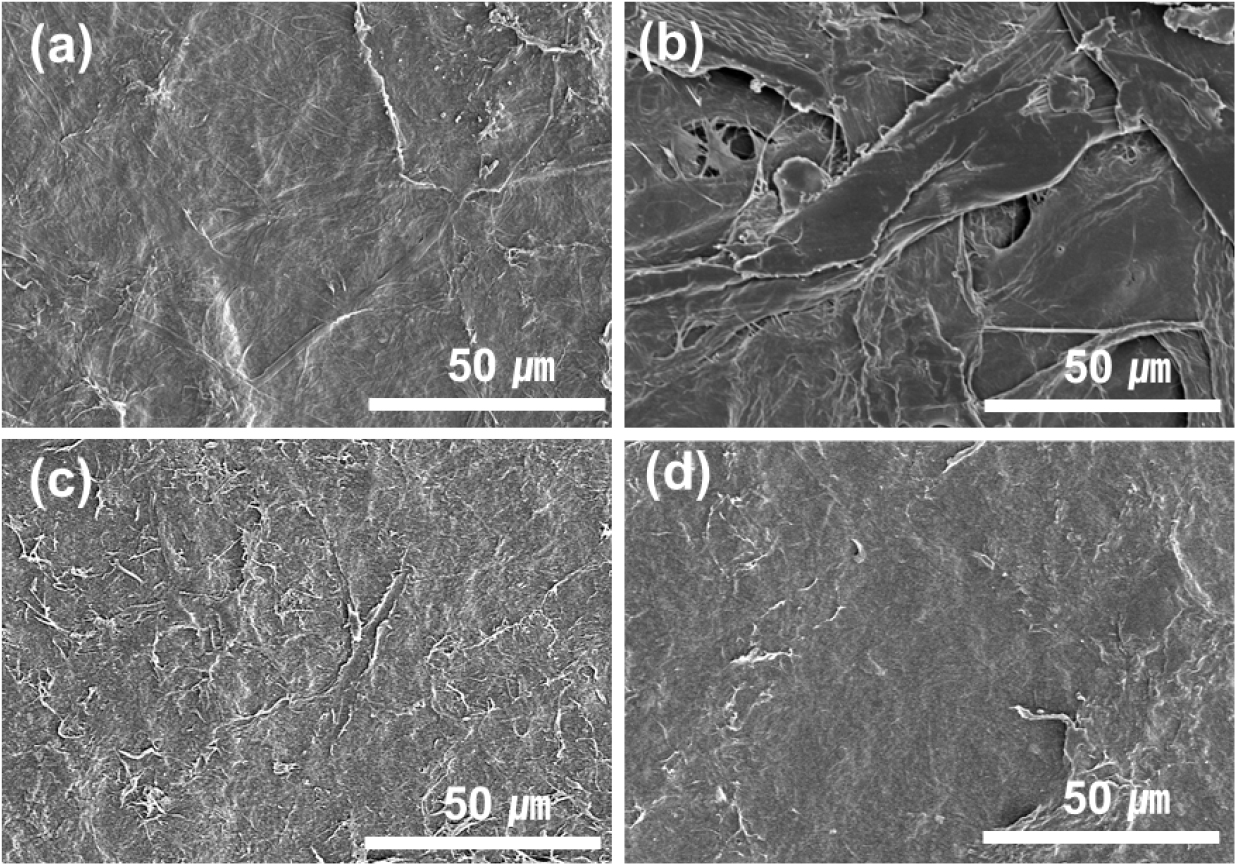
The surface morphologies of the films prepared from bleached CNF, L-100CSF, L-MFC, and L-CNF are presented in Fig. 4. Distinct differences in film structure were observed depending on the degree of fibrillation. The bleached CNF and L-CNF films exhibited relatively smooth and homogeneous surfaces with few visible fiber aggregates, indicating the formation of dense fibrillar networks. In contrast, the L-100CSF film exhibited a rough surface morphology, with large fiber bundles and voids, suggesting limited fibrillation and incomplete fiber consolidation during film formation. The surface of the L-MFC film was more uniform than that of the L-100CSF film but still contained visible fibrillar aggregates and surface irregularities. As the fibrillation level increased from L-100CSF to L-MFC and L-CNF, the fibrillar structures became progressively finer and more uniformly distributed, resulting in denser, smoother film surfaces. This observation is consistent with previous studies reporting that increased fibrillation leads to denser, more homogeneous film structures [40].
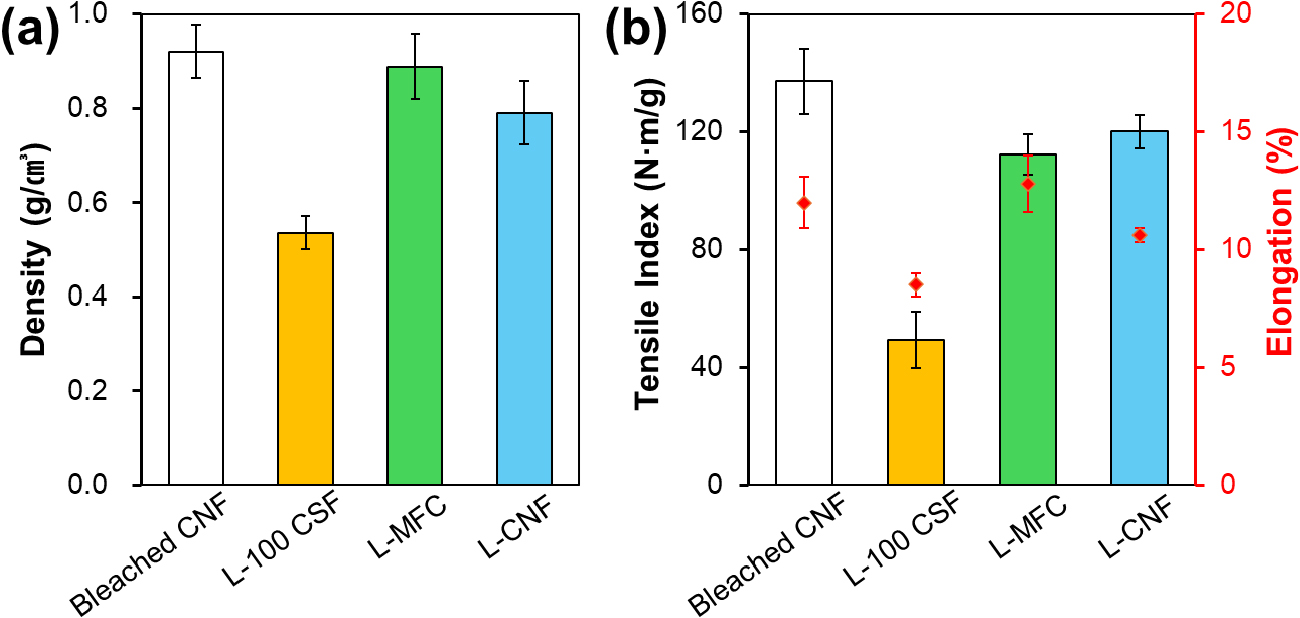
The density, tensile index, and elongation of the films prepared from bleached CNF, L-100CSF, L-MFC, and L-CNF are presented in Fig. 5. The density of the films tended to increase with increasing fibrillation level. The L-100CSF film exhibited the lowest density, whereas films prepared from more highly fibrillated fibers showed higher density values. This result is attributed to the reduction of void spaces within the film structure as fibrillation progressed. A similar trend was observed for the tensile index. Within the lignin-containing samples, the tensile index increased with increasing fibrillation level. The increased fines content, reduced particle size, and higher WRV values suggest that progressive fibrillation promoted closer contact between fibrils, resulting in stronger inter-fiber bonding [41]. Although L-CNF exhibited the highest tensile index among the lignin-containing fibers, its tensile performance remained lower than that of the commercial bleached CNF film. This difference may be attributed to residual lignin, which can partially limit hydrogen bond formation between adjacent cellulose fibrils [27]. Consequently, despite exhibiting a high degree of fibrillation, the lignin-containing fibers formed a less strongly bonded network than the bleached CNF. Meanwhile, the elongation values of L-MFC and L-CNF were higher than those of L-100CSF, showing a tendency similar to that observed for the tensile index.
3.4 Properties of reinforced recycled newspaper-based paper sheets
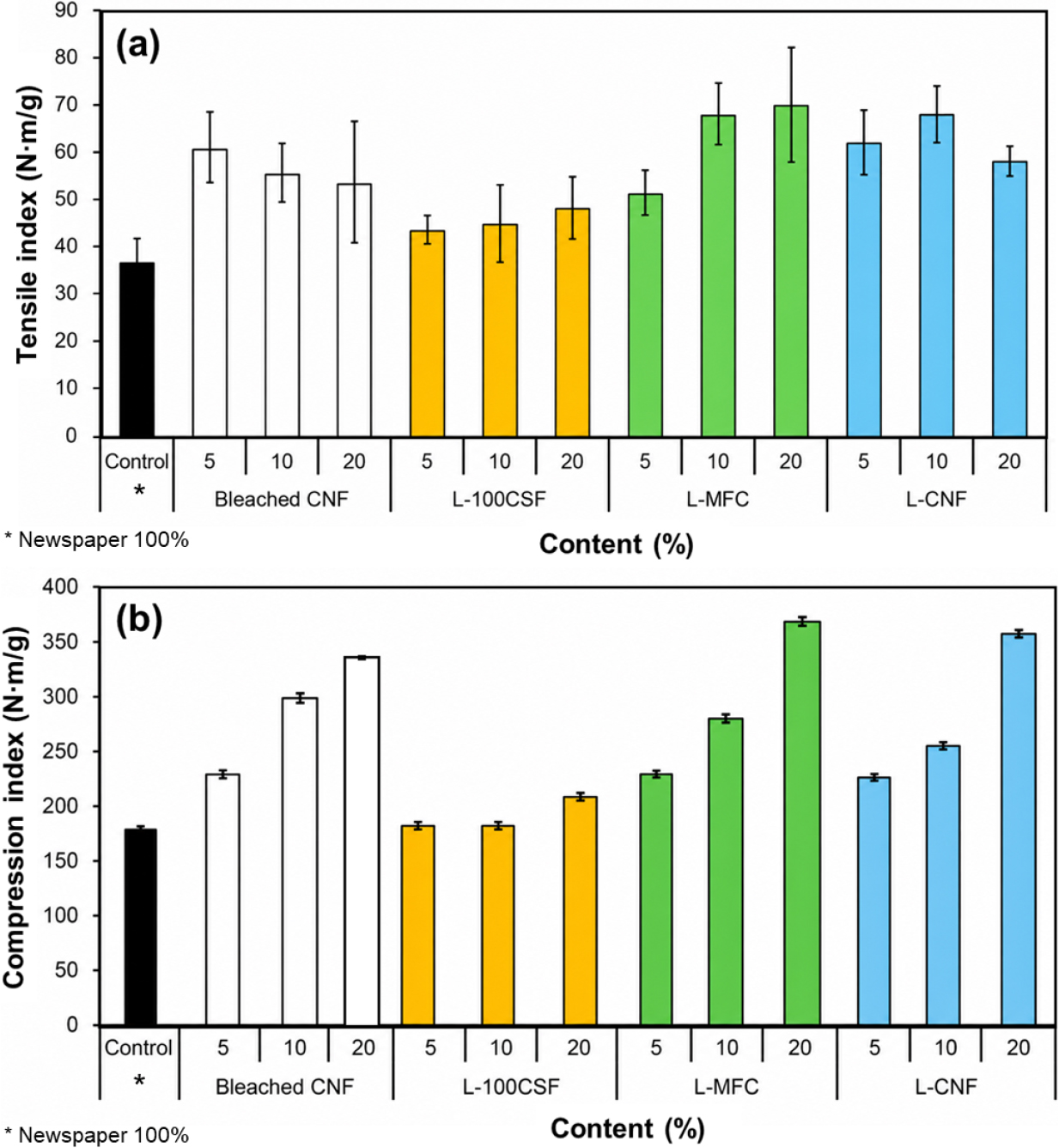
To compare the reinforcing performance of fibrillated fibers with different fibrillation levels, recycled newspaper-based paper sheets containing various amounts of bleached CNF, L-100CSF, L-MFC, and L-CNF were prepared, and their tensile and compression properties are presented in Fig. 6. All fibrillated fiber additives improved the mechanical properties of the recycled paper compared with the control sheet, suggesting that the fibrillated fibers contributed to improved bonding between recycled fibers. The reinforcing effect varied depending on the degree of fibrillation and the addition level. Among the lignin-containing fibers, the tensile index increased from 43.1 to 48.0 N·m/g for L-100CSF as the addition level increased from 5% to 20%, corresponding to improvements of approximately 19–30% compared with the control. Although the reinforcing effect was lower than that of L-MFC and L-CNF, the results indicate that partially fibrillated fibers can still contribute to strength development in recycled fiber-based paper sheets. Among the lignin-containing fibers, L-MFC exhibited the highest tensile and compression indices under the present experimental conditions. The tensile index increased from 51.1 to 69.8 N·m/g as the addition level increased from 5% to 20%, corresponding to improvements of approximately 38–89% relative to the control sheet. The compression index showed a similar trend, increasing from 229 to 368 N·m/g. The superior performance of L-MFC may be attributed to its relatively high degree of fibrillation, which allows it to retain a larger fiber size than L-CNF. In contrast, L-CNF exhibited the highest tensile index at a 10% addition level, reaching 68.0 N·m/g, but a slight decrease was observed at 20% addition. A similar tendency was observed for the bleached CNF. This behavior may be attributed to the excessive proportion of fines introduced at high addition levels. As the addition level increased, the proportion of recycled fibers decreased, and part of the highly fibrillated fines may have been lost during sheet formation [42]. In addition, residual lignin may also have partially limited hydrogen bonding between adjacent fibers, contributing to the observed differences in reinforcing performance.
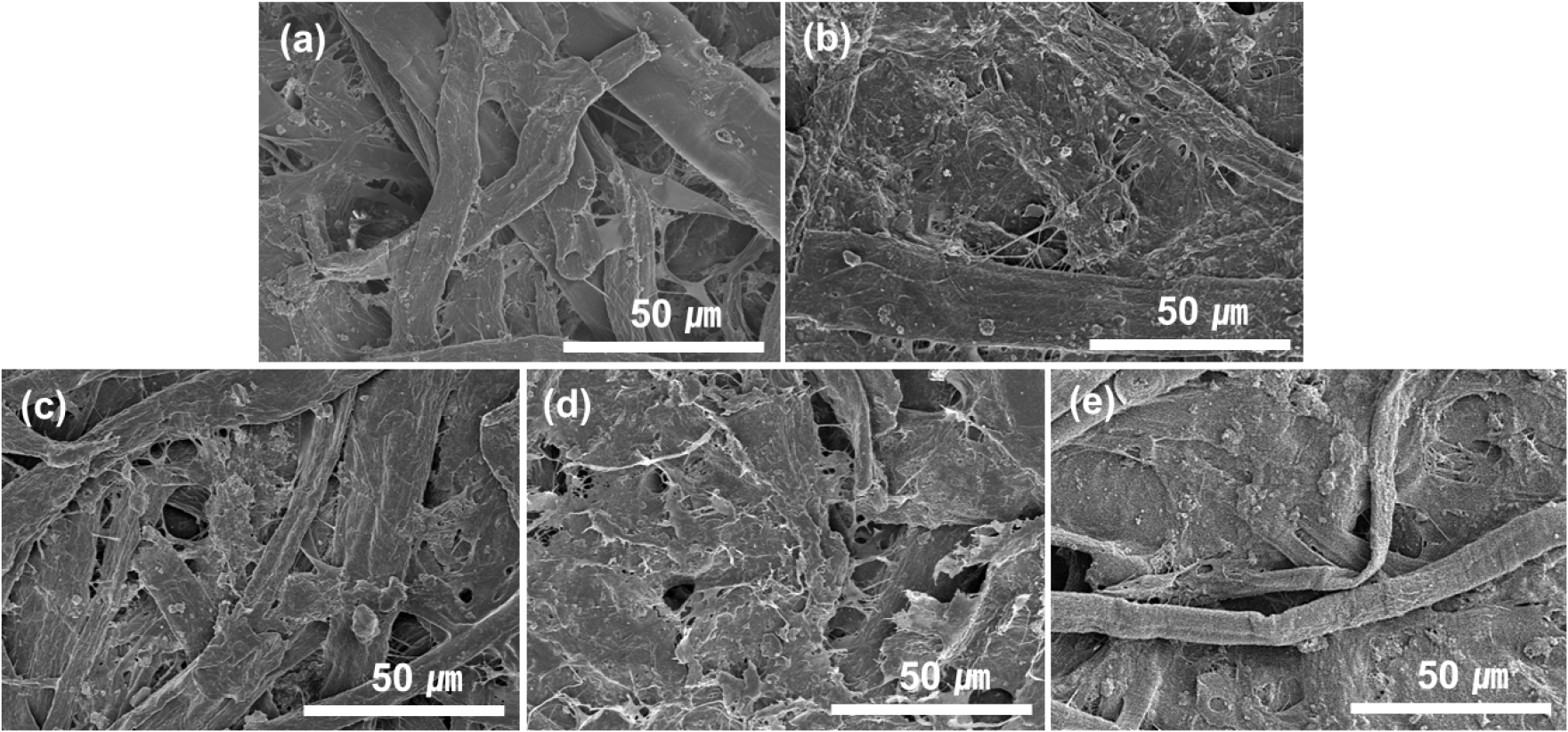
To further examine the structural changes associated with the improved mechanical properties, the surface morphologies of recycled newspaper-based paper sheets containing 10 wt% of the fibrillated fiber additives were observed by FE-SEM, and the results are presented in Fig. 7. The control sheet exhibited a porous structure in which individual recycled fibers were clearly distinguishable, and relatively large voids were observed between adjacent fibers. In addition, small particles originating from fillers, printing residues, and other impurities commonly present in recycled newspaper fibers were observed on the fiber surfaces [43]. The sheets containing fibrillated fibers exhibited surface morphologies different from those of the control sheet. Although only 10 wt% of the fibrillated fibers was added, changes in the arrangement and coverage of the fiber surfaces were observed, indicating that the fibrillated materials were incorporated into the recycled fiber network during sheet formation. The SEM observations support the mechanical property results shown in Fig. 6, suggesting that the fibrillated fibers contributed to changes in the paper structure, which were associated with the improved tensile and compression properties.
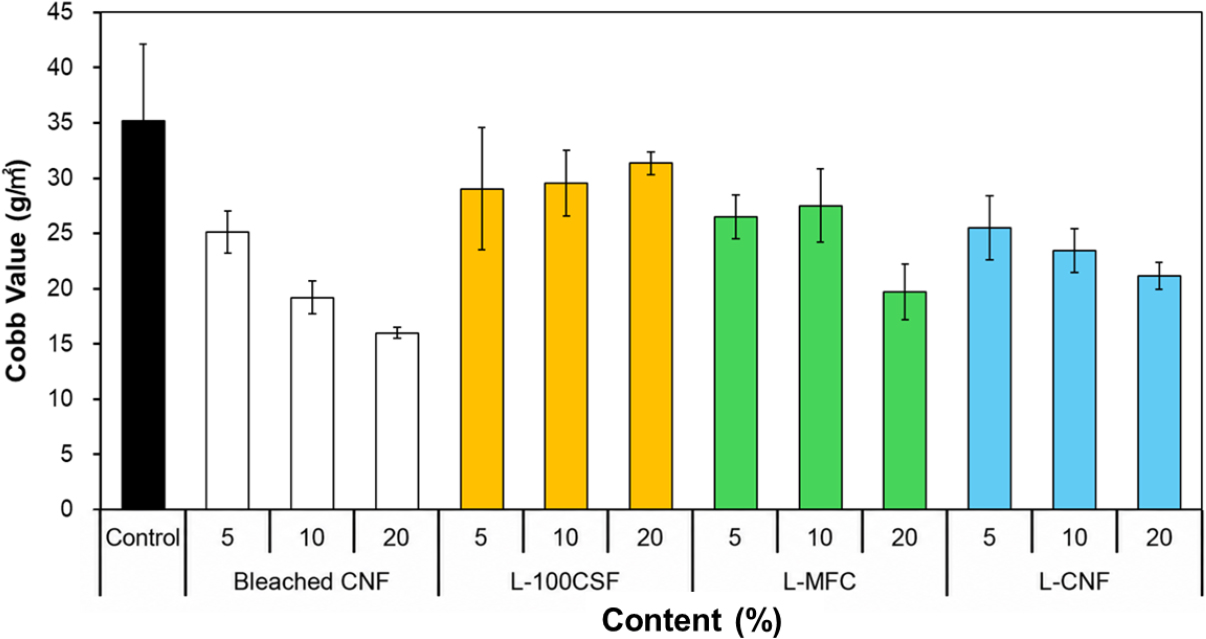
The Cobb values of recycled newspaper-based paper sheets reinforced with fibrillated fibers are presented in Fig. 8. The control sheet exhibited the highest Cobb value of approximately 35 g/m2, indicating a relatively high water absorption capacity. In contrast, the addition of fibrillated fibers generally reduced the Cobb value, suggesting improved water resistance of the paper sheets. The extent of improvement depended on both the fibrillation level and the amount of addition. Bleached CNF showed the greatest reduction in Cobb value, decreasing from 25.1 g/m2 at 5% addition to 15.9 g/m2 at 20% addition. Similar trends were observed for L-MFC and L-CNF, whose Cobb values decreased to 19.7 and 21.2 g/m2, respectively, at an addition level of 20%. In contrast, L-100CSF exhibited relatively high Cobb values across all addition levels, indicating a limited effect on water resistance. The improved water resistance of the highly fibrillated samples is attributed to their ability to form a denser fiber network, thereby reducing water accessibility within the paper structure. The fibrillated materials likely occupied inter-fiber spaces and increased fiber-fiber contact, thereby limiting water penetration into the sheet [44]. Among the lignin-containing samples, L-MFC exhibited the most balanced improvement in tensile strength, compression strength, and water resistance, suggesting that an intermediate fibrillation level is more effective than complete nanofibrillation for reinforcing recycled paper sheets. These results demonstrate the potential of fibrillated lignocellulose fibers as multifunctional additives for improving both the mechanical properties and moisture resistance of recycled fiber-based materials, providing fundamental information for the development of high-performance paper packaging and pulp-mold products.
4. Conclusions
Lignin-containing fibers with different fibrillation levels were prepared from softwood kraft pulp and evaluated as reinforcing additives for recycled newspaper-based paper sheets. Increasing fibrillation reduced the fiber length from 0.450 mm for L-100CSF to 0.081 and 0.045 mm for L-MFC and L-CNF, respectively, while increasing the fines content from 45.5% to 93.9% and 99.3%. All fibrillated fibers improved the mechanical properties of recycled paper sheets compared with the control. Among the lignin-containing fibers, the sheet containing 20 wt% L-MFC exhibited the best overall performance, showing a tensile index of 69.8 N·m/g and a compression index of 368 N·m/g, corresponding to improvements of 89% and 104%, respectively, compared with the control sheet. In addition, the Cobb value decreased from 35.1 to 19.7 g/m2. These results suggest that L-MFC is a promising reinforcing additive for simultaneously improving the mechanical properties and water resistance of recycled newspaper-based paper sheets.