


1. Introduction
2. Materials and Methods
2.1 Materials
2.2 Methods
3. Results and Discussion
3.1 Comparison of fractionation efficiency according to fractionation methods
3.2 Comparison of drainage properties of OCC recycled stock according to fractionation methods
3.3 Comparison of strength properties of OCC recycled paper according to white water cleaning fractionation methods
4. Conclusions
1. Introduction
With the growth of the domestic packaging and delivery market and the expansion of e-commerce, the demand for corrugated board has increased, resulting in a continuous rise in the production of recycled paper derived from OCC (Old Corrugated Containers) [1,2,3]. In OCC recycling processes, efforts to reduce water consumption have led to increased recirculation of process water, causing the accumulation of suspended solids in white water and consequently resulting in dewatering problems, equipment contamination, and deterioration in paper quality [4,5]. In particular, the accumulation of ash in process water has been identified as one of the major factors contributing to the degradation of recycled paper quality [6].
The ash contained in white water from OCC recycling processes mainly consists of inorganic particles such as calcium carbonate (CaCO3) and kaolin clay, which originate from fillers and inorganic coating pigments. These particles interfere with the formation of hydrogen bonds between fibers, thereby reducing the strength and stiffness of paper [6,7,8]. In contrast, fines can play a positive role in improving paper strength by increasing the bonding area between fibers and enhancing sheet consolidation [9,10,11]. Therefore, for the efficient reuse of OCC white water, a fractionation strategy is required that selectively removes ash while maximizing the retention and recovery of fines that contribute to strength development.
In Korea, dissolved air flotation (DAF) is commonly applied in wastewater treatment systems of OCC recycling processes to recover suspended solids from process water [12]. As a result, relatively small ash particles, which are more readily recovered through DAF, can be collected effectively. However, larger ash particles tend to settle rather than float during the DAF process and are consequently discarded as solid waste from wastewater treatment facilities. It has been reported that paper strength deteriorates more significantly as the particle size of ash decreases. Nevertheless, relatively larger ash particles, which are more likely to be retained through filtration, are not effectively recovered, whereas finer ash particles, which are difficult to retain and exert more detrimental effects on paper strength, may instead be recovered and reintroduced into the papermaking process. This phenomenon raises concerns regarding adverse effects on both the quality and productivity of recycled paper production.
To address these limitations, the present study attempted to apply a hydrocyclone, which separates particles based on differences in specific gravity, for the fractionation of suspended solids in process water, aiming at the selective separation of ash and fines. The fractionation performance and fiber loss behavior may vary depending on the operating mode of the hydrocyclone [13]. In particular, it was anticipated that a simple single-step cleaning process would have limitations in achieving the desired separation objective of removing ash while retaining fines from white water containing particles with broad size distributions [14]. Therefore, more efficient control of ash in process water using hydrocyclones requires not merely a single-step cleaning process but rather a multi-step fractionation strategy that considers particle size and distribution characteristics. Such an approach was expected to enable cumulative classification according to particle size and density at each step, thereby allowing selective fractionation of ash particles based on their size.
Accordingly, this study investigated two types of two-step hydrocyclone cleaning treatments for silo white water obtained from OCC recycling processes. The first involved reclassifying the reject fraction from an accept recirculation cleaning process using an additional accept recirculation cleaning treatment, while the second involved subjecting the reject fraction obtained after Tetradeca-cleaning system and accept recirculation cleaning loop. The fractionation performance of these two approaches was compared and evaluated. To quantify the separation behavior of ash and fines, solids concentration and ash content at each fractionation stage were measured under each condition, and mass balances were calculated. Furthermore, the fractionated white water was incorporated into OCC recycled furnish, and the effects on dewatering properties and handsheet strength were evaluated to assess how white water fractionation influences the performance of OCC recycled paper.
2. Materials and Methods
2.1 Materials
2.1.1 Process water
Silo white water was collected from the OCC recycling process at AJIN P&P, a corrugating base paper manufacturing facility, and used as the process water for the experiments. Detailed characteristics of the collected white water are presented in Table 1.
Table 1.
Characteristics of silo white water
| Items | Value |
| Consistency (%) | 0.11 |
| pH | 7.9 |
| Conductivity (µS/cm) | 6,500 |
| Calcium Hardness (ppm) | 3,000 |
2.1.2 Testliner
To investigate the effects of cleaner-fractionated white water on the dewatering behavior and strength properties of recycled paper, OCC recycled stock was prepared using the fractionated white water. The paper (Testliner) used for stock preparation was provided by AJIN P&P, and its properties after conditioning were summarized in Table 2.
Table 2.
Physical properties of testliner measured after conditioning
| Items | Value |
| Grammage (g/m2) | 300 |
| Thickness (µm) | 420 |
| Density (g/cm3) | 0.71 |
| Bulk (cm3/g) | 1.4 |
2.2 Methods
2.2.1 Hydrocyclone
In this study, a Twister Hydrocyclone (hereafter referred to as the “Twister”), a representative heavy contaminant removal cleaner manufactured by Valmet and widely used in industrial papermaking processes, was employed. Although the Twister is classified as a low-consistency cleaner, it is designed to operate at feed consistencies of up to approximately 2%. Owing to this capability, it provides excellent removal efficiency of contaminants such as sand and metallic particles, thereby improving both papermachine runnability and the quality of final paper products.
Due to experimental constraints, the flexible impeller pump available in the laboratory was unable to provide a sufficient discharge flow rate for operating the Twister at its industrial design flow rate of 270 L/min. Furthermore, operating the cleaner at flow rates exceeding 270 L/min would have required an excessive volume of process water for laboratory-scale experiments. Therefore, in this study, only one of the three cones constituting the Twister was connected to the pump and operated. A schematic diagram and detailed specifications of the cleaner are presented in Fig. 1 and Table 3, respectively.
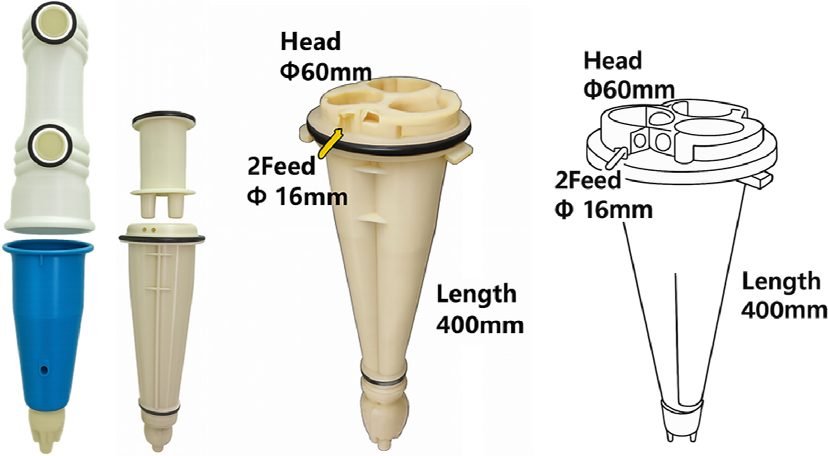
Table 3.
Technical specifications of the Twister Hydrocyclone
| Items | Value |
| Diameter of head (mm) | 60 |
| Diameter of feed inlet (mm) | 16 |
| Total length (mm) | 400 |
| Chamber length (mm) | 100 |
| Cone length (mm) | 300 |
2.2.2 Cleaner fractionation
The performance of cleaner fractionation is strongly influenced by operating conditions, including flow rate, pressure differential, reject ratio, feed consistency, and the characteristics of the processed material. In this study, to compare different fractionation strategies (multi-step cleaning and accept recirculation cleaning loop), only the fractionation mode was varied while maintaining identical baseline operating conditions, such as flow rate and reject ratio.
Based on the results of previous studies, the cleaner flow rate was set at 105 L/min, and the reject discharge rate was maintained at 4% [15]. Both fractionation methods were conducted over two steps, the first cleaning steps was designated as the 1st pass, and the second cleaning step as the 2nd pass.
2.2.2.1 Fractionation by two accept recirculation cleaning loops
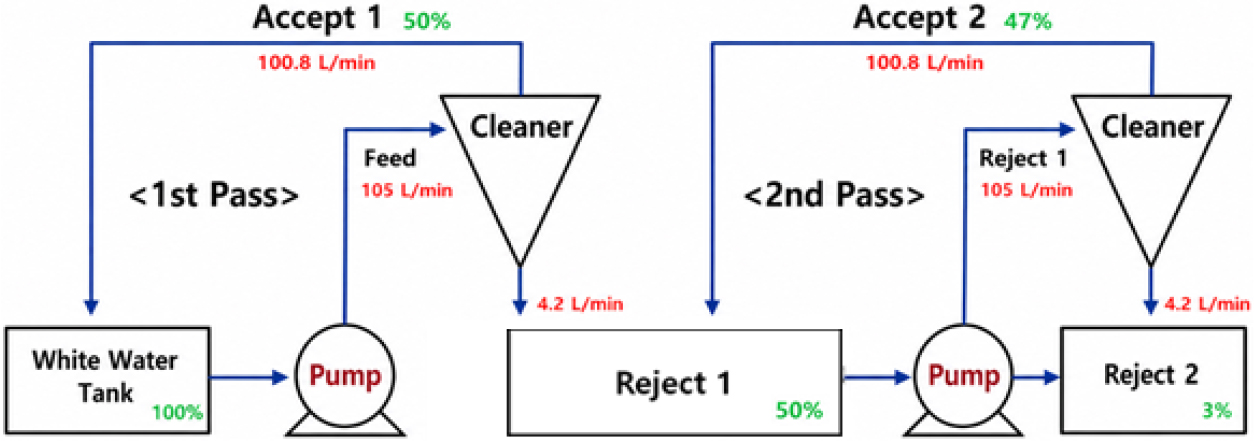
The accept recirculation cleaning process was conducted by recirculating the fractionated accept back into the white water tank while maintaining constant cleaner operating conditions until the target amount of reject was recovered. Both the 1st pass and 2nd pass were performed using the same procedure. In the 1st pass, reject corresponding to 50% of the total feed volume was recovered. In the 2nd pass, reject corresponding to 6% of the Reject 1 volume was collected, which was equivalent to 3% of the initial feed volume. A schematic diagram of the accept recirculation cleaning loop is presented in Fig. 2.
2.2.2.2 Fractionation by Tetradeca-cleaning system and accept recirculation cleaning loop
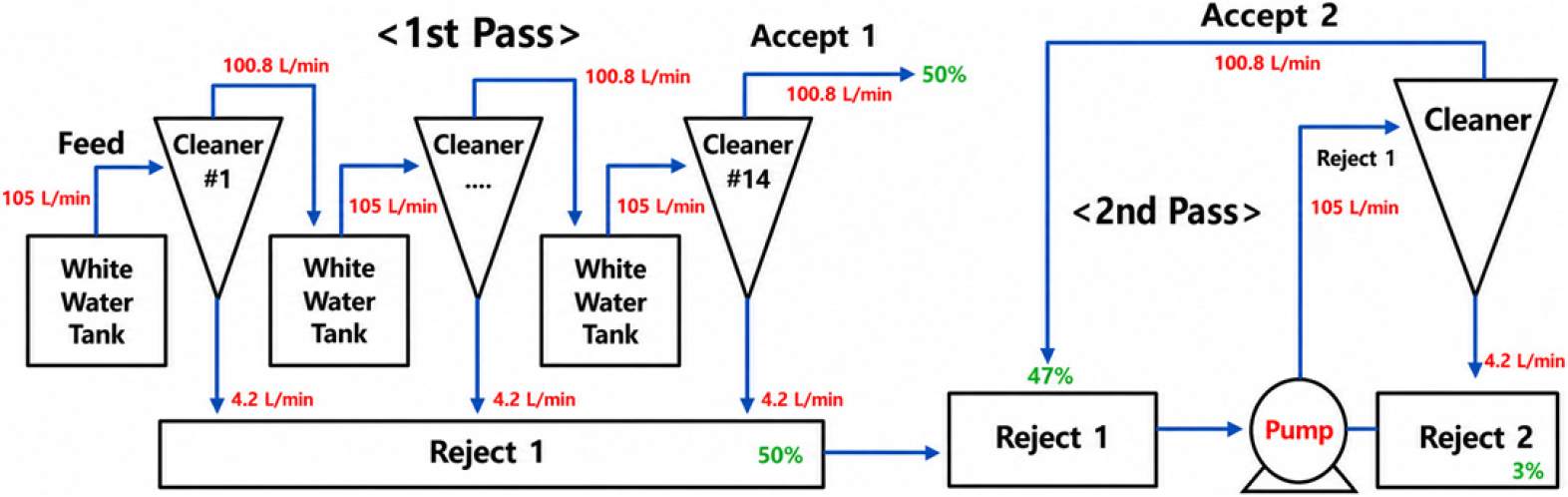
In the Tetradeca-cleaning fractionation process, rejects and accepts were separated through a single pass of the cleaner without recirculation of the cleaner accept. Specifically, white water stored in the feed tank was supplied to the cleaner, and the resulting accept and reject fractions were collected separately in individual tanks. After all white water in the feed tank had been processed, the accept tank was used as the new feed tank and subjected to cleaner treatment under the same operating conditions. This procedure was repeated until the volume ratio of cleaning accept to reject reached 50:50.
The 2nd pass cleaning treatment was performed in the same manner as the accept recirculation fractionation process, in which white water was recirculated while recovering reject corresponding to 6% of the feed volume. A detailed schematic diagram of the cleaner fractionation process is presented in Fig. 3.
2.2.3 Measurement of solids concentration and ash content
The solids concentration of cleaner-fractionated white water was measured to determine the reject thickening factor (T), defined as the ratio of reject consistency to inlet consistency (T = Cᵣ/Cᵢ), while the ash contents of the accept and reject fractions were analyzed to evaluate the fractionation efficiency of the cleaning process.
The solids concentration of white water was determined by measuring the dry weight of solids collected through dewatering using a Büchner funnel, followed by drying in an oven at 105°C for 30 min. The ash content of the cleaning accept and reject fractions was determined by incinerating the oven-dried solids in a muffle furnace at 525°C for 4 h, and subsequently measuring the residual mass after combustion.
2.2.4 Stock preparation
2.2.4.1 Pulping and screening of linerboard
The disintegration of linerboard was carried out using a laboratory pulper. The pulp consistency was adjusted to 5%, and the disintegration water was maintained at 45°C. The stock was disintegrated for 10 min under an rotor rotational speed of 800 rpm.
As a portion of undispersed flakes remained in the disintegrated stock, the pulped stock was subjected to a screening process. For this purpose, the disintegrated stock was diluted tenfold to a consistency of 0.5% and then screened using a pilot-scale screening system manufactured by Lamort. After screening, the stock consistency was measured, and the screened stock was diluted with fresh water to obtain a final consistency of 0.3%.
2.2.4.2 Dilution and thickening of fractionated white water
After determining the solids concentration of white water obtained from each fractionation stage, the consistency was adjusted to 0.3% by dilution when the concentration exceeded 0.3%, or by concentration when it was below 0.3%.
Dilution was performed using water prepared by dissolving calcium chloride (Calcium Chloride, Kanto Chemical Co., Inc., Japan) in distilled water to match the calcium hardness of the original white water. Concentration was achieved by allowing suspended solids in the white water to settle for 24 h, followed by removal of the supernatant to obtain a final consistency of 0.3%.
2.2.5 Handsheet forming and evaluation of drainage
2.2.5.1 Freeness measurement
The freeness of the prepared stock was measured using a Canadian Standard Freeness (CSF) Tester (L&W, Sweden).
2.2.5.2 Handsheet forming using a Wet End Process Simulator
Handsheets were molded using a Wet End Process Simulator (WEPS) (Sambo Scientific Co., Korea). The basis weight of the handsheets was 150 g/m2, and to simulate practical papermaking conditions in industrial production, 300 ppm of cationic polyacrylamide (C-PAM) as a retention aid and 1,500 ppm of bentonite, both provided by a domestic chemical supplier (SNF Korea), were added to the stock.
In addition, to compare the dewatering efficiency of wet webs, the Final Air Permeability (FAP) value measured by the WEPS was determined. The dewatering properties of the stock were evaluated based on both the FAP results and freeness measurements.
2.2.6 Measurement of handsheet properties
Prior to strength measurements, the handsheets were conditioned for 24 h under standard atmospheric conditions of 23°C and 50% relative humidity, in accordance with ISO 187.
As key strength properties required for corrugated paper, which was the target paper grade in this study, the burst strength (ISO 2758, Bursting Strength Tester, L&W, Sweden), compression strength (ISO 12192, Crush Tester, L&W, Sweden), and internal bond strength (ISO 16260, Internal Bond Tester, IDM, Spain) of the handsheets were measured.
3. Results and Discussion
3.1 Comparison of fractionation efficiency according to fractionation methods
3.1.1 Reject thickening factor
The reject thickening factor is a representative parameter used to evaluate the fractionation efficiency of cleaners, indicating the degree of solids concentration increase in the reject fraction relative to the feed [16]. In general, hydrocyclones separate ash and contaminants with relatively high specific gravity and larger particle size into the reject fraction, while finer fibers with lower specific gravity tend to be classified into the accept fraction. In this process, a greater degree of solids concentration in the reject fraction indicates more effective selective removal of ash and contaminants. Therefore, a higher reject thickening factor, defined as the ratio of reject consistency to feed consistency, reflects superior fractionation efficiency of the cleaner.
The reject thickening factors obtained from fractionation by two consecutive accept recirculation cleaning loops are presented in Fig. 4, whereas those obtained from fractionation by a Tetradeca-cleaning system followed by an accept recirculation cleaning loop are shown in Fig. 5. Under both operating modes, the reject thickening factor increased substantially in the 2nd pass compared with the 1st pass, indicating that solids concentration in the reject fraction became more effective through the two-step fractionation process. This behavior is attributed to the initial removal of high-density particles during the 1st pass, followed by additional concentration of the remaining solids during the 2nd pass.
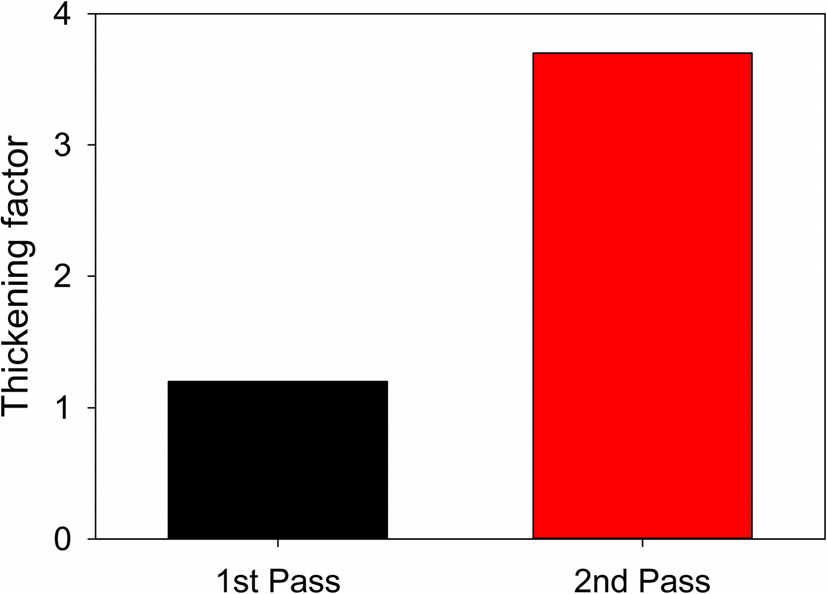
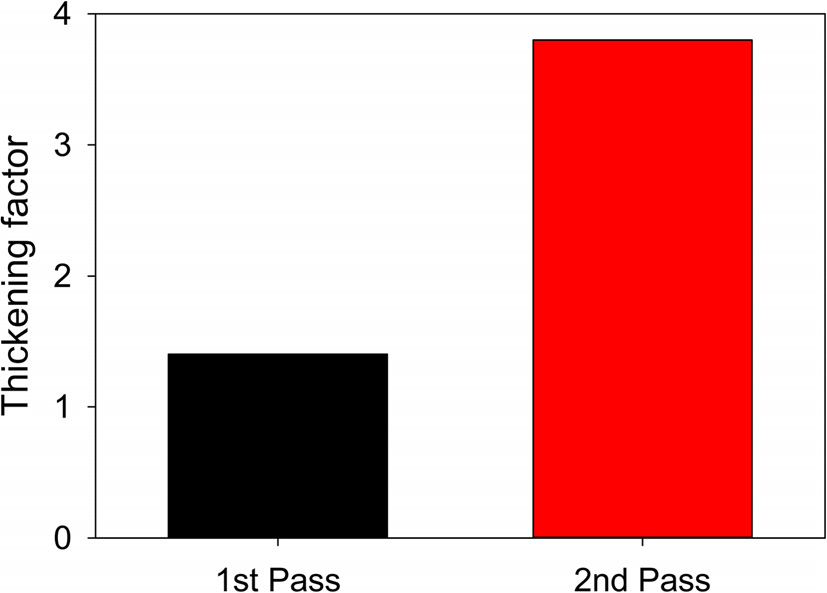
In particular, for fractionation by two consecutive accept recirculation cleaning loops, the reject thickening factor increased markedly from approximately 1.2 in the 1st pass to approximately 3.7 in the 2nd pass, demonstrating a significant improvement in thickening performance. Similarly, fractionation by a Tetradeca-cleaning system followed by an accept recirculation cleaning loop showed an increase in reject thickening factor from approximately 1.4 in the 1st Pass to approximately 3.8 in the 2nd pass, exhibiting a comparable trend.
These results suggested that sequential fractionation could enhance the selective separation performance of hydrocyclones.
3.1.2 Ash content
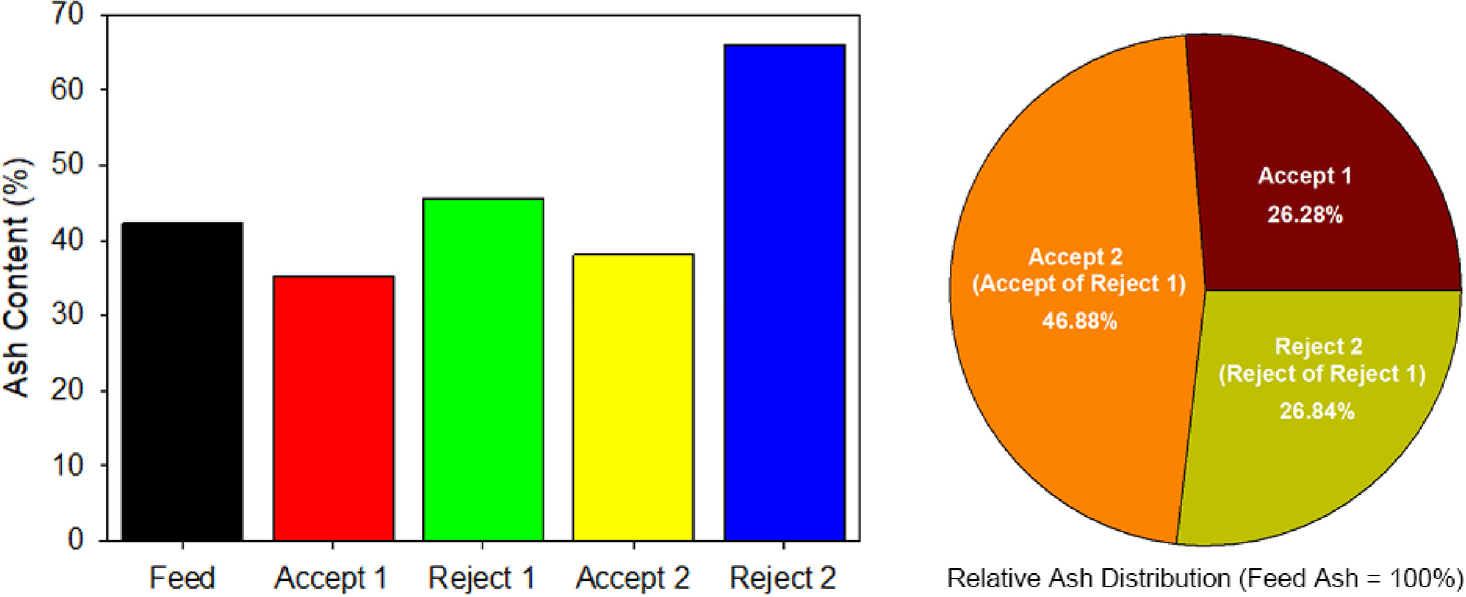
Analysis of ash content enabled evaluation of how inorganic components were redistributed among the fractions during the cleaner fractionation process. The ash contents obtained from 1st pass fractionation by an accept recirculation cleaning loop are presented in Fig. 6, whereas those obtained from 1st pass fractionation by a Tetradeca-cleaning system are shown in Fig. 7. Under both operating modes, the ash content decreased in the accept fractions and increased in the reject fractions relative to the feed, indicating that the cleaner effectively separated inorganic ash based on differences in specific gravity.
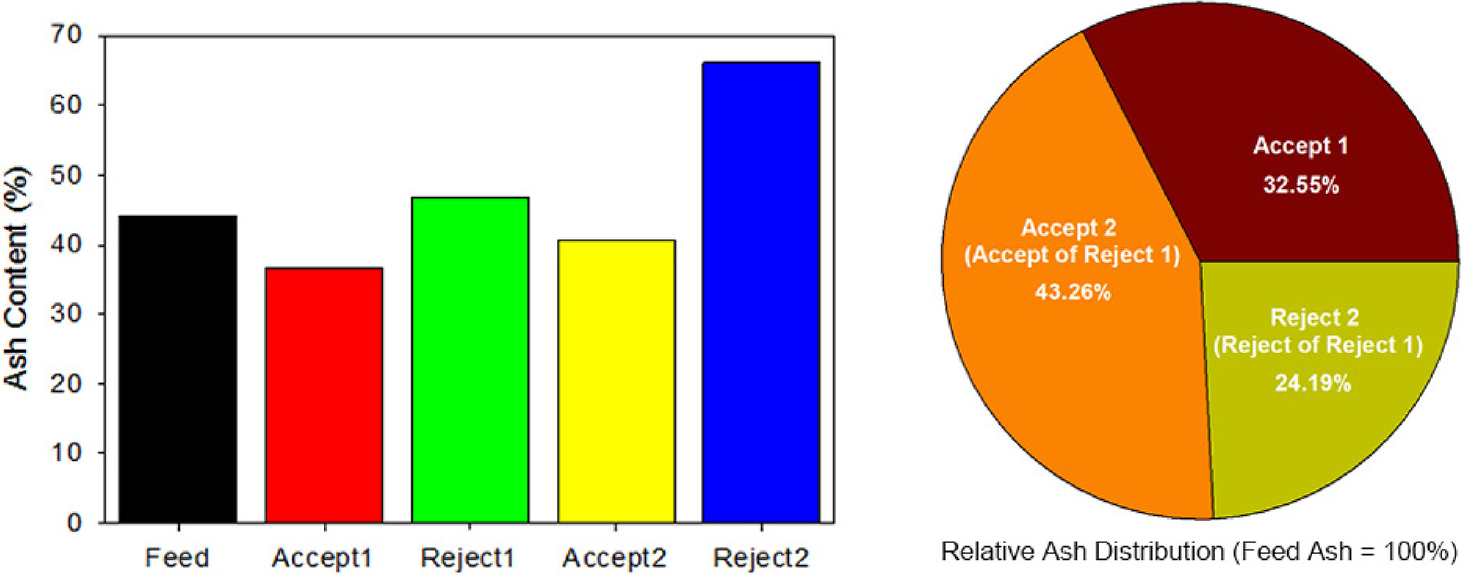
Based on the ash content in the feed (normalized to 100%), approximately 67.45% of the total ash was recovered in Reject 1 during the first-pass cleaning process, indicating that a substantial portion of the ash was removed in a single cleaning stage. For the two consecutive accept recirculation cleaning loop, the ash content of the feed was approximately 44%, whereas those of Accept 1 and Accept 2 were approximately 36% and 40%, respectively, which were lower than that of the feed. In contrast, the ash contents of Reject 1 and Reject 2 increased to approximately 47% and 66%, respectively, indicating that ash was most highly concentrated in the 2nd Pass reject fraction.
A similar trend was observed for fractionation by a Tetradeca-cleaning system followed by an accept recirculation cleaning loop. When fractionation was performed using the Tetradeca-cleaning system, approximately 73.72% of the total ash in the feed (normalized to 100%) was recovered in Reject 1 during the first-pass cleaning process, indicating that a greater proportion of ash was removed in the initial cleaning stage compared with the two consecutive accept recirculation cleaning loops. For ash contents of the individual fractions, the ash content of the feed was approximately 42%, while those of Accept 1 and Accept 2 decreased to approximately 35% and 38%, respectively. In contrast, the ash contents of Reject 1 and Reject 2 increased to approximately 45% and 66%, respectively, resulting in the highest ash concentration in the final reject fraction. This result suggests that, by reintroducing the 1st Pass reject fraction as the feed for the 2nd Pass, smaller ash particles and fines were preferentially removed during the 1st Pass, whereas relatively larger ash particles and fines became highly concentrated in the reject fraction during the 2nd Pass.
Notably, under both operating modes, the ash content of Reject 2 increased by more than approximately 1.5 times relative to the feed, while the ash content in the accept fractions remained consistently lower. These findings suggested that the two-step cleaner fractionation process is effective in selectively removing ash from white water.
3.2 Comparison of drainage properties of OCC recycled stock according to fractionation methods
3.2.1 Freeness
Freeness is a representative parameter used to quantitatively evaluate the drainage of pulp suspensions and is highly sensitive to factors such as the degree of refining, fines content, and the particle size distribution of suspended solids [17]. In particular, smaller particles can fill the voids between fibers more effectively, thereby reducing the permeability of the filtration layer and increasing drainage resistance [18]. In this study, freeness (mL CSF) was measured to compare the drainage of stocks prepared using fractionated white water. Higher freeness values indicate superior drainage performance. The freeness values of stocks prepared using white water obtained by additional accept recirculation cleaning of reject fractions from an accept recirculation cleaning loop are presented in Fig. 8, whereas those of stocks prepared using white water obtained by accept recirculation cleaning of reject fractions from a Tetradeca-cleaning system are shown in Fig. 9.
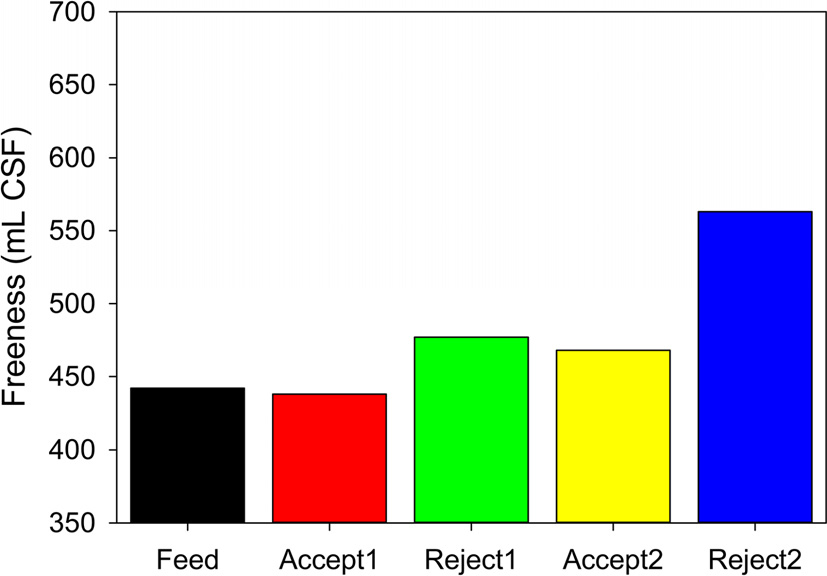
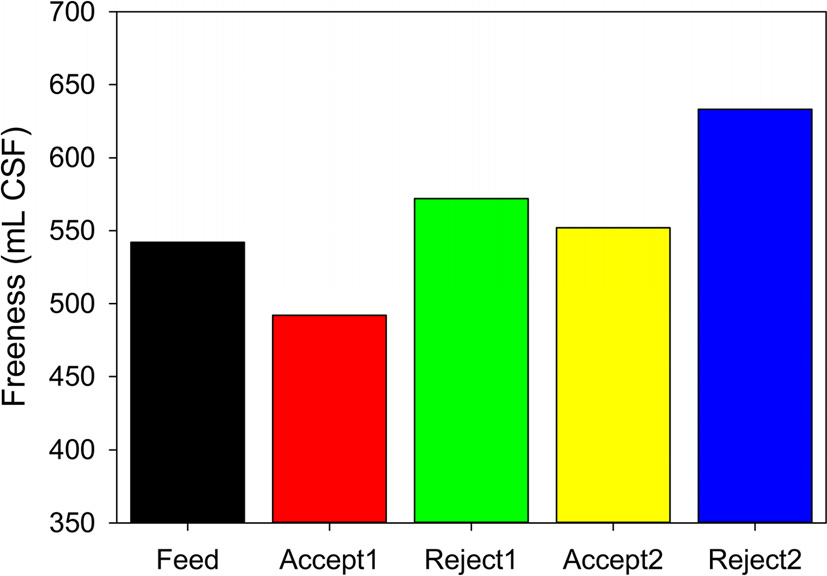
Under both operating modes, the stock prepared with Accept 1 exhibited the lowest freeness values. This behavior was attributed to the distribution of relatively smaller ash particles and fines into the accept fraction during the 1st Pass fractionation process.
Consequently, even when the same mass of suspended solids was incorporated into the stock, the larger number of fine particles filled the pores between fibers more effectively during sheet formation, reducing drainage channels. As a result, the permeability of the filtration layer decreased, leading to increased dewatering resistance.
In contrast, Reject 2 exhibited relatively high freeness values, indicating superior dewatering properties. This result was considered to be associated with the progressive fractionation process, in which ash particles with higher specific gravity and larger particle size became increasingly concentrated in the reject fraction. Even at the same mass of suspended solids, larger inorganic particles were fewer in number and therefore tend to form a more open pore structure, facilitating water transport. Accordingly, Reject 2 white water obtained through the two-step cleaner fractionation process was expected to be beneficial for improving stock dewatering and enhancing papermaking productivity.
3.2.2 Air permeability resistance (FAP) of wet webs measured by WEPS
The WEPS performs vacuum dewatering during handsheet molding and evaluates the residual vacuum pressure that remains unreleased after wet web formation, which is expressed as the Final Air Permeability (FAP, mmHg). A lower FAP value indicates higher air permeability of the wet web, suggesting improved vacuum dewatering performance under actual papermaking conditions. Accordingly, Fig. 10 presents the FAP values of stock prepared with white water fractionated through a two-step recirculating cleaning process, whereas Fig. 11 shows the FAP measurements obtained when rejects separated by a Tetradeca-cleaning process were further fractionated through an accept recirculation cleaning loop.
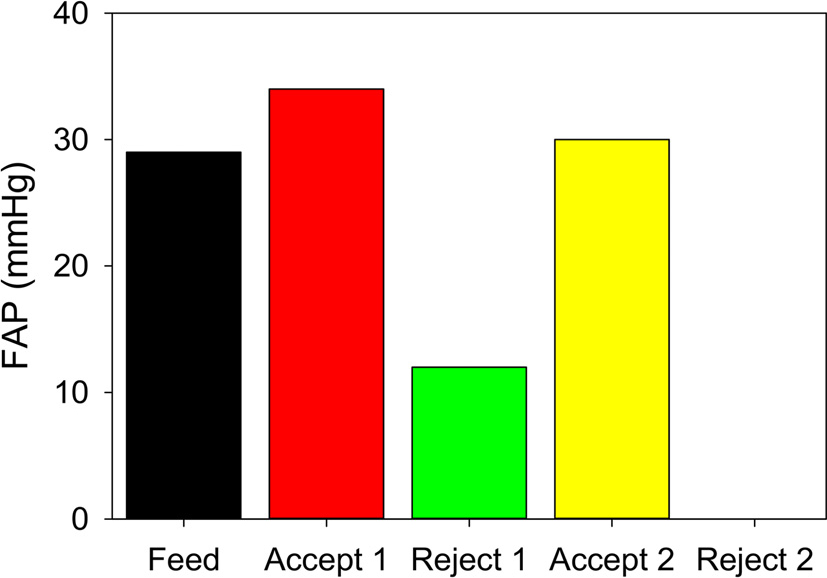
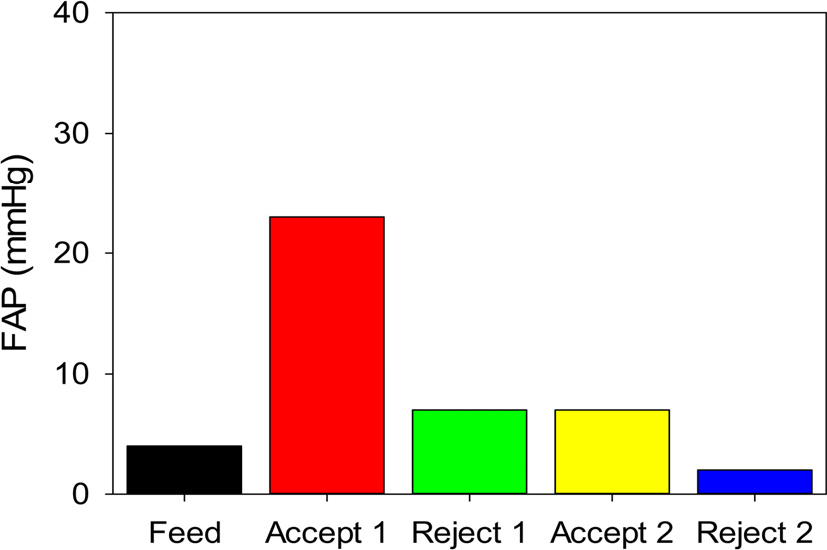
The results showed that both fractionation methods exhibited FAP trends similar to those observed for freeness (mL CSF). Accept 1, which exhibited the lowest freeness, showed the highest FAP value, indicating poor vacuum dewatering performance. In contrast, Reject 2 exhibited the lowest FAP value, demonstrating superior dewatering characteristics. These findings suggested that recovering the reject fraction from the two-step cleaning process could effectively improve the dewatering performance of recycled OCC paper.
3.3 Comparison of strength properties of OCC recycled paper according to white water cleaning fractionation methods
3.3.1 Burst strength
Burst strength is a representative mechanical property indicating the ability of paper to resist rupture under instantaneous external pressure and is strongly influenced by inter-fiber bonding, sheet structural uniformity, and the distribution of fines. In packaging papers such as corrugated board, burst strength is widely used as an important indicator for evaluating resistance to localized loads and impact [19]. In this study, burst strength was compared using the burst index, in which measured burst strength values were normalized by basis weight to eliminate the influence of differences in sheet grammage. Fig. 12 presents the burst index of handsheets prepared from stock formulated using white water fractionated by two different approaches: (1) white water obtained by re-fractionating rejects from an accept recirculation cleaning process through an additional accept recirculation cleaning step, and (2) white water obtained by processing rejects separated through a Tetradeca-cleaning system followed by an accept recirculation cleaning loop.
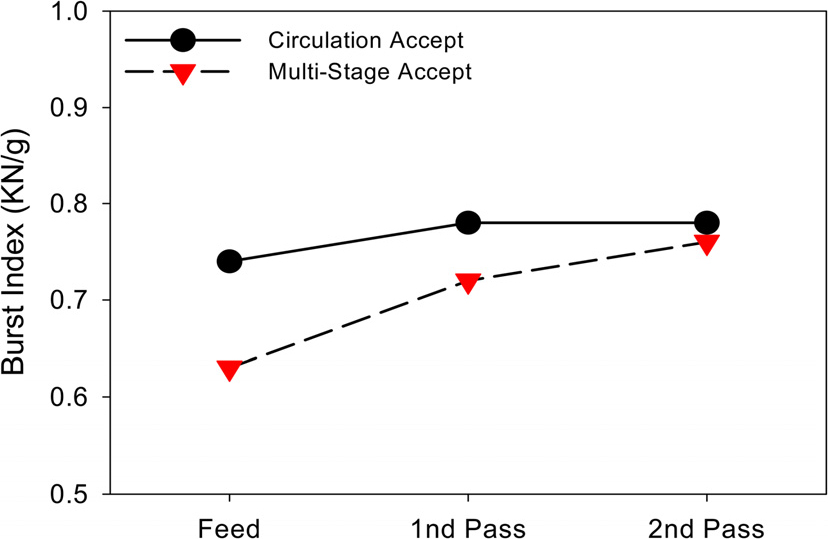
The experimental results showed that both types of accept fractions exhibited improved burst strength compared with the feed white water when used for stock preparation. This improvement was presumed to result from the partial removal of ash components that adversely affected paper strength during the cleaning process, while fines contributing to inter-fiber bonding remained in the cleaner accept fraction. In particular, the highest burst strength was observed in handsheets prepared from the second-pass accept fraction. This result was attributed to the additional fractionation treatment after the first pass, which effectively removed smaller ash particles detrimental to strength development while retaining a relatively higher proportion of fines that contributed to inter-fiber bonding. These findings suggested that enhanced strength properties were not solely attributable to reduced ash content but rather to the simultaneous optimization of ash particle size distribution and fines composition.
Comparing the two fractionation strategies, the condition in which rejects separated through the Tetradeca-cleaning process were further treated by accept recirculation cleaning exhibited more stable and greater improvements in burst strength than the condition in which rejects from the accept recirculation cleaning process were subjected to an additional accept recirculation cleaning step. This difference might be explained by the fact that, in the latter case, white water depleted of large ash particles and fines during the first-pass accept recirculation cleaning was reintroduced into the cleaner feed, thereby reducing overall cleaning efficiency. In contrast, rejects obtained from the Tetradeca-cleaning process had already undergone initial separation of large ash particles and fines and were subsequently introduced directly into the second-pass cleaning stage without additional dilution by accept white water. Consequently, relatively higher amounts of coarse ash particles and fines could be retained in the recycled OCC stock, resulting in more favorable strength development.
3.3.2 Compressive strength
Compressive strength is a representative mechanical property that indicates the ability of paper or paperboard to withstand compressive loads without structural collapse. In corrugated packaging materials, compressive strength is particularly important because it is directly related to box stacking strength and compression resistance during transportation. Compressive strength is strongly influenced not only by the intrinsic strength of fibers but also by inter-fiber bonding, sheet density and bulk structure, and the distribution of ash components [20]. In this study, compressive strength was compared using the compressive index, in which measured compressive strength values were normalized by basis weight to eliminate the influence of differences in sheet grammage. The results are presented in Fig. 13.
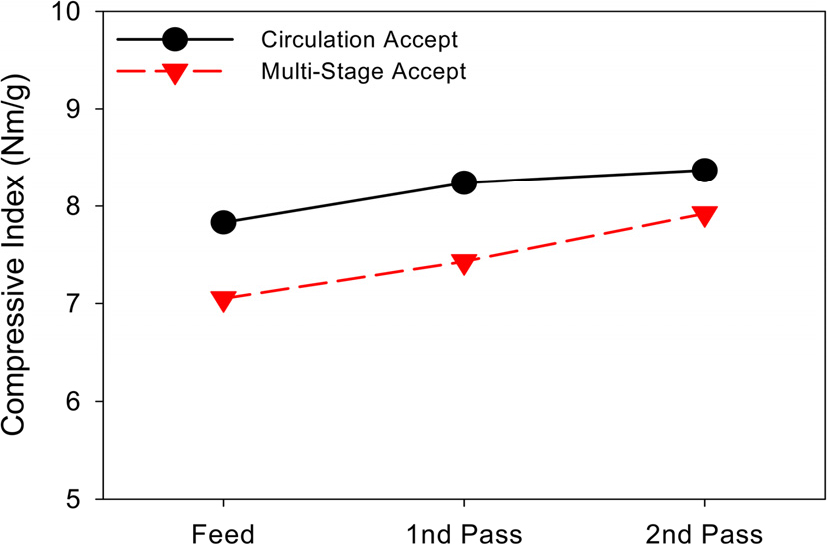
The experimental results showed that, for both fractionation methods, the incorporation of the first- and second-pass accept fractions led to improvements in compressive strength compared with the feed condition, with the second-pass accept fraction exhibiting the highest compressive index. This improvement was presumed to result from the removal of ash particles that hinder structural formation during cleaner fractionation, while simultaneously increasing the relative proportion of organic fines capable of filling void spaces within the sheet structure. Organic fines may contribute to a more uniform sheet density by filling gaps within the fiber network and can help distribute applied compressive stress more evenly, thereby preventing localized stress concentration. Furthermore, during the two-step cleaning process, shorter and less effective fines are preferentially removed, whereas relatively larger fines contributing to structural reinforcement are enriched in the accept fraction, resulting in the formation of a more stable sheet structure. This enhancement in structural stability is considered to be responsible for the superior compressive strength observed in the second-pass accept fraction.
Meanwhile, handsheets prepared from white water obtained by treating rejects separated through the Tetradeca-cleaning process with an accept recirculation cleaning loop exhibited more stable and greater improvements in compressive strength than those prepared from white water obtained by re-fractionating rejects from the accept recirculation cleaning process through an additional accept recirculation cleaning step. As discussed previously, repeated circulation of cleaner accept fractions may cause white water depleted of larger ash particles and structurally beneficial fines to be reintroduced into the cleaner feed, thereby reducing overall cleaning efficiency. In contrast, this issue was relatively less pronounced when rejects from the Tetradeca-cleaning process were subjected to accept recirculation cleaning, leading to improved retention of components favorable for compressive strength development and consequently enhanced sheet performance.
3.3.3 Internal bond strength
Internal bond strength is a property representing the ability of inter-fiber and inter-ply bonds within paper to withstand tensile stress applied in the thickness direction. It is influenced by factors such as fiber bonding area, fines and ash content, and sheet density [21]. In this study, internal bond strength was measured using the Scott bond method (J/m2), and the results are presented in Fig. 14.
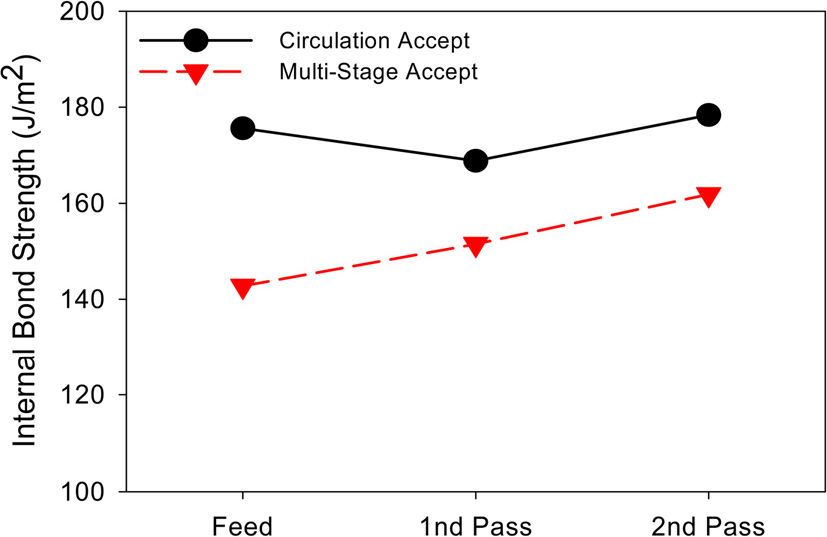
The experimental results showed that, for both fractionation methods, handsheets prepared using cleaner accept fractions exhibited improved internal bond strength compared with those prepared from feed white water. In particular, the second-pass accept fraction resulted in the highest internal bond strength. This trend was consistent with the results observed for burst and compressive strengths and is presumed to result from the partial removal of ash particles that interfere with inter-fiber bonding during the cleaning process, while organic fines contributing to bond formation were relatively enriched in the second-pass accept fraction. In other words, fine ash particles detrimental to strength development were preferentially removed from the white water during the first pass, and subsequent second-pass treatment enabled more selective retention of fines capable of enhancing inter-fiber bonding. Since internal bond strength is influenced more strongly by the continuity and uniformity of bonding throughout the layered sheet structure than by simple surface bonding strength, the simultaneous reduction of ash content and homogeneous distribution of fines in the second-pass accept fraction likely provided the most favorable conditions for improving internal bond strength.
Furthermore, handsheets prepared from white water obtained by treating rejects separated through the Tetradeca-cleaning process followed by an accept recirculation cleaning loop exhibited more stable and greater improvements in internal bond strength than those prepared by re-fractionating rejects from the accept recirculation cleaning process through an additional accept recirculation cleaning step. When white water is fractionated solely through repeated accept recirculation cleaning, white water depleted of larger ash particles and structurally beneficial fines may be reintroduced into the cleaner feed during repeated circulation, potentially reducing overall cleaning efficiency. In contrast, fractionation using the Tetradeca-cleaning process allows individual fractions to be recovered independently at each step, thereby enabling more efficient retention of fines favorable for strength development. Therefore, the most effective condition for improving the strength properties of recycled paper was identified as the second-pass accept fraction obtained by applying accept recirculation cleaning to rejects separated through the Tetradeca-cleaning process. This finding is also consistent with the optimal conditions observed for both burst strength and compressive strength.
4. Conclusions
In this study, two-step cleaning processes were applied to white water generated from an OCC recycling process. Specifically, white water fractionated as rejects through accept recirculation cleaning was subjected to an additional accept recirculation cleaning step, while rejects obtained through a Tetradeca-cleaning process were further treated using accept recirculation cleaning. The separation behavior of ash and fines according to different fractionation methods and their effects on dewatering performance and paper strength when incorporated into recycled OCC stock were comparatively evaluated. The objective was to investigate the potential of utilizing solid components in white water not merely as removable contaminants but as functional fractionated resources.
For both fractionation methods—re-fractionation of rejects from accept recirculation cleaning through a second-pass accept recirculation cleaning step, and treatment of rejects from the Tetradeca-cleaning process using second-pass accept recirculation cleaning—the concentration factor increased in the second pass compared with the first pass, and reject fractions exhibited higher ash contents. These results confirmed that two-step cleaning effectively separated and concentrated relatively larger ash particles present in white water. In particular, pronounced ash enrichment was observed in the second-pass reject fractions for both methods, indicating their potential as effective fractionation processes for ash removal from white water.
In both fractionation methods, second-pass reject fractions, which consisted predominantly of ash, exhibited superior dewatering performance when incorporated into recycled OCC stock. Therefore, these fractions may be more suitable for applications where dewatering performance is prioritized over strength properties, or alternatively, for easy removal and discharge through sedimentation when necessary.
For both fractionation methods, incorporation of accept fractions resulted in improved burst strength, compressive strength, and internal bond strength compared with the feed condition. This improvement is attributed to the removal of fine ash particles detrimental to paper strength during cleaner treatment, while fines contributing to inter-fiber bonding remained enriched in the accept fractions. In particular, the fractionation strategy involving second-pass accept recirculation cleaning of rejects obtained from the Tetradeca-cleaning process produced greater improvements in strength properties than the strategy involving re-fractionation of rejects from accept recirculation cleaning. This enhancement is presumed to result from more stable preservation of beneficial fines and selective removal of components detrimental to strength development through stage-wise fractionation.
The two-step treatment involving repeated accept recirculation cleaning of rejects generated from accept recirculation cleaning offers advantages in terms of simpler process configuration and operational convenience. However, repeated circulation may allow white water depleted of larger ash particles and beneficial fines to be reintroduced into the cleaner feed, potentially reducing overall cleaning efficiency. In contrast, the two-step process combining Tetradeca-cleaning followed by accept recirculation cleaning enabled independent recovery of fractions at each stage, facilitating composition control and allowing efficient production of accept fractions for strength improvement and reject fractions for dewatering enhancement.
Overall, the results demonstrate that two-step cleaning of white water in OCC recycling processes is an effective approach for ash removal, dewatering improvement, and enhancement of paper strength properties. Both the repeated accept recirculation cleaning strategy and the strategy combining Tetradeca-cleaning with subsequent accept recirculation cleaning exhibited favorable fractionation efficiency and improved dewatering performance. However, regarding strength enhancement of recycled paper, the latter approach showed relatively superior performance. Therefore, when process simplicity and operational convenience are prioritized, the recirculation of rejects generated from accept recirculation cleaning may be a practical option. Conversely, when quality improvement of recycled corrugated containerboard is the primary objective, the Tetradeca-cleaning-based two-step fractionation strategy appears to be the more effective process approach.