


1. Introduction
2. Materials and Methods
2.1 Materials
2.2 Methods
3. Results and Discussion
3.1 Flocculation behavior of pulp under different water conditions
3.2 Dewatering behavior in the wire and press sections depending on pulp floc characteristics
3.3 Handsheets properties depending on pulp floc properties
4. Conclusions
1. Introduction
Dewatering is one of the most critical processes in papermaking because it directly affects production speed, energy consumption, and manufacturing cost. In a typical papermaking process, pulp slurry with a consistency of approximately 1% is discharged from the headbox onto the forming wire, and water is progressively removed through the wire, press, and dryer sections. Most of the free water is mechanically removed in the wire and press sections by gravity and compression. However, the remaining water must be evaporated in the dryer section to achieve the target moisture content of the paper. Although the amount of water removed in the dryer section accounts for only a small portion of the total dewatering, a considerable amount of thermal energy is required because of the high latent heat of water evaporation. Consequently, the dryer section is the most energy-intensive process in papermaking and accounts for a substantial portion of the total energy consumption in paper mills [1]. Therefore, improving the energy efficiency of the dryer section is one of the most important issues for reducing manufacturing costs [2].
Improving the energy efficiency of papermaking requires not only increasing the thermal efficiency of the dryer section but also reducing the moisture content of the paper web before it enters the dryer section. The press section is the final stage where water can be mechanically removed from the paper web. Therefore, press dewatering performance directly affects the energy demand of the dryer section. Even a small increase in solids content after the press section can significantly reduce the amount of water that must be evaporated in the dryer section. As a result, steam consumption and energy consumption can be considerably reduced [3]. Therefore, improving press dewatering efficiency is considered an effective approach for reducing drying energy consumption while increasing production speed, lowering manufacturing costs, and reducing carbon emissions.
Various polymer-based retention and drainage systems have been developed to improve dewatering performance and fines retention in papermaking. Among them, microparticle systems are one of the most widely used retention technologies. In a conventional microparticle system, cationic polyacrylamide (C-PAM) is first added to form large flocs through polymer bridging between fibers and fines. These flocs are partially disrupted by shear forces generated during stock transportation through pumps, screens, and fan pumps. Bentonite is then added to induce reflocculation of the dispersed flocs. As a result, smaller and denser flocs are formed. These reflocs provide more uniform void structures within the fiber network and facilitate water removal while improving fines retention. Consequently, both drainage performance and retention efficiency are improved [4].
However, dewatering performance is not determined only by the formation or size of flocs. Floc size, density, mechanical strength, internal pore structure, and spatial distribution collectively influence water transport during sheet formation and pressing. Small flocs cannot effectively retain fines and fillers, resulting in poor retention and non-uniform sheet formation. In contrast, excessively large or loosely packed flocs tend to trap water within or between flocs. This reduces the efficiency of mechanical water removal in the wire and press sections [5,6,7]. Therefore, improving dewatering performance requires not only forming large flocs but also producing flocs with an appropriate size, high density, and suitable pore structure for efficient water removal during pressing [8,9,10].
The flocculation behavior of polyelectrolytes is strongly affected by molecular weight, charge density, dosage, and shear conditions. High-molecular-weight polyelectrolytes promote polymer bridging between fibers and produce large flocs. Polyelectrolytes with high charge density rapidly adsorb onto negatively charged fiber and fines surfaces and neutralize their surface charge, promoting flocculation. However, excessive addition of polyelectrolytes may cause over-flocculation, poor formation, and reduced drainage performance. Therefore, optimization of the retention aid type, dosage, and addition sequence is essential for achieving efficient retention and drainage [9,11,12].
Poly-diallyldimethylammonium chloride (p-DADMAC) is a representative cationic polyelectrolyte with a high charge density. It readily adsorbs onto negatively charged fiber and fines surfaces and effectively neutralizes their surface charge. This pre-adsorption can influence the adsorption behavior of subsequently added retention polymers. It can also modify the flocculation mechanism. When p-DADMAC is combined with a conventional microparticle system, the adsorption and bridging behavior of C-PAM can be altered. As a result, not only the floc size but also the floc density, uniformity, and shear stability can be changed [13,14,15,16,17,18].
In this study, we investigated the effects of water chemistry and p-DADMAC addition conditions on the structural characteristics of pulp flocs formed in a microparticle system. The relationships between floc structure and drainage performance in the wire and press sections were also evaluated to identify floc structures favorable for press dewatering. In addition, the physical properties of handsheets prepared using fresh water and simulated process water were compared. The applicability of the p-DADMAC-based microparticle system under practical papermaking conditions was also evaluated.
2. Materials and Methods
2.1 Materials
Linerboard was supplied by a domestic corrugated paper manufacturer (Company A) and used as the raw material in this study. The linerboard was disintegrated using a laboratory disintegrator at a pulp consistency of 4% and a rotational speed of 3,000 rpm for 20 min to prepare the experimental pulp slurry. The disintegrated pulp was subsequently fractionated using a 200-mesh screen to determine the fines content. Approximately 30% of the pulp passed through the screen and was classified as fines. A high-charge-density, low-molecular-weight p-DADMAC and a low-charge-density, high-molecular-weight C-PAM were used as cationic polyelectrolytes. Bentonite was used as the anionic microparticle. The characteristics of the chemicals used in this study are summarized in Table 1.
Table 1.
Properties of chemicals
| Chemical | Charge density (meq/g) | Molecular weight (MDa) |
| p-DADMAC | 5.39 | 0.4–0.5 |
| C-PAM | 2.47 | 5 |
| Bentonite | -1.03 | - |
2.2 Methods
2.2.1 Effect of p-DADMAC pre-addition under different water conditions on pulp flocculation
Anionic colloidal substances and fines present in process water compete with fibers for the adsorption of cationic polyelectrolytes, reducing the performance of retention aids and dry-strength agents [19]. Pre-addition of a high charge density cationic polyelectrolyte, such as p-DADMAC, before a microparticle system can neutralize these anionic substances. This provides more available adsorption sites for subsequently added cationic polymers on the fiber surfaces. To evaluate this effect, pulp slurry prepared at a consistency of 4% was diluted to 0.1% using either distilled water or laboratory prepared hard water. The hard water was prepared by adding CaCl2 to adjust the conductivity and hardness to values comparable to those of an actual papermaking process. Table 2 presents the properties of the dilution water. In the case of hard water, both the electrical conductivity and hardness were substantially higher than those of distilled water, reflecting the high ionic strength conditions commonly encountered in papermaking systems. Plus, the chemical addition levels are presented in Table 3. The flocculation behavior of the pulp suspension after chemical addition was evaluated using a laser diffraction particle size analyzer (Mastersizer 2000, Malvern Panalytical, UK).
Table 2.
Properties of dilution water
| Properties | Fresh water | Hard water |
| Conductivity (µS/cm) | 130 | 6,000 |
| Hardness (ppm) | 100 | 3,000 |
Table 3.
Retention chemical addition conditions
| Chemical addition level (%, based on oven dried pulp) | ||
| p-DADMAC | C-PAM | Bentonite |
| 0 | 0.04 | 0.20 |
| 0.01 | ||
| 0.10 | ||
| 0.15 | ||
2.2.2 Evaluation of drainage performance in the wire and press sections
The drainage performance in the wire section was evaluated using a Wet-End Process Simulator (WEPS, Sambo Science, Republic of Korea). The WEPS simulates the vacuum dewatering process in the wire section of a paper machine and is widely used to evaluate the initial drainage behavior of pulp suspensions and the dewatering characteristics of flocs [20]. To clearly distinguish the drainage performance of different floc structures, the pulp suspension was prepared to produce handsheets with a basis weight of 300 g/m2. The drainage behavior was monitored from the dewatering curve obtained using the WEPS. The wet and oven-dried weights of the handsheets were also measured, and the drainage performance in the wire section was calculated using Eq. (1).
The press dewatering performance was evaluated using the wet sheets prepared by the WEPS. Press dewatering was performed using a laboratory press (BYNO, BSC 80 × 200, Netherlands). To prevent structural damage to the wet sheets during pressing, the applied pressure was gradually increased from 2 to 4 and 6 bar. The wet sheets were pressed for 5 s at each pressure level. The solids content after press dewatering was calculated using Eq. (2).
2.2.3 Evaluation of handsheet properties depending on pulp floc characteristics
The physical properties of the handsheets were evaluated to investigate the effect of pulp floc characteristics on the final sheet properties. Handsheets with a basis weight of 150 g/m2 were prepared with different the dosage of the polyelectrolytes. The handsheets were conditioned for 24 h at 23 ± 1°C and 50 ± 2% relative humidity according to TAPPI T 402 prior to testing. The tensile strength was measured according to TAPPI T 494, and the short-span compression strength (SCT) was determined according to TAPPI T 826 om-13. Sheet formation was also evaluated.
2.2.4 Formation evaluation of handsheets under chemical addition levels
The formation of the prepared handsheets may vary depending on the size and uniformity of the flocs, resulting in either locally sparse or relatively uniform fiber distribution. Therefore, formation was evaluated to assess the effects of floc characteristics on handsheet formation. The formation of the handsheets was evaluated using a formation analyzer (Paper PerFect Formation Analyzer, OpTest Equipment Inc., Canada). The formation index was calculated as the ratio of the total area of the detected flocs to the total analyzed image area.
3. Results and Discussion
3.1 Flocculation behavior of pulp under different water conditions
Fig. 1 illustrates the experimental procedure used to evaluate the flocculation behavior of the pulp suspension. Different agitation speeds were applied at each chemical addition step to simulate the shear conditions encountered in an actual papermaking process. The dosages of C-PAM and bentonite were fixed at 0.04% and 0.20%, respectively, throughout the experiments. For the p-DADMAC pre-addition system, the p-DADMAC dosage was changed with different addition levels, while the remaining experimental conditions were kept constant. The pulp suspension was diluted to a consistency of 0.01% using either fresh water or simulated process water (hard water) before evaluating the flocculation behavior with a laser diffraction particle size analyzer.
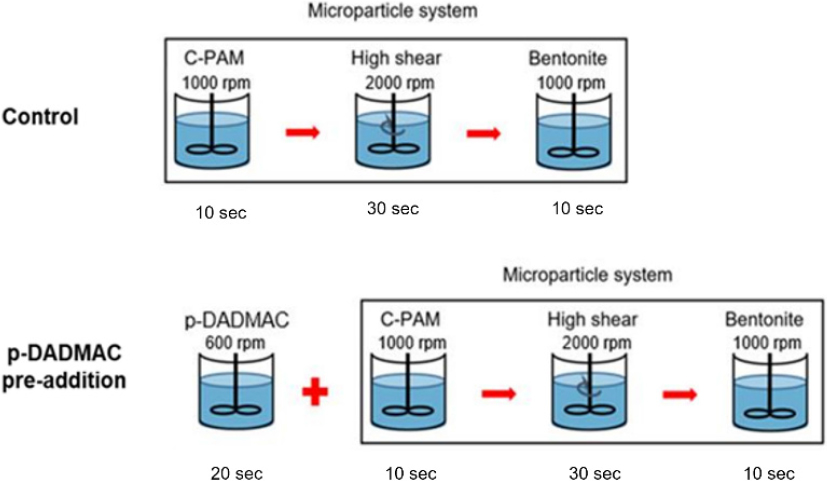
Fig. 2 shows the flocculation behavior of the pulp suspension with different p-DADMAC dosages under distilled water conditions. Pre-addition of p-DADMAC before the microparticle system produced a more uniform floc size distribution and increased the median floc size (D50). The largest flocs with the narrowest size distribution were obtained with 0.01% p-DADMAC. In contrast, increasing the p-DADMAC dosage to 0.05% reduced the floc size despite the higher chemical dosage. This behavior is attributed to the adsorption characteristics of p-DADMAC on the fiber surface. An appropriate amount of p-DADMAC preferentially adsorbs onto the negatively charged fiber surface before C-PAM addition. These forms localized cationic patches on the fiber surface and changes the adsorption behavior of the subsequently added C-PAM. As a result, the loop and tail segments of C-PAM remain extended instead of gradually adsorbing flat onto the fiber surface over time. This enhances inter-fiber bridging and produces larger and more uniform flocs [21]. When the p-DADMAC dosage was increased to 0.05%, the available anionic adsorption sites on the fiber surface were excessively neutralized before C-PAM addition. This reduced the adsorption of C-PAM onto the fibers and lowered its bridging efficiency. Consequently, the floc size decreased even though a larger amount of p-DADMAC was added.
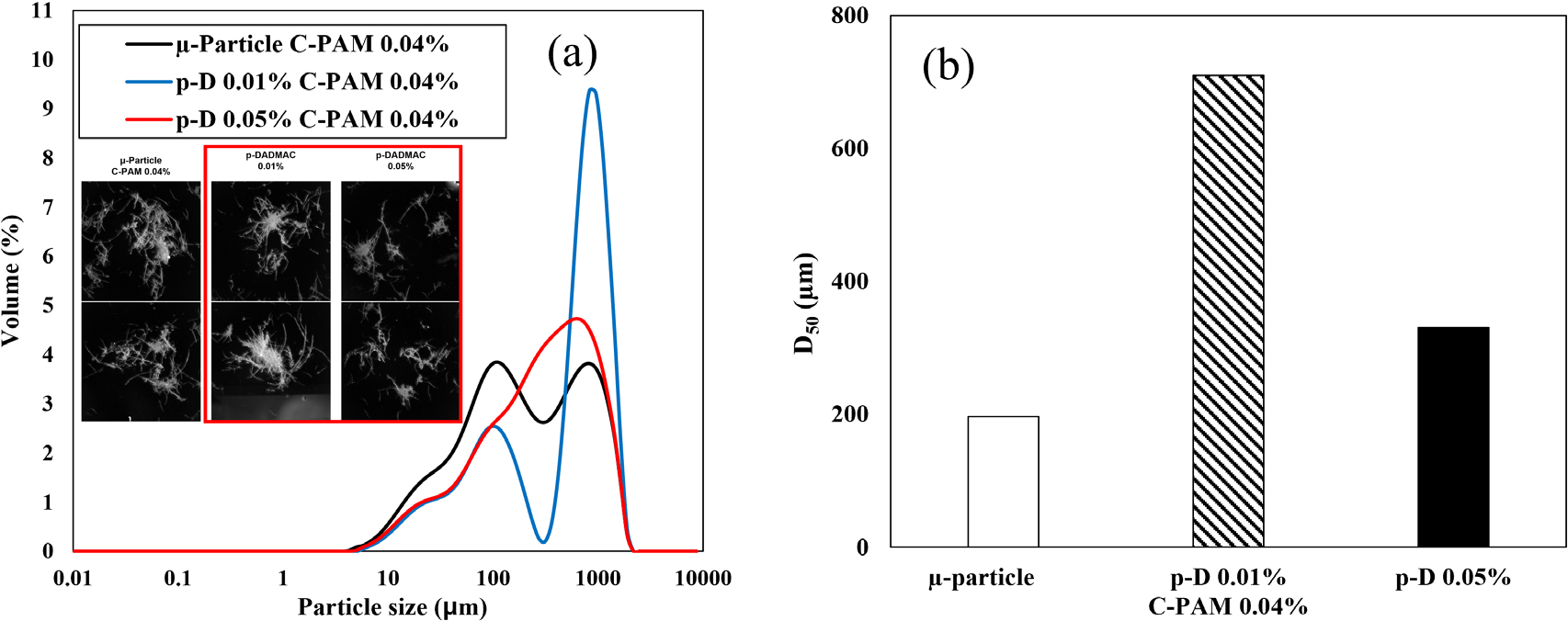
Fig. 3 shows the flocculation behavior of the pulp suspension under hard water conditions with different p-DADMAC dosages. Unlike the results obtained under fresh water conditions, the flocculation behavior changed considerably under hard water conditions (Fig. 3). The floc size distribution became more uniform as the p-DADMAC dosage increased. However, the median floc size (D50) gradually decreased with increasing p-DADMAC dosage. This trend was opposite to that observed under fresh water conditions, where the floc size increased as the p-DADMAC dosage increased.
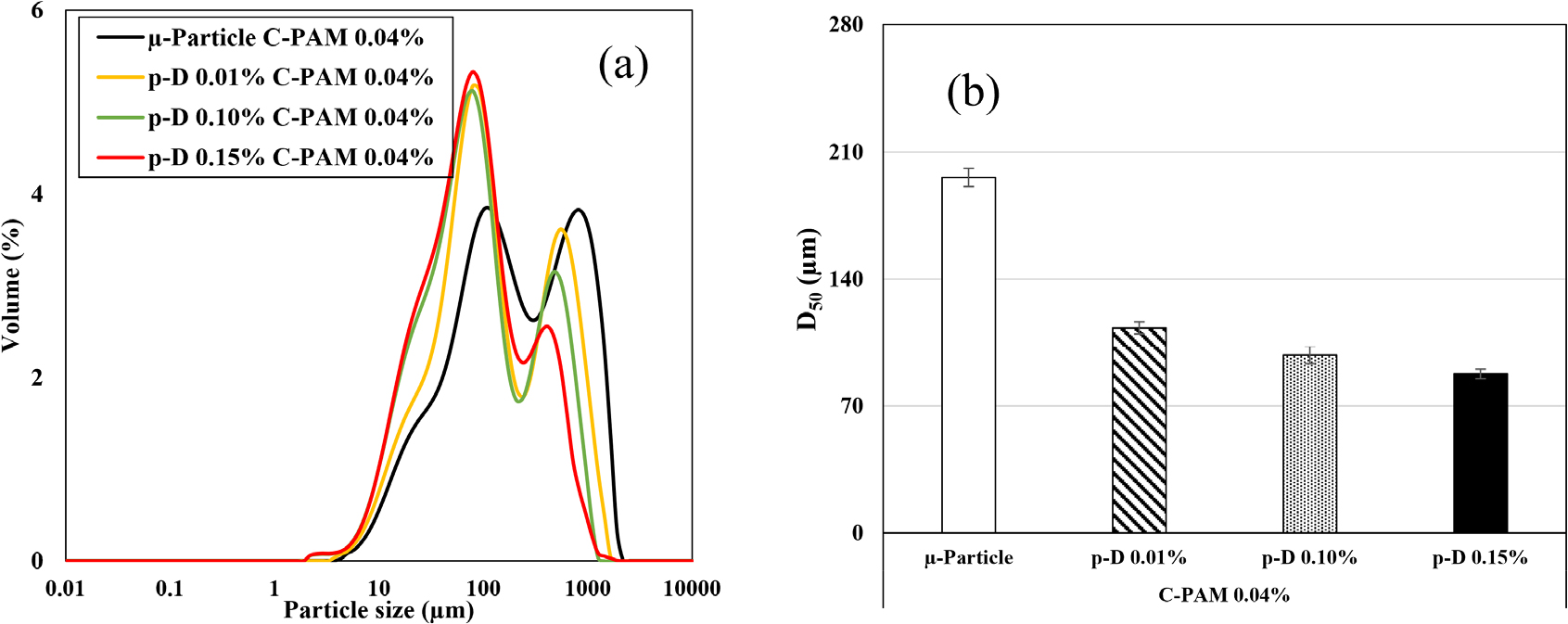
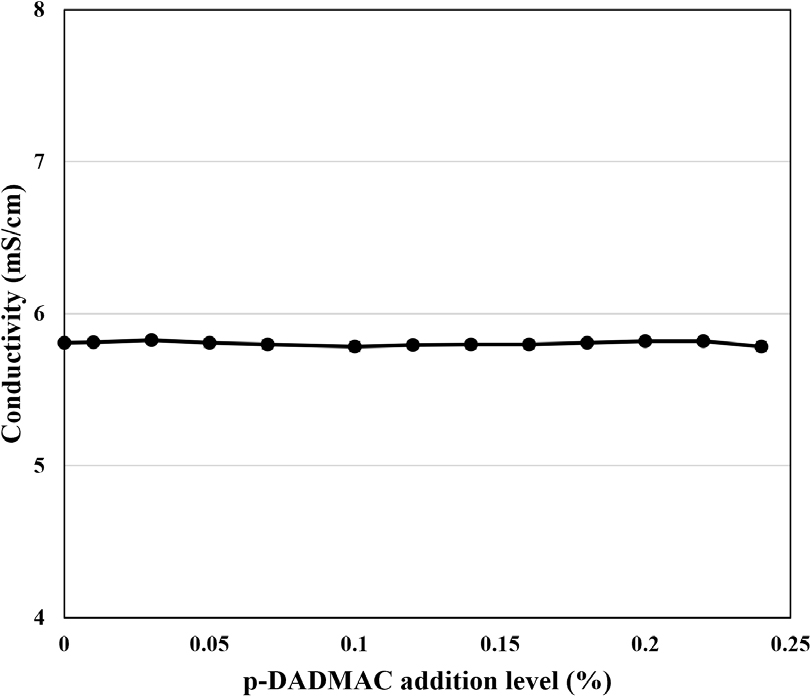
Fig. 4 shows that the electrical conductivity remained nearly constant even when the p-DADMAC dosage increased from 0 to 0.24% under hard water conditions. Although the pre-addition of p-DADMAC can selectively adsorb anionic substances present in the pulp suspension, it does not reduce the high ionic strength of the hard water. Consequently, C-PAM is adsorbed under a high ionic strength environment, where electrostatic screening restricts the extension of the loop and tail segments. This limits the bridging ability of C-PAM, resulting in the formation of smaller and more uniform flocs, as shown in Fig. 3[22,23,24].
3.2 Dewatering behavior in the wire and press sections depending on pulp floc characteristics
The structural characteristics of pulp flocs, including their size, density, and internal porosity, are known to play important roles in determining dewatering performance during papermaking [25,26]. Appropriate control of floc structure can improve not only gravity and vacuum drainage in the wire section but also mechanical dewatering in the press section. In general, larger flocs facilitate water removal in the wire section by providing larger drainage channels. However, excessively large flocs tend to retain water within the floc structure, reducing dewatering efficiency during press dewatering. Therefore, controlling floc structure is essential to achieve balanced drainage performance in both the wire and press sections [25]. Fig. 5 shows the sheet formation of handsheets prepared with the microparticle system under fresh water conditions. Compared with the microparticle system alone, pre-addition of p-DADMAC produced less uniform sheet formation. This result is consistent with the flocculation behavior shown in Fig. 2, where p-DADMAC pre-addition increased the floc size and produced a more uniform floc size distribution. The formation of larger flocs increased the local fiber concentration during sheet formation, resulting in poorer formation. Although the larger flocs are expected to facilitate drainage in the wire section, the reduced sheet formation uniformity may lead to lower mechanical properties of the handsheets.
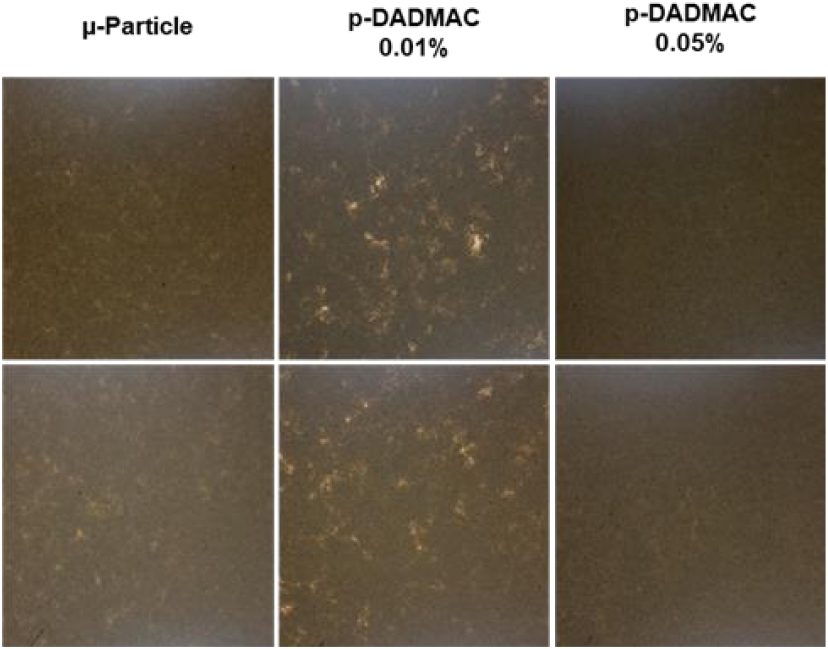
Fig. 6 shows the WEPS drainage curves (a) and solids content of the wet web (b) with different p-DADMAC dosages under hard water conditions. As shown in Fig. 6a, the microparticle system without p-DADMAC reached approximately 0 mbar within 15 s, indicating the fastest drainage behavior. In contrast, pre-addition of p-DADMAC maintained a higher residual vacuum pressure throughout the measurement period. This result is consistent with the flocculation behavior shown in Fig. 3, where p-DADMAC pre-addition produced smaller and more uniform flocs under hard water conditions. The higher residual vacuum pressure indicates slower water removal in the wire section, which resulted in a lower solids content of the wet web, as shown in Fig. 6b. Although drainage in the wire section was delayed by p-DADMAC pre-addition, this limitation can be compensated for in an actual paper machine through appropriate operation of dewatering elements, such as foils and suction boxes.
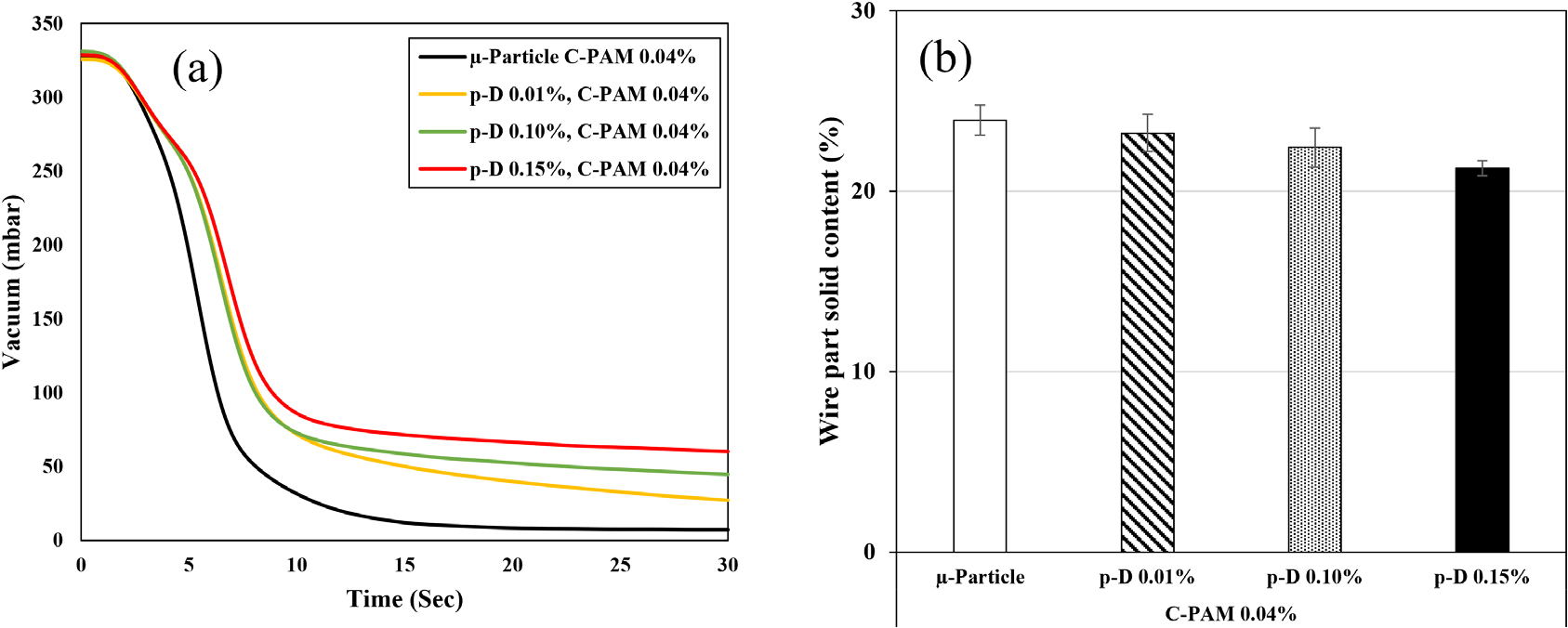
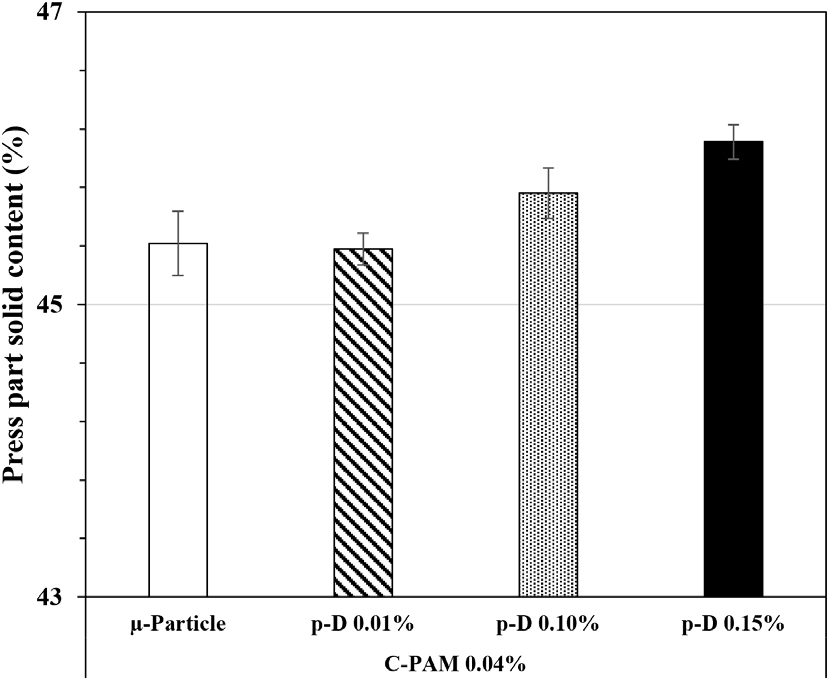
Fig. 7 shows the solids content of the wet web after press dewatering under hard water conditions with different p-DADMAC dosages. The highest solids content (approximately 46.5%) was obtained with 0.15% p-DADMAC + 0.04% C-PAM, although this condition exhibited slower drainage in the wire section (Fig. 6b). This result indicates that the smaller and more uniform flocs formed by p-DADMAC pre-addition facilitated the removal of water trapped within the flocs during mechanical pressing. As a result, the press dewatering efficiency was improved despite the slower drainage in the wire section. These results suggest that pre-addition of p-DADMAC can improve the overall dewatering performance by enhancing water removal during press dewatering. Although the increase in solids content compared with the control was relatively small, it may still be practically significant in terms of drying energy consumption. According to Ref. [27], a 1 percentage-point increase in solids content before the drying section can reduce drying energy consumption by approximately 4%. Therefore, the increase in press solids content achieved by p-DADMAC pre-addition may contribute to a reduction in the energy demand of the drying section.
3.3 Handsheets properties depending on pulp floc properties
Fig. 8 shows the sheet formation of handsheets prepared with the microparticle system and the p-DADMAC pre-addition system under hard water conditions. Compared with the microparticle system alone, pre-addition of p-DADMAC improved sheet formation. This result is consistent with the flocculation behavior shown in Fig. 3, where smaller and more uniform flocs were formed under hard water conditions. The smaller flocs reduced local variations in fiber concentration, while the narrower floc size distribution promoted a more homogeneous distribution of fibers throughout the sheet, resulting in improved formation [28]. Interestingly, this trend is opposite to that observed under fresh water conditions in Fig. 5. Under fresh water conditions, p-DADMAC pre-addition produced larger flocs, which increased local fiber concentration and consequently deteriorated sheet formation. The contrasting results shown in Figs. 5 and 8 clearly demonstrate that sheet formation is strongly influenced not only by floc size but also by the uniformity of the floc size distribution. Therefore, the formation of relatively small and uniformly distributed flocs is considered favorable for achieving a homogeneous sheet structure.
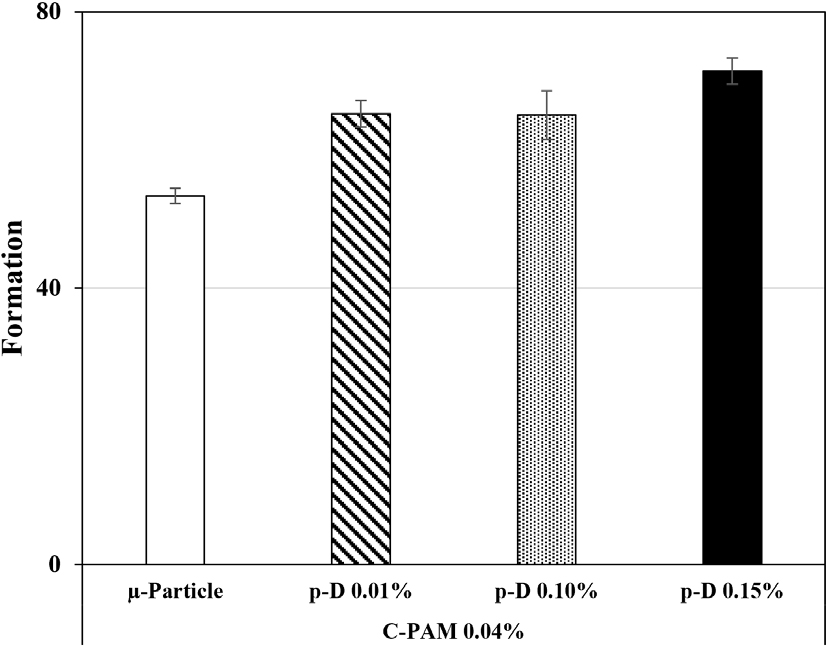
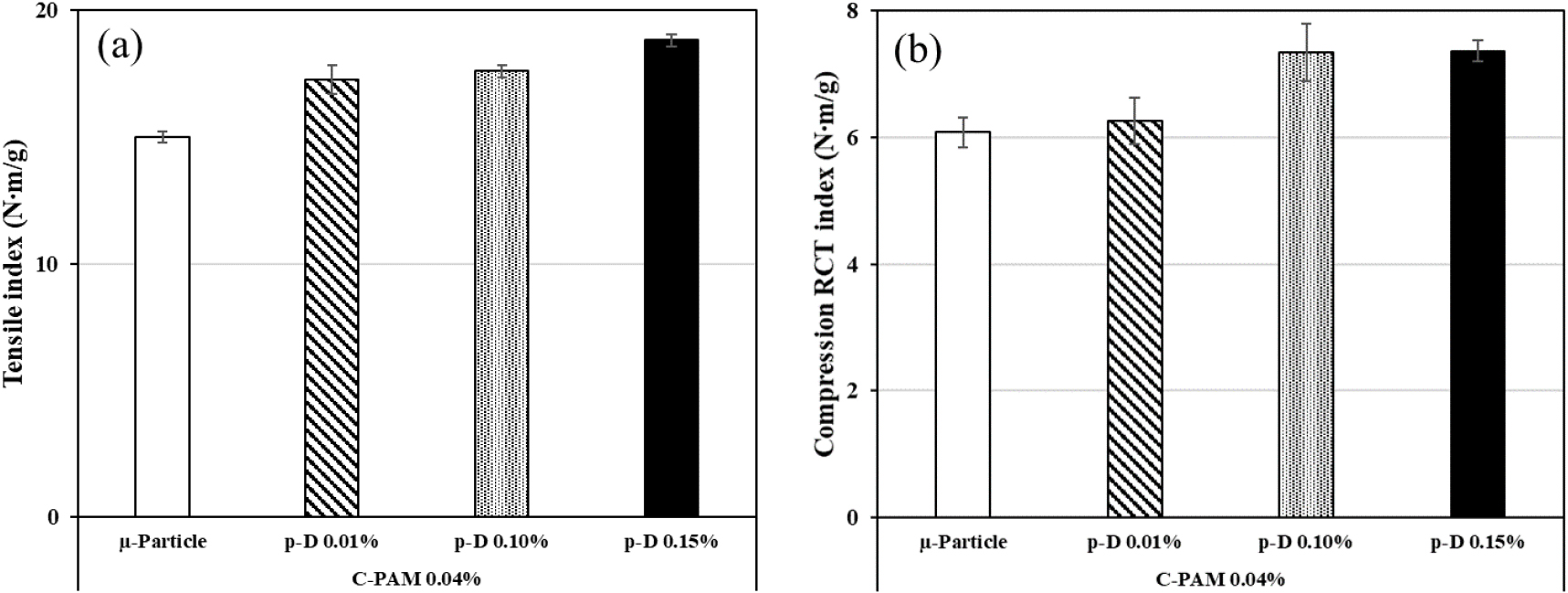
Fig. 9 shows the tensile index (a) and compression index (b) of the handsheets under hard water conditions with different p-DADMAC dosages. Both the tensile and compression indices increased as the p-DADMAC dosage increased. This result is consistent with the flocculation behavior shown in Fig. 3, where smaller and more uniform flocs were formed with p-DADMAC pre-addition. The improved strength properties are attributed to the enhanced adsorption of C-PAM onto the fiber surface following the preferential neutralization of anionic interfering substances by p-DADMAC. In addition, the higher dewatering efficiency in the press section increased the fiber-to-fiber contact area, further improving the strength properties of the handsheets.
4. Conclusions
This study investigated the effects of water quality and p-DADMAC pre-addition on the flocculation characteristics and dewatering behavior of pulp suspensions in a microparticle retention system. In addition, the physical properties of handsheets were evaluated. Under fresh water conditions, p-DADMAC pre-addition increased the floc size and produced a more uniform floc size distribution by improving the adsorption behavior of C-PAM. In contrast, under hard water conditions, p-DADMAC pre-addition produced smaller and more uniform flocs because the high ionic strength limited the extension of the loop and tail segments of C-PAM. The smaller and more uniform flocs formed under hard-water conditions delayed drainage in the wire section, while their contribution to the improved dewatering efficiency observed during press dewatering may be associated with the facilitated removal of water trapped within the flocs. Pre-addition of p-DADMAC also improved sheet formation and enhanced the tensile and compression properties of the handsheets. These improvements were attributed to enhanced adsorption of C-PAM onto the fiber surface and increased fiber-to-fiber contact during press dewatering, with the improvement in strength also likely influenced by the improved formation resulting from the smaller and more uniform flocs. These results demonstrate that the floc structure required for efficient press dewatering differs from that for rapid wire drainage. Appropriate control of floc characteristics through p-DADMAC pre-addition can improve overall dewatering efficiency and handsheet properties under hard water conditions.