


1. Introduction
2. Materials and Methods
2.1 Materials
2.2 Methods
3. Results and Discussion
3.1 Morphological characteristics of CNF prepared at different grinding consistencies
3.2 Rheological properties of composite spinning dopes at different CNF to alginate ratios
3.3 Compressive properties of wet gels and tensile properties of dried composite fibers crosslinked with divalent cations
4. Conclusions
1. Introduction
The increasing production and use of petroleum-based polymeric materials have raised serious environmental concerns, including not only the consumption of fossil resources but also the accumulation of plastic waste and the generation of microplastics [1,2]. Consequently, increasing attention has been directed toward renewable and biodegradable materials derived from natural polymers as alternatives to petroleum-based polymers. In particular, biodegradable composites and environmentally friendly fibers based on cellulose and other natural polymers have been actively investigated [3,4].
Natural-polymer-based fibers can be produced using various spinning techniques, among which wet spinning has been widely employed for the fabrication of continuous cellulose nanofibril (CNF)-based fibers [5,6]. In wet spinning, a polymer solution or suspension is extruded through a nozzle into a coagulation bath containing a non-solvent or crosslinking agent, where solvent exchange, phase separation, or ionic crosslinking induces the formation of continuous fibers [5,6,7]. Because wet spinning can be conducted in aqueous systems at relatively low temperatures, it is particularly suitable for thermally sensitive natural polymers. Furthermore, the structure and properties of the resulting fibers can be controlled by adjusting the spinning-dope composition and coagulation conditions [5,6].
Stable wet spinning requires the spinning dope to flow smoothly through the nozzle while maintaining a continuous shape after extrusion until coagulation occurs. Therefore, rheological properties such as viscosity, shear-thinning behavior, and viscoelasticity are critical factors governing spinning stability and the structure and properties of the resulting fibers [5,6]. An excessively low viscosity may reduce shape stability, whereas an excessively high viscosity may increase extrusion resistance and hinder uniform spinning. In addition, the shear and extensional forces generated during spinning can induce the alignment of polymer chains and nanomaterials. Thus, precise control of the rheological properties and interactions among the components is required [5,6,7].
Alginate is an anionic natural polymer derived from brown algae and has a linear structure composed of β-D-mannuronic acid and α-L-guluronic acid units [8,9]. Upon contact with divalent cations such as Ca2+, Ba2+, and Sr2+, alginate forms a three-dimensional gel network through ionic crosslinking in an egg-box configuration. Because this reaction proceeds rapidly under aqueous conditions at room temperature, it has been widely utilized for fiber formation [8,9,10,11]. However, variations in ion diffusion and crosslinking rates can produce a nonuniform crosslinked structure within the fiber, while shrinkage during drying can affect the structure and mechanical properties of the final fiber [11,12]. The incorporation of reinforcing materials is therefore required to improve the performance of alginate fibers.
CNF has a high aspect ratio and strong hydrogen-bonding capability because of its abundant hydroxyl groups and has consequently been widely used as a reinforcing material in natural-polymer composites [5,13]. CNF forms interconnected networks in water and exhibits shear-dependent viscosity. During spinning, CNF can align along the fiber axis and contribute to the improved mechanical strength of the resulting fibers [5,6,7,14,15]. The incorporation of CNF into alginate can improve both the rheological properties of the spinning dope and the mechanical properties of the resulting fibers. However, excessive CNF loading may reduce spinning stability because of increased viscosity and non-uniform dispersion [5,6,12,15].
Combining alginate with CNF enables the ionic crosslinking ability of alginate to be integrated with the network-forming and reinforcing effects of CNF. However, these two components may play different roles depending on the processing stage and physical state of the composite fiber. Alginate is expected to contribute primarily to wet-gel formation and compressive resistance through ionic crosslinking with divalent cations. In contrast, CNF may contribute more strongly to the tensile properties of dried fibers by forming an elastic network in the spinning dope and establishing interfibrillar bonding during drying. It is therefore necessary to evaluate not only the rheological properties of spinning dopes with different compositions but also the mechanical properties of ionically crosslinked wet gels and dried fibers separately.
Previous studies have investigated the fabrication and mechanical properties of alginate/cellulose nanocrystal (CNC) composite fibers [12,15] as well as the rheological and spinning behavior of CNF suspensions [5,6,7]. However, few studies have examined the rheological properties of CNF/alginate spinning dopes at different mixing ratios together with the compressive properties of cross-linked wet gels and the tensile properties of dried composite fibers.
Therefore, this study aimed to evaluate the effects of CNF/alginate spinning-dope composition on rheological behavior and on the mechanical properties of ionically crosslinked gels and wet-spun fibers. First, the effects of pulp consistency during mechanical grinding on the average fiber length and fines content of the resulting CNF were investigated to select an appropriate CNF preparation condition. CNF/alginate spinning dopes with different mixing ratios were then prepared, and their shear-rate-dependent viscosity and dynamic viscoelastic properties were characterized. In addition, the compressive properties of wet gels cross-linked with divalent cations and the tensile properties and cross-sectional morphologies of the dried composite fibers were analyzed to distinguish the respective contributions of alginate and CNF to wet-gel formation and the mechanical performance of the dried fibers.
2. Materials and Methods
2.1 Materials
Never-dried hardwood bleached kraft pulp supplied by Moorim P&P in Korea was used as the raw material for CNF production. The chemical composition of the pulp was analyzed according to TAPPI Test Method T 203 om-93. The pulp consisted of 79.4 ± 0.6% cellulose, 18.8 ± 0.2% hemicellulose, and small amounts of lignin and ash. Sodium alginate (EXTRA Pure, Mw = 32,000–250,000, DUKSAN, Korea) was used to prepare the spinning dopes containing CNF. Sodium carboxymethyl cellulose (CMC; average Mw ≈ 250,000, DS = 1.2, Sigma-Aldrich, USA) was used as an additive to control the rheological properties of the spinning dopes. Calcium chloride (CaCl2, Sigma-Aldrich, USA) was dissolved in distilled water to prepare a 5 wt% solution for ionic crosslinking of the composite spinning dopes.
2.2 Methods
2.2.1 Preparation of cellulose nanofibrils (CNF)
Pulp fibers were diluted with distilled water to a consistency of 1.5% and beaten to a freeness of 300 mL CSF using a laboratory Valley beater. To minimize the loss of fines generated during beating, the beaten pulp suspension was dewatered using a 400-mesh filter cloth to prepare samples for nanofibrillation. The dewatered pulp was adjusted to consistencies of 2, 3, and 4% by adding distilled water and mechanically treated using a grinder (Super Masscolloider, Masuko Sangyo Co., Ltd., Japan). The stone gap and rotation speed were set to -150 µm and 1,500 rpm, respectively, and each pulp suspension was passed through the grinder 30 times.
The fibril diameter and morphology of the prepared CNF were observed using field-emission scanning electron microscopy (FE-SEM; ULTRA PLUS, Carl Zeiss, Germany). The average fiber length and fines content were analyzed using a fiber analyzer (L&W Fiber Tester, Lorentzen & Wettre, Sweden). For viscosity measurement, the prepared CNF was diluted to 2% with distilled water, and its viscosity was measured using a Brookfield viscometer (DV2T-LV, Brookfield, USA). Finally, the CNF was dewatered using a 400-mesh filter cloth to obtain a solids content of 10% and was then used to prepare the CNF/alginate spinning dopes.
2.2.2 Preparation of CNF/alginate composite spinning dopes and evaluation of wet-spinning characteristics
The overall experimental procedure used in this study is shown in Fig. 1. CNF and alginate were used as the main components of the composite spinning dopes, and CMC was added under selected conditions to control their rheological properties. The CNF to alginate ratios were adjusted to 8:2, 6:4, 4:6, and 2:8 on a dry-weight basis, and the corresponding formulations were designated as CNF8 AL2, CNF6 AL4, CNF4 AL6, and CNF2 AL8, respectively. After adding each component according to the specified mixing ratio, distilled water was added to adjust the final solids content of each spinning dope to 4 wt% (Table 1). The prepared spinning dopes were then mixed at 700 rpm for 10 min using a high-speed homogenizer (T25 digital ULTRA-TURRAX, IKA, Germany).
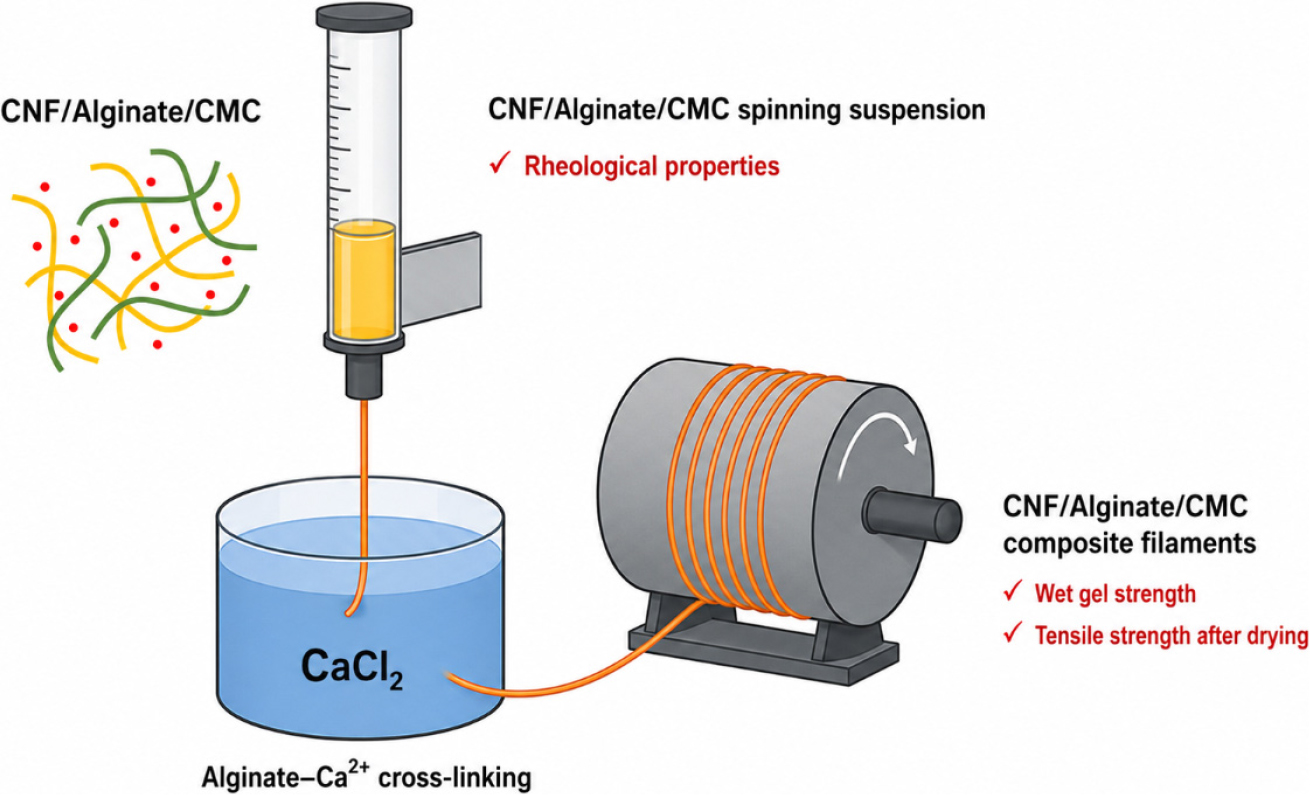
Table 1.
Formulations of CNF/alginate spinning dopes prepared at a total mass of 500 g and a solids content of 4%
The prepared composite spinning dope was loaded into a 10 mL syringe equipped with a needle having an internal diameter of 0.6 mm and extruded into the coagulation bath at a flow rate of 5 mL/min using a syringe pump (ISPLab01-Pro, DK Infusetek, China). The extruded spinning dope was ionically crosslinked in the calcium chloride solution to form continuous gel fibers. The gel fibers were then wound onto a drum dryer heated to 110°C and dried to produce the final composite fibers. The rheological properties of the composite spinning dopes were analyzed to evaluate their wet-spinning processability, including flow behavior within the nozzle and shape retention after extrusion. A rheometer (MCR 102, Anton Paar, Germany) was used to measure shear-rate-dependent viscosity. The storage modulus (G′) and loss modulus (G″) were also measured through frequency sweep tests.
2.2.3 Evaluation of the mechanical properties of CNF/alginate wet gels and dried composite fibers
Wet gels and dried composite fibers were prepared in different forms to evaluate the effect of the spinning-dope composition on the mechanical properties of the coagulated materials. To prepare the wet gels, the composite spinning dopes were formed into circular specimens with a thickness of 0.5 mm and immersed in a coagulation bath containing a 5% calcium chloride solution for 30 s to induce ionic crosslinking. Texture profile analysis (TPA) was performed on the gels in the wet state without drying using a texture analyzer (TA.XTplusC, Stable Micro Systems, UK). The tensile properties of the dried composite fibers were measured using a universal testing machine (MTC-100, IDM Instruments, Spain). The surface and cross-sectional morphologies of the fibers were observed using FE-SEM.
3. Results and Discussion
3.1 Morphological characteristics of CNF prepared at different grinding consistencies
Fig. 2 shows the FE-SEM images and diameter distributions of CNF prepared by 30 grinding passes at pulp consistencies of 2, 3, and 4%. Under all conditions, the pulp fibers were sufficiently fibrillated, and nanometer-scale fibrils forming highly entangled network structures were observed. The average fibril diameters of CNF prepared at 2, 3, and 4% were 19.3, 15.8, and 17.1 nm, respectively, with most fibrils distributed within the range of approximately 15–25 nm. Although slight differences in the average fibril diameter were observed among the pulp consistency conditions, the overall diameter distributions were similar. These results indicate that 30 grinding passes produced relatively uniform nanofibrillation over the pulp consistency range of 2–4%, and CNF with similar diameter characteristics was obtained regardless of the initial pulp consistency.
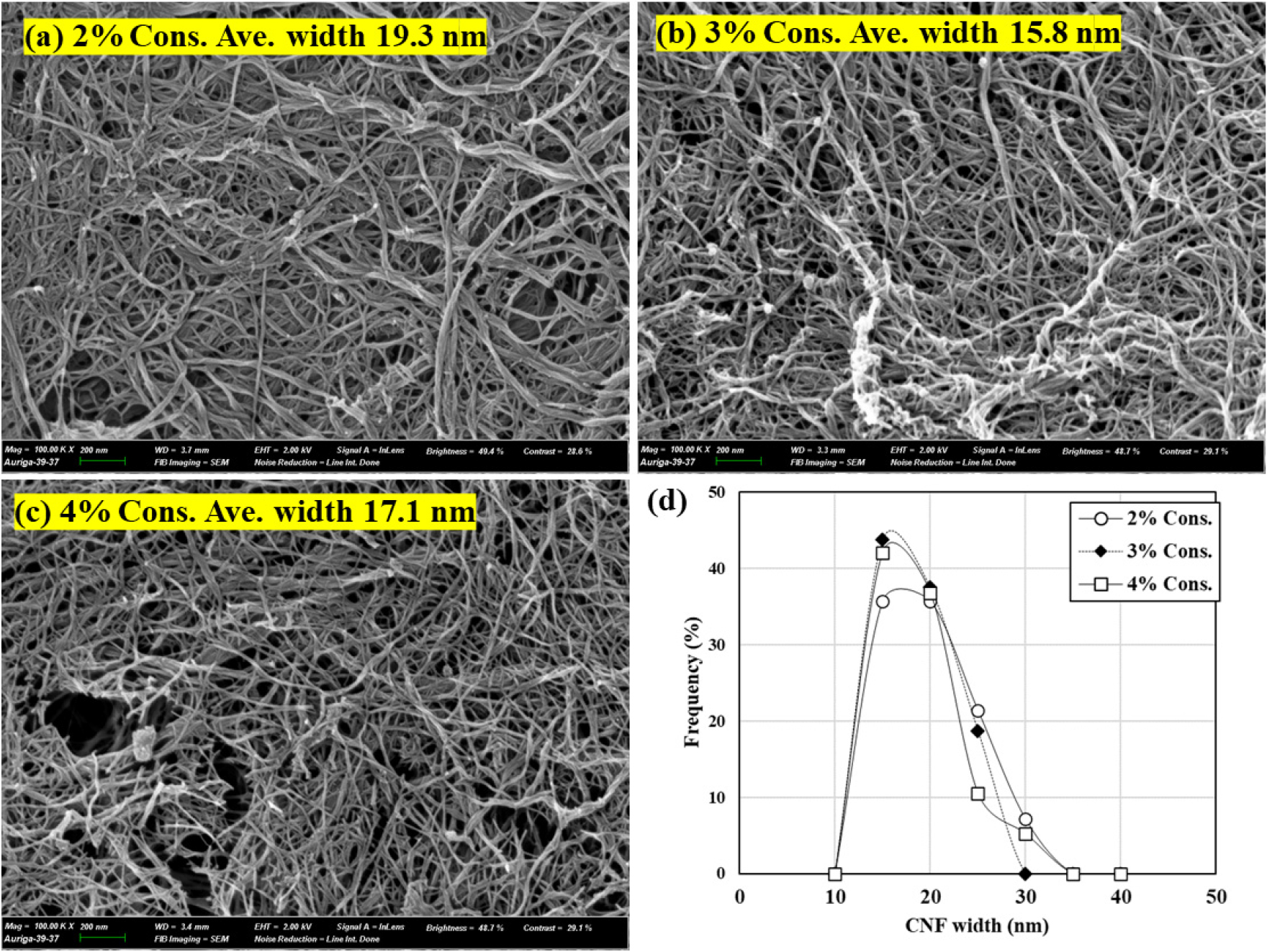
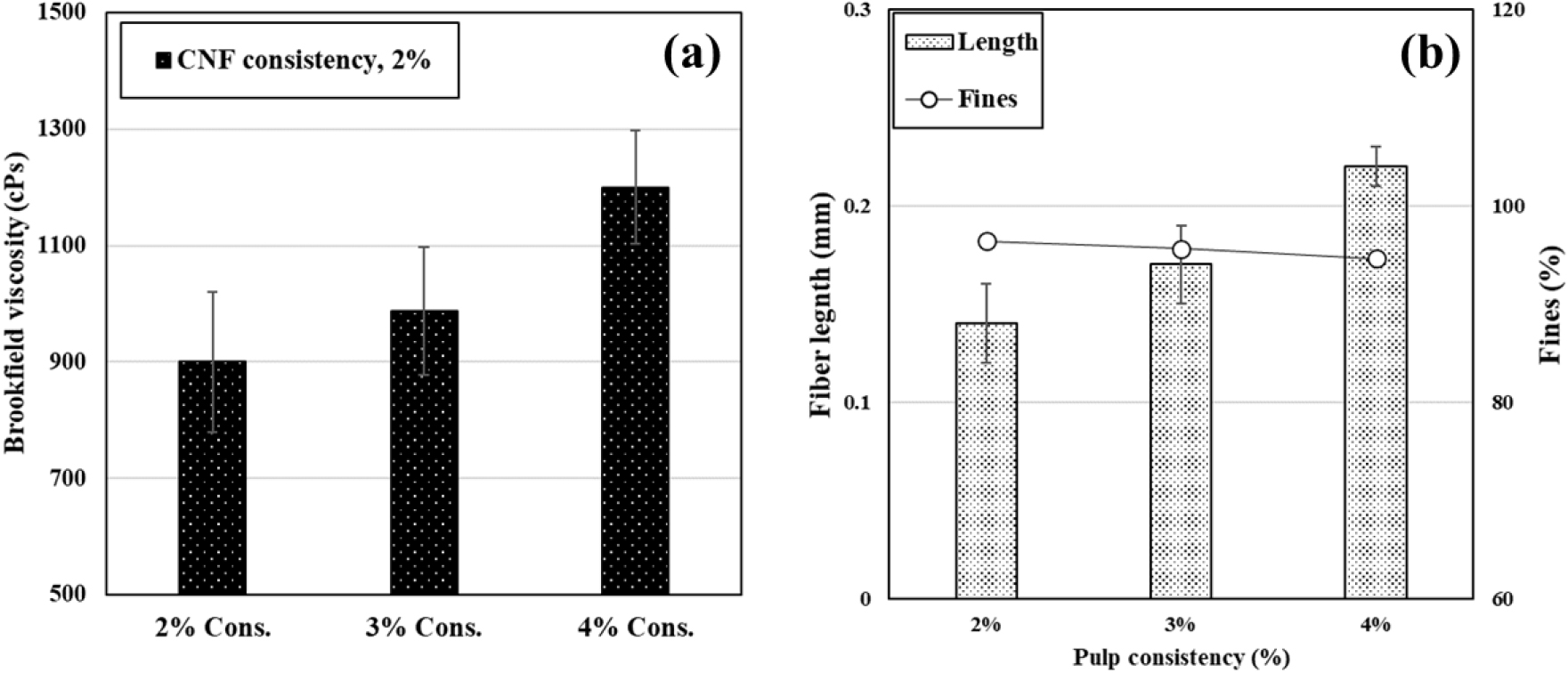
Fig. 3 shows the Brookfield viscosity and fiber analysis results of CNF diluted with distilled water to a concentration of 2%. As the pulp consistency during grinding increased from 2 to 4%, the Brookfield viscosity of CNF increased from approximately 900 to 1,200 cPs, while the average fiber length increased from 0.14 to 0.22 mm. The FE-SEM analysis presented in Fig. 2 showed similar average fibril diameters and diameter distributions under all grinding conditions. Therefore, the differences in viscosity observed at the same CNF concentration were attributed mainly to differences in fiber length and the degree of fibril entanglement rather than fibril diameter. At a lower pulp consistency, individual fibers are more likely to come into direct contact with the grinding surfaces and undergo stronger cutting action. In contrast, at a higher pulp consistency, fiber-to-fiber contact can distribute the mechanical impact and help retain relatively long fibrillar particles [16,17]. Thus, CNF prepared at a higher pulp consistency maintained a similar fibril diameter but showed a longer fiber length. Its higher aspect ratio and greater fibril entanglement were considered responsible for the higher viscosity. In general, CNF with a longer fiber length can maintain fiber-axis orientation during spinning and promote fibril entanglement and hydrogen bond formation, which may improve the tensile strength and elastic modulus of the final fibers [13,18]. Therefore, CNF prepared at a pulp consistency of 4%, which showed the longest average fiber length and highest viscosity, was used in the subsequent experiments.
3.2 Rheological properties of composite spinning dopes at different CNF to alginate ratios
The flow viscosity and viscoelastic properties of the composite spinning dopes were analyzed to evaluate their extrusion behavior through the syringe needle. Fig. 4 shows the shear rate dependent viscosity of the spinning dopes prepared at different CNF to alginate ratios. All samples exhibited shear-thinning behavior, with viscosity decreasing as the shear rate increased. This behavior can reduce extrusion resistance as the spinning dope passes through the nozzle. After extrusion, the decrease in shear may increase the viscosity of the spinning dope and help maintain the fiber shape.
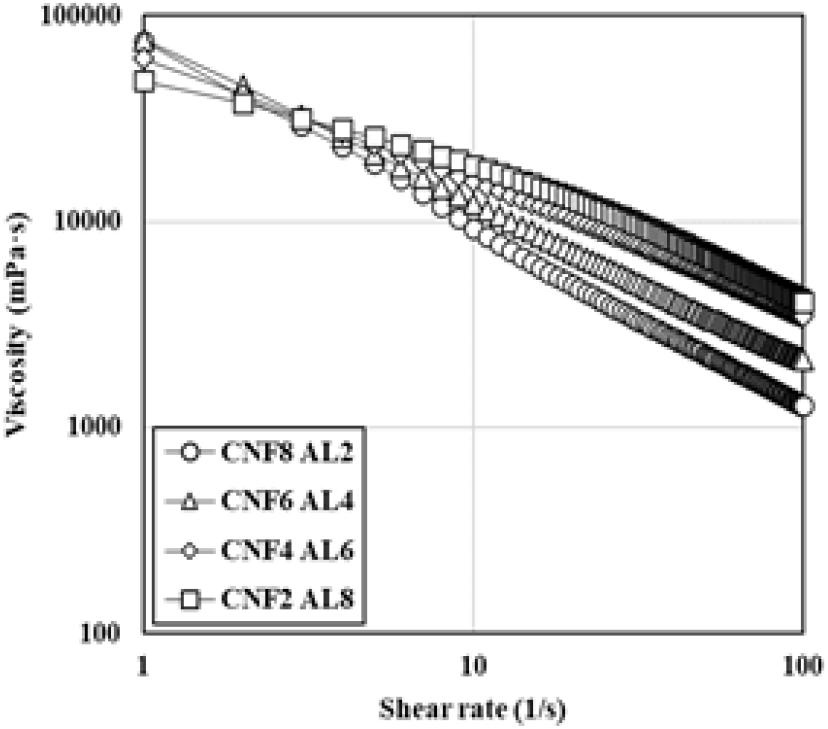
At low shear rates, the differences in viscosity among the formulations were relatively small. As the shear rate increased, the alginate-rich CNF2 AL8 sample showed the highest viscosity, while the viscosity decreased with increasing CNF content. Under high-shear conditions, the physical network formed by CNF was disrupted, and the fibrils became aligned in the flow direction, which caused a substantial decrease in viscosity. In contrast, alginate molecules in the continuous phase maintained a certain level of flow resistance even under shear, which may explain the higher viscosity of the alginate-rich spinning dope [19,20].
The storage modulus (G′) and loss modulus (G″) were measured as a function of angular frequency to evaluate the viscoelastic properties of the composite spinning dopes at different CNF to alginate ratios, and the results are shown in Fig. 5. The alginate-rich CNF2 AL8 sample showed a transition from viscous-dominant behavior (G″ > G′) to elastic-dominant behavior (G′ > G″) as the frequency increased (Fig. 5a). In contrast, the samples with relatively high CNF contents showed G′ values higher than G″ over the entire frequency range, indicating predominantly elastic behavior (Fig. 5b). This behavior was attributed to the development of a continuous network through increased contact and physical entanglement among CNF fibrils [19]. Such an elastic network may improve the structural stability of the spinning dope after extrusion and help maintain a continuous filament shape during the ionic crosslinking of alginate by Ca2+[21]. Since G′ remained higher than G″ in CNF4 AL6 and the formulations with higher CNF contents, a CNF fraction of at least 40% of the total solids appears appropriate for preparing composite spinning dopes with a stable elastic network.
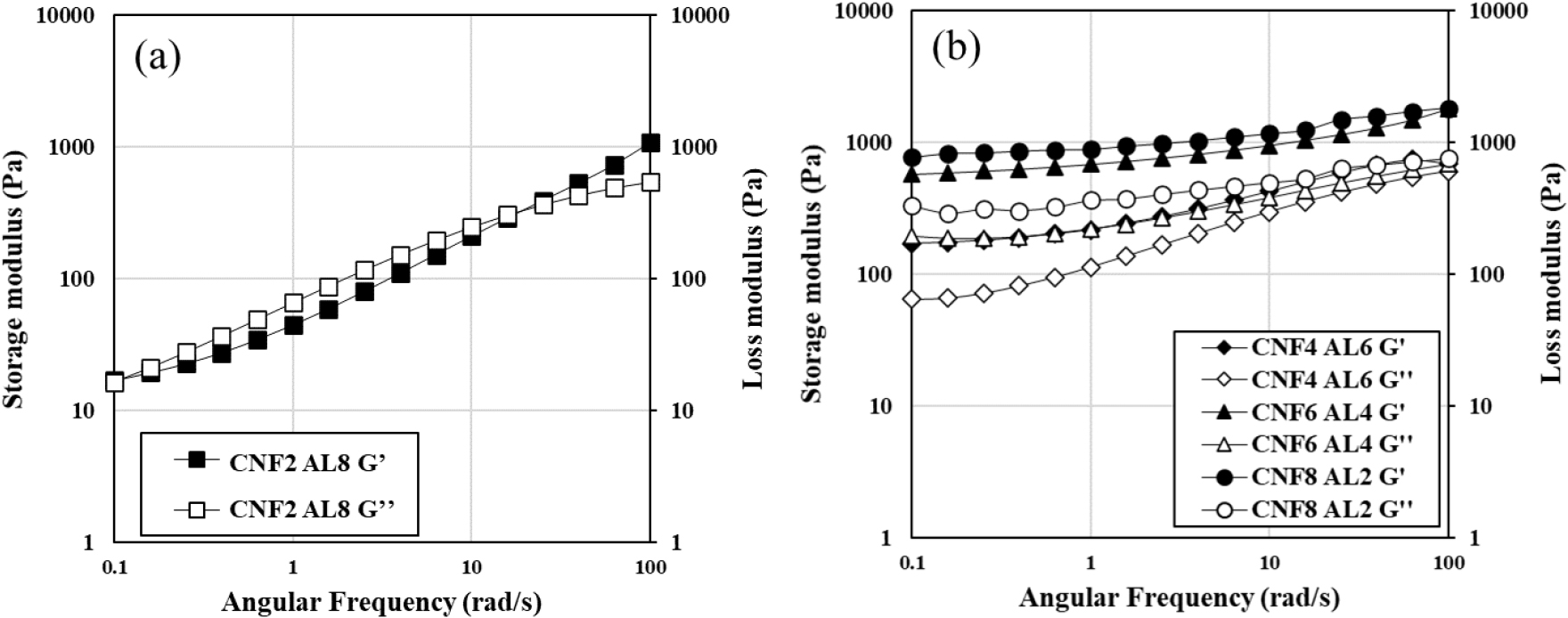
Fig. 6 shows the rheological properties of the CNF4 AL6 spinning dope containing CMC at 5% of the total solids. CMC was added to control the flowability and post-extrusion shape stability of the composite spinning dope. In the stress sweep test shown in Fig. 6a, the CMC-containing spinning dope exhibited a lower storage modulus (G′) in the linear viscoelastic region than the spinning dope without CMC. This decrease was attributed to electrostatic repulsion between the carboxylate groups (–COO−) of CMC and alginate, which reduced the density of physical crosslinks in the CNF-based network and formed a looser structure [22,23].
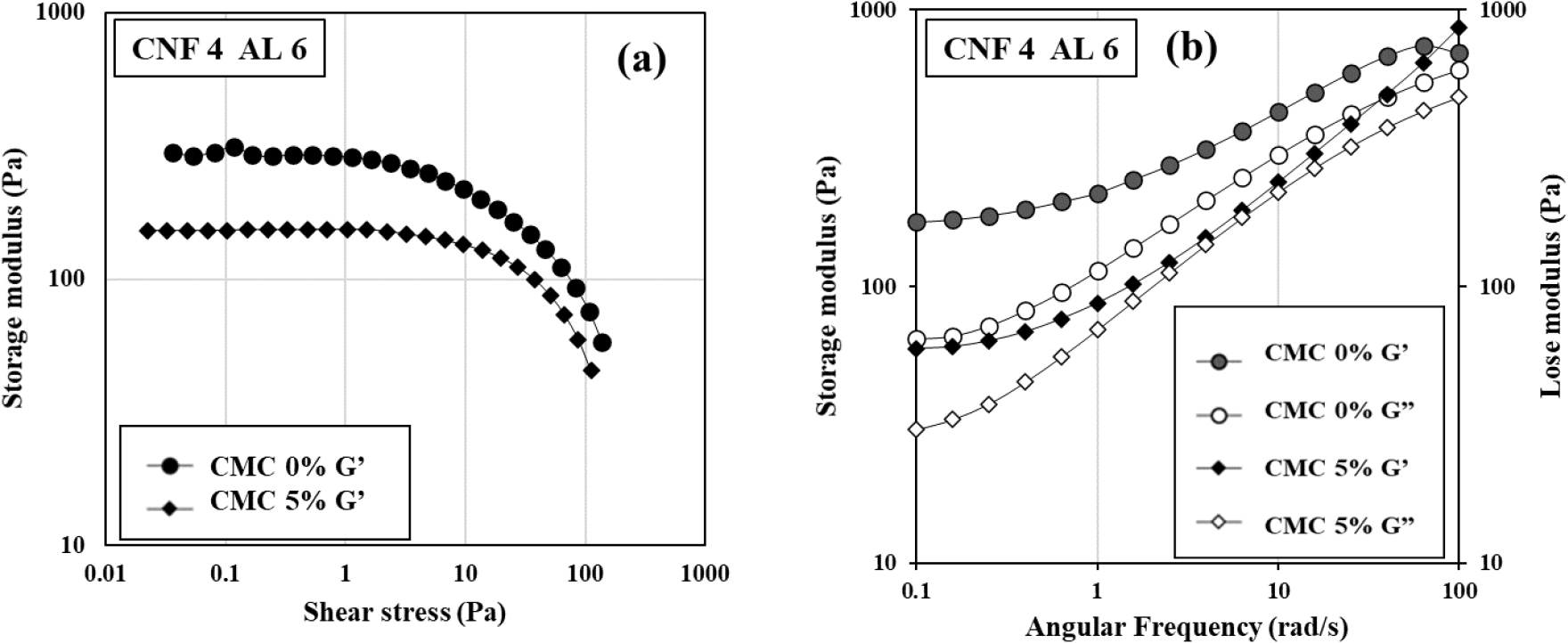
In the frequency sweep test shown in Fig. 6b, both G′ and G″ of the CMC-containing spinning dope were lower than those of the spinning dope without CMC in the low frequency region. Consistent with the stress sweep results, this behavior indicates that CMC reduced the initial network strength and allowed a more flexible response under slow deformation [22]. As the angular frequency increased, G′ of the CMC-containing spinning dope increased more rapidly and approached that of the spinning dope without CMC in the high frequency region. This behavior indicates that the CMC-containing spinning dope was relatively flexible at low angular frequencies but showed greater elastic resistance under rapid oscillatory deformation. Therefore, CMC may improve flowability under slow deformation while providing sufficient structural resistance under the rapid deformation associated with nozzle extrusion. This rheological behavior could improve the balance between flowability and shape stability after extrusion.
3.3 Compressive properties of wet gels and tensile properties of dried composite fibers crosslinked with divalent cations
Wet gels and dried composite fibers were prepared in different forms to evaluate the effect of the spinning-dope composition on the mechanical properties of the coagulated samples. For wet-gel preparation, the composite spinning dopes were formed into circular specimens and crosslinked in a coagulation bath containing divalent cations. TPA was then performed without drying the specimens. Fig. 7 presents a representative force–time curve obtained from the two cycle TPA test and the methods used to calculate the main mechanical parameters [24]. In this study, initial hardness, defined as the maximum force measured during the first compression cycle, was used to evaluate the mechanical properties of the wet gels crosslinked with divalent cations. This value represents the maximum force required to deform the wet gel to the specified compression strain and reflects the apparent hardness and compressive resistance of the ionically crosslinked gel network. A higher initial hardness was therefore interpreted as greater resistance of the wet gel to compressive deformation [25].
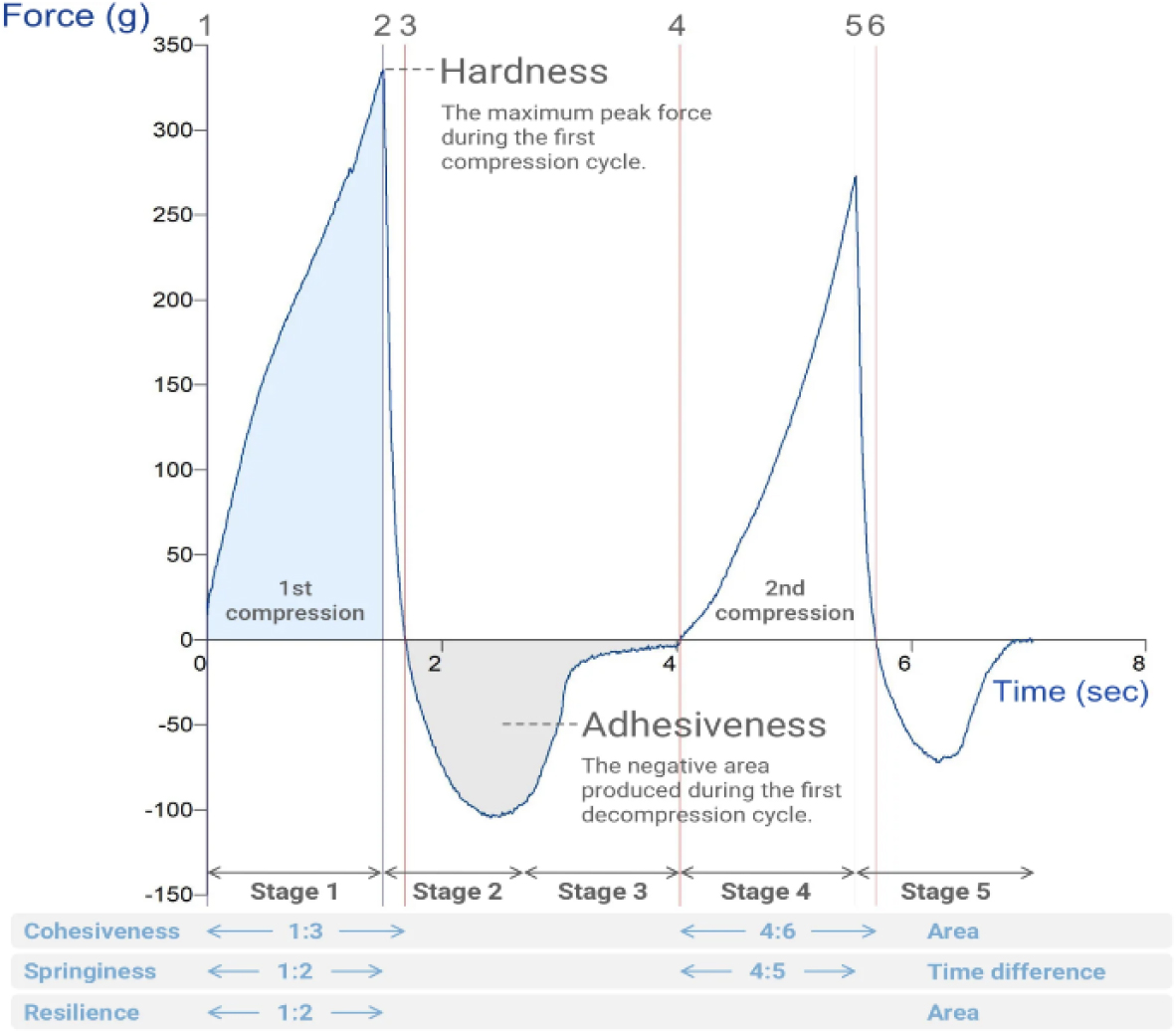
Fig. 7.
Fig. 7. Representative force–time curve of texture profile analysis (TPA) and the determination of major texture parameters. Adapted from Stable Micro Systems (2025) [24].
For tensile testing, the composite spinning dopes were extruded through a nozzle into filament form, coagulated with divalent cations, and dried. The tensile properties of the dried composite fibers were then measured using a UTM. The tensile strength of the dried fibers reflects the combined effects of the ionic crosslinked structure and the bonds formed between the polymer components and CNF during drying [5].
Fig. 8 shows the initial hardness of the circular wet gels crosslinked in the divalent salt coagulation bath and the tensile strength of the dried composite fibers prepared in filament form. The initial hardness of the wet gels clearly increased as the CNF fraction decreased and the alginate fraction increased. The mechanical properties of the CNF8 AL2 wet gel could not be measured because the alginate content was insufficient to form a stable gel network through crosslinking with divalent cations. As the alginate content increased, more carboxylate groups became available for coordination with divalent cations, which increased the density of ionic crosslinks between alginate chains [8,25]. In contrast, the CNF-rich formulations contained less alginate available for direct ionic crosslinking. The formation of a continuous gel network was therefore limited, and the wet gels showed lower initial hardness.
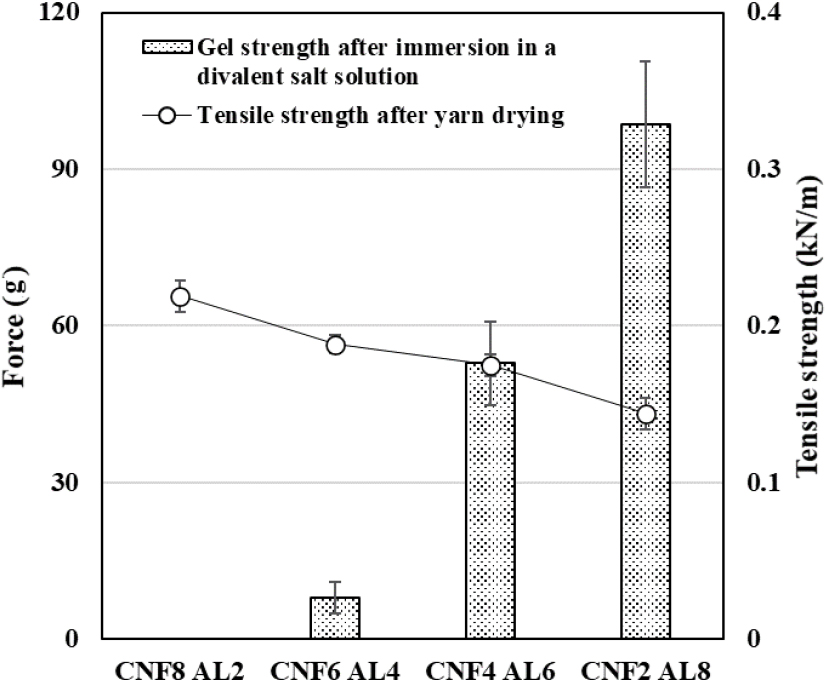
The tensile strength of the dried composite fibers showed the opposite trend and decreased as the alginate content increased. The initial hardness measured by TPA primarily reflects the degree of ionic crosslinking in the wet gel, whereas the tensile strength of the dried fibers is affected by several factors, including the reinforcing effect of CNF and hydrogen bonding among the components. These results indicate that the mechanical properties of the wet gels do not directly represent the tensile strength of the dried fibers. The two properties should therefore be interpreted as independent indicators of mechanical performance in the wet and dried states, respectively.
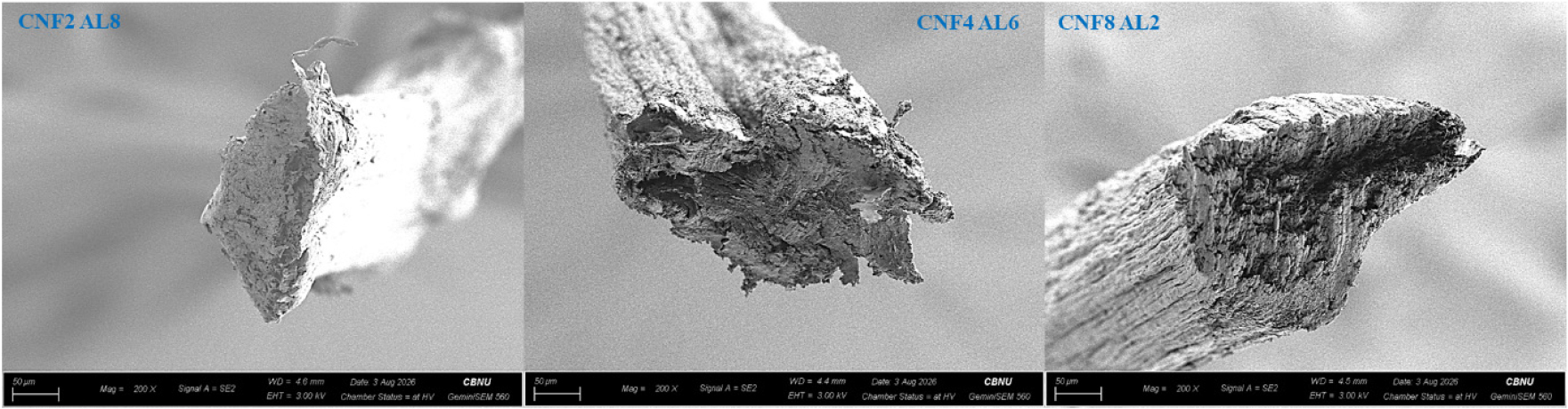
Fig. 9 presents cross-sectional FE-SEM images of the fibers prepared with different CNF and alginate contents. As the CNF content increased, the fibrillar structures of CNF became more clearly visible within the fiber cross sections. During drying, these fibrils came into close contact and formed a dense network. Strong hydrogen bonds between the abundant hydroxyl groups of CNF may have improved load transfer and structural cohesion, which agrees with the tensile strength results shown in Fig. 8. Therefore, the development of the fibrillar network and increased hydrogen bonding among the fibrils contributed to the improved tensile strength of the dried composite fibers with higher CNF contents.
4. Conclusions
This study evaluated the effects of CNF/alginate composition and CMC addition on the rheological properties of composite spinning dopes and the mechanical properties of wet gels and dried composite fibers. The average fiber length and viscosity of CNF increased with increasing pulp consistency during grinding. Therefore, CNF prepared at a pulp consistency of 4 wt%, which showed the longest average fiber length and highest viscosity, was used for the spinning dopes. All CNF/alginate spinning dopes exhibited shear-thinning behavior. As the CNF content increased, contact and physical entanglement among fibrils promoted the formation of an elastic network. In formulations containing at least 40% CNF, G′ remained higher than G″ over the measured frequency range, indicating improved shape stability after extrusion. CMC addition modified the frequency-dependent viscoelastic response of the CNF4 AL6 spinning dope and helped control the balance between flowability and shape stability.
The compressive resistance of the wet gels increased with increasing alginate content because more carboxylate groups were available for ionic crosslinking with divalent cations. In contrast, the tensile strength of the dried composite fibers increased with increasing CNF content. FE-SEM observations showed more distinct fibrillar structures and denser networks in the CNF-rich fibers. These structures promoted load transfer through fibril entanglement and hydrogen bonding formed during drying. Thus, alginate contributed mainly to wet gel formation and compressive resistance, whereas CNF contributed to the elastic network of the spinning dope and the tensile strength of the dried composite fibers. These findings confirm that the CNF-to-alginate ratio is an important factor in controlling the properties of both wet gels and dried composite fibers.